Not All Little Golden Books Were Golden

(Editor’s note: I’ve decided to do a little blog work on memories. I am hoping to tell one story from a past memory each week. This post begins that practice.)

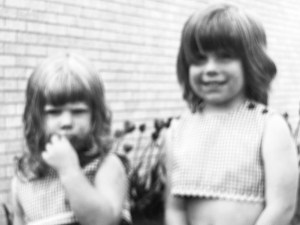
No idea why these little girls are wearing Victorian clothing in 1972

When I was a young girl, my middle sister and I shared a full-size bed in one bedroom. At night, my mom would read us a Little Golden Book. One book that sticks in my mind more than any other was called Good Little, Bad Little Girl. The story was about one little girl who sometimes was well-behaved and other times was not, just like most humans. The “good” little girl was depicted as being neat, clean, calm, and polite, the very ideal of femininity. The “bad” little girl was messy, disheveled, emotional, stubborn, and rude, everything a little girl was not meant to be. As I look back at the book now, I find it appallingly sexist. At the time, however, that is not at all how I understood the story. 

The good little girl in the story looked a lot like the sister I shared that bedroom with. She had lovely, smooth, straight, blonde hair that was easy to comb through and was held neatly in barrettes. She was sweet with her baby doll toys, compliant with parents’ wishes, and not any trouble at all. The bad little girl in the story reminded me of myself. She was depicted with unruly hair, sticking her tongue out, pulling the good girl’s hair, and acting like a tomboy. She was not at all what she was “supposed” to be. The parallels between the good and bad girls in the story and my sister and I were uncanny in my young mind. This story was about us.

When my mother read that story to us, I was probably 5 or 6. I didn’t realize the tale was about one girl. I thought it really was about two girls, one good and one bad. At the end of the book, though, the narrator says (spoiler alert): “If you would be happy, if you would be wise, open your ears and open your eyes. Make the bad little girl grow smaller and smaller. Make the good little girl grow taller and taller.” My understanding of that passage at the time was that I, with my less than perfect hair, behavior, and demeanor, was so bad that perhaps I should simply disappear. I had no idea that the girl in the story was one young female child who simply had good days and bad days and was alternately sweet and ornery. I didn’t understand that the book was meant to be a cautionary (if outdated and sexist) tale for young girls about how to best behave. Because my sister looked and acted like the girl in the book, because my mother often held up my sister to me as an example of a good girl (look at how nicely she holds her baby doll), I understood that I simply was the “bad” girl. I realize that my mother was just reading a story book, but we never had any qualifying conversations about the meaning of the book. There was no objective talk to break down the notion that most of us are basically good people with bad days and that, if we strive to be the best versions of ourselves, our bad behaviors may dissipate with time. Without that conversation, my creative mind was left to run wild. And run wild it did. I did not like that book, but it came to be the one I most identified with. It has stuck with me for 48 years.

I’ve discussed this Little Golden Book book in therapy because it is one of the earliest memories I have about how I internalized the notion that I was not a good, acceptable person deserving of love exactly the way I am. There are many stories about myself that I accepted over the years without stopping to question their veracity. I will continue to work on growing my self-esteem through self-compassion until I can put this book (and other stories I was sold about myself) behind me as false narratives that were never true and that I no longer need to carry.

While I am, in nearly all cases, against banning or destroying books, maybe someday I will get my hands on a copy of this book. Then I will burn it for the symbolic and therapeutic relief it will provide. Don’t worry, though. I will leave The Poky Puppy, The Little Red Hen, Scruffy the Tugboat, and Tootle in tact.

The Dihydrogen Monoxide Discomfiture

Me and the kid who gave me an opportunity to grow today

Ever feel like a giant dummy? Ever have one of your kids provide the reason for that feeling? Today, Thing Two and I were discussing the chemicals in our foods. Well, we’d actually started talking about the chemicals and chemical processes involved in making dog food, but we eventually got around to discussing human foods. I started carrying on about fertilizers and pesticides that contaminate our food. And that was when my son decided to test me by saying, “Yeah. There are a lot of them, especially dihydrogen monoxide.” My brain began scanning some of the chemical names I could remember from books and articles. I was coming up blank, but not wanting my son to think I was some sort of uneducated buffoon, I quickly responded, “Yeah, sure. Among others.” That was my big mistake. BIG. Because Thing Two then points out that dihydrogen monoxide is the chemical name for water. Yep. It sure enough is. It’s right there in the H2O terminology. And had I taken a minute to think, I would have figured it out. But I was in the middle of dinner prep and distracted. Plus, I took chemistry for a hot minute in 1985, and that was the last I ever thought about any of it.

I felt like a jackass. No. Wait. I felt like a stack of jackasses, piled one on top of another to infinity. It hurt my pride to realize I was foolish enough not to really think through what he was saying. It made me ashamed to be old enough that I couldn’t remember the chemical name my addled brain was searching for, and dihydrogen monoxide sounded like something I should be concerned about. And it is because, you know, you can drown in a teaspoon full of the stuff. At any rate, upon realizing my colossal foible and listening to my son’s gloating about getting me with his funny joke, I felt hurt. When he reminded me about the H2O thing, I remembered he had told me he and his classmates were teasing another kid about dihydrogen monoxide a couple months ago. So, not only had I failed to think it through today, but I had totally forgotten that he he told me about this before. Not once stupid, but twice stupid I was.

And while this is a story about my senior moment (handed to me courtesy of my high school senior), it’s also about something else. It’s about how I handled my humiliation and shame. There was a time in my life when I likely would have gone into a bit of a rage over this. I might have yelled at whoever set me up, trying to make them feel bad about embarrassing me. I might have wanted them to feel the same shame I felt. I might have stormed or pouted my way out of the conversation. I didn’t do that today. I sat with my mistake and felt ignorant and uneducated for a while. Then I acknowledged that I am human and I don’t know everything, nor do I remember most of what I learned in high school 36 years ago. After about 10 minutes of feeling like a complete dolt and an embarrassment to myself, my gender, and my children, I stopped. I made my peace with it. I moved on and let it go until just now when I decided to tell the world about it here. This is growth, my friends. This is what it looks like when you face the things that have plagued you your entire life and you get to know them up close and personal.

I grew up in a house where one of the worst things you could do was appear foolish. I learned it was better to not try something than to try it and fail. This has been a real issue for me since birth. But I am getting over it. I’m learning that it’s okay to say something dumb. It’s okay to trip and fall. It’s okay to suck at something. It’s even okay not to know something you should know because we all do it sometimes. It’s what being human is, and I am a human. I’m learning to be fallible, to embrace myself, even the things I don’t like, like the notion that I don’t, in fact, know much. I’m learning to laugh at myself. And growth happens when you take the thing you’re ashamed of and share it. So, there you have it, folks. Proof that I’m a learning robot. Next time I will definitely remember what dihydrogen monoxide is. And next time it will only take me 5 minutes to beat back my shame. The time after that there may be no shame at all. Perhaps then it will just be me being perfectly okay with being imperfect.

The Roads We Can’t Ever Travel

Photo by JOHN TOWNER on Unsplash

On a good friend’s recommendation, I started watching Maid on Netflix yesterday. I finished all ten episodes already, if that tells you anything about the quality of the show. It is about a young, single mother trying to make her own way after leaving an abusive relationship. The characters are raw. Their lives are complicated and difficult. They have mental illnesses, chemical dependencies, financial struggles, and broken dreams. It’s painful to watch, but that is exactly why it should be seen. It’s a poignant reminder of how little we know about the lives of those outside our own circle.

In a time when it seems everyone is on edge and no one seems to notice or care about anyone else, when everyone is quick to anger and judgment, this is the kind of show we need to see. It’s a lesson in our common humanity. If you watch the show and it doesn’t make you a little softer and kinder to your fellow humans, watch it again. It’s time we get our heads back on straight. The pandemic has taken a lot of out of us. We’ve been isolated, stressed about our survival, our lack of freedom, our health. Maybe it would be a good idea to recognize that we are all struggling.

As I’m writing all this pontifical, pie-in-the-sky bullshit, though, I am realizing that I need to be honest with you too. There’s another reason this show grabbed me the way it did. It’s because a large part of it is about surviving emotional abuse, the abuse that has no outward scars so people don’t believe you were injured. There’s plausible deniability in emotions. Well-meaning people tell you to your face that the people who hurt you over and over didn’t mean it. They tell you that you’re being dramatic. They tell you that because they are fortunate enough not to understand what it’s like to have someone close to you manipulate, terrify, and crush you. The show is about deciding to put your mental health first and making the difficult, conscious choice to let others deal with their own demons while you face your own. It’s about using your outside voice to proclaim to the world that you want something for yourself, and you’re ready to believe you deserve it. While watching these characters interact, I saw my life. I saw their struggles and nodded my head. But I also saw their strength, and for the first time I am seeing my own too. It feels good to be at a place where I can like myself for both my beauty and my imperfections.

We don’t know what anyone else is going through. What we know is filtered through our own lens. Tread lightly. Be gentle with others if you can. It’s been a little rough on this rock recently. We can’t know the roads others are on, where they lead, or why they wind the way they do. We can’t help others read their map or give them directions. We can’t ever travel their road with them. We’re not meant to. We have our own road on which to focus and that one deserves our full attention.

Out Of The Ashes, New Growth

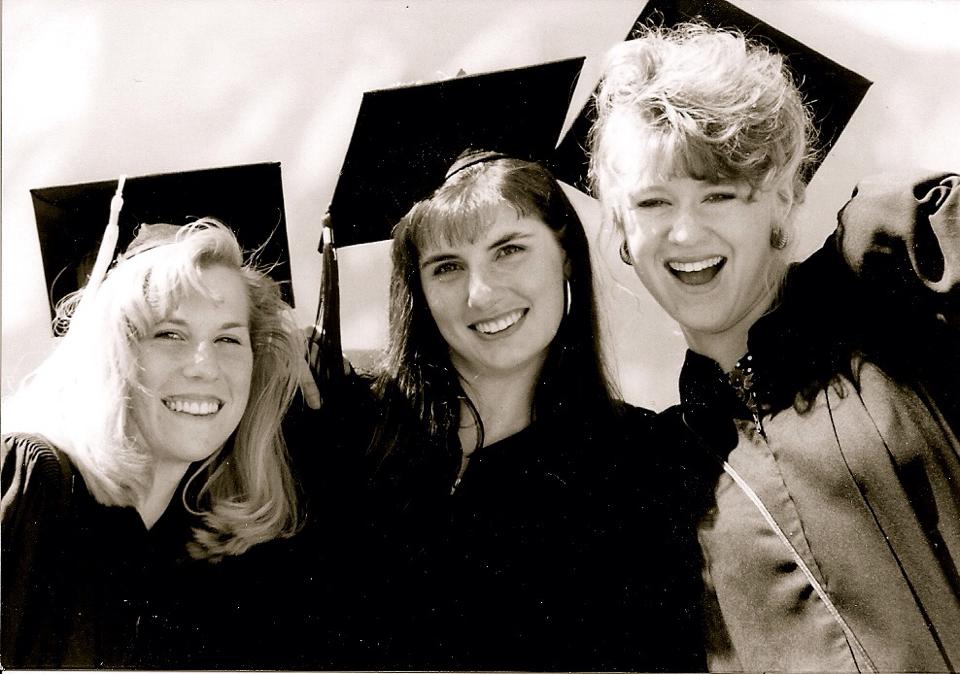
It occurred to me today that I have next to no memories of the day I graduated from college. I have a fuzzy recollection of lining up to head into the arena where the ceremony was held. I have another vague memory of sitting with friends, but that memory is based solely around photos I took that day. I don’t actually remember sitting with my friends or taking photos. I can’t tell you which of my family members were there. My parents were recently divorced. My sisters were 20 and 17. I don’t know if we celebrated with dinner somewhere or if I spent time with friends and their families or if I spent the day with my boyfriend. It strikes me as odd, though, that there are no clear or warm memories of that day for me. It seems like the kind of day that many people might remember. An auspicious occasion. I was the first in our family to graduate from a four-year college. It feels like it passed as more or less an ordinary day.

My husband remembers his graduation day. His mom and dad hosted a graduation breakfast for him and his friends. It was near Christmas and his birthday, so his mom had a Santa come to the breakfast. After the ceremony, his parents hosted Steve and some of his friends at a graduation lunch at their favorite college restaurant, the Rio Grande, known for their potent margaritas (limit 3 per customer). At the lunch, his mom had a clown arrive with balloons. Later, a belly dancer showed up and performed three songs for him in the crowded restaurant. He has told me he wished it had only been two songs (enough for his mom to get her money’s worth), though, because three was a bit much. Still, his accomplishment was celebrated and cemented with specific events that he carries with him and always will. It was a fun day for him.

Today we were at Luke’s last cross-country event of the season. There were some teenagers walking near us. One of them, noticing all the parents at this meet at one p.m. on a Thursday afternoon, remarked to his friends, “I wish I had a supportive family.” That comment struck me. I told Steve that young man has a gift he doesn’t realize is a gift. He has self-awareness at a young age. I didn’t realize until my mid forties that I didn’t have a supportive family when I was growing up, at least not supportive parents, to be sure. If you are young when you realize you don’t have a supportive family, you can work to piece together a supportive family of your choosing. You can work to change your narrative for more of your life.

I have done a lot of work trying to piece together memories from the first eighteen years of my life. I don’t have many, but the ones that stick with me and have to do with my parents are predominantly negative. I do have positive memories of my life growing up, but those have to do with friends or my accomplishments. My fondest wish as a parent was to create positive memories with our sons that they would have with them their whole lives. I hope someday they will remember their birthdays, graduations, and other important milestones. I hope they will also benefit from the little things, like dinner as a family every night and deep conversations on long car rides. I hope they will look back and not just know they had a supportive family, but feel the power of that support each and every minute. Moreover, I wish every child had a loving, supportive family because every child should travel through life with at least that.

“Never underestimate a cycle breaker. Not only did they experience years of generational trauma, but they stood in the face of this trauma and fought to say ‘This ends with me.’ This is brave. This is powerful. This comes at significant cost. Never underestimate a cycle breaker.” ~Author Unknown

“You are not the darkness you endured. You are the light that refused to surrender.” ~John Mark Green

Get Off My Lawn

I pay attention to dreams. I believe that, at least in part, your dreams are meant to help you work through issues you are struggling with in your waking life. I do remember most of my dreams when I wake, if only for a little while. Sometimes, though, they are odd enough and vivid enough that I find myself telling someone about them. Those dreams often come on nights when I take a melatonin or Benadryl before heading to bed.

Last night’s dream started out normal enough. Steve and I were returning home after a trip. It wasn’t the home we live in now, but it was supposed to be. This house was an older, two-story Craftsman-style home, that had been renovated inside but still retained its period charm. At any rate, we recognized it as home and were glad to be there. I carried some of my bags upstairs and grabbed the knob on the bedroom door. It turned, but as I pushed the door to open it, I felt resistance. Someone was on the other side blocking me from going in. I put the bags down and pushed again. It gave enough for me to see that there were people inside the room. Rather than being frightened by this, I was puzzled. I pushed again, and the door opened enough that I was able to recognize one of the individuals as a former owner. I also noticed that none of our belongings were in the room. The room had been returned to the way it looked when we toured it, complete with their bed, dressers, lamps, and knick knacks. What the hell?

“What are you doing in our bedroom?” I asked, more annoyed than concerned.

“We decided we want our house back,” came their reply. “You can’t live here anymore.”

“Ummm….we own this house now,” I said firmly. “You need to get out or I will call the police.”

“We never wanted to leave this house,” they said. “You tricked us into selling it and now we are taking it back.”

At this point, it occurred to me that I needed to get Steve. I walked down the stairs and told him to come up. I turned the handle again, and this time they let us both in. We had a back-and-forth conversation that went much like the previous one, but at least now Steve was up to speed. I was getting quite angry at them for being in our house. I mean, we’d been paying the bills and the taxes and who the hell were they to just say we couldn’t be here anymore? This was our damn house. I escalated to threats.

“You need to get out or I am going to start moving you out myself. It would be a shame if I dropped this,” I said, picking up a Lladro figurine of a woman in fancy dress.

“Go ahead and drop it,” the previous owner said. “We’ll just add it to the lawsuit we’re filing against you.”

“You can’t sue us. We own the house. You sold it to us. The title is in our name, and your signatures are on file.”

He said, “We never wanted to sell. You tricked us.”

“That is not how it happened. We told you we liked your house and asked if you would sell. We told you to name your price. You did, and we paid it and the sale went through.”

“We want it back. We’re not leaving.”

At this point, Steve and I looked at each other and then walked downstairs, completely perplexed about what to do with the squatters in our bedroom. I suggested we call our realtor, Andy, as back up. We did and went outside to wait for him.

When he got out of his car, he was on the phone. Realtors are always on their phones. He ended his call, and we told him what was going on.

“So, what do we do now?” I inquired.

“I have no idea,” he said, sounding as confused as we felt. “I’ve never had something like this happen before.”

I told him he had better figure it out. What the hell do you do when someone who used to own your space has moved back in without violence? It was a conundrum, but I had no doubt they did not belong there and must go.

About that time, I woke up. I told Steve about my crazy dream, not really thinking about what it meant. A couple hours later, though, it came to me. Yesterday, I was talking to Steve about how I am feeling more powerful and capable of standing up for myself and making my choices from a place of what I want, rather than what is convenient for or desired by someone else. This dream is a perfect representation of that. I wasn’t afraid for my safety when I found them in my house because I felt legitimate claim to my space. I didn’t want them there and I knew they had no right to be there, so I had no plans of letting them take from me what I knew was rightfully mine. I merely had to determine the proper way to oust them. That is progress for me. In my past, I’ve too often let others run roughshod over my wishes, but I’ve been working to stake my own claim in my life and realize that my personal choices and mental well being matter more than keeping the peace with others. It’s a good place to be. I’m on the right path at long last.

Now I just need to get those people out of my house and then off my damn lawn.

Diffusing The Power Of Shenpa

Indeed

Yesterday I wrote about learning to deflect when something or someone triggers me to act in ways that run counter to what is healthy for me. And then, in a wonderful act of serendipity as I was doing homework for the Midlife Mindfulness class I attend, I discovered that our topic completely ties in with the work I did yesterday in therapy and then in my blog post from last night. Talk about the Universe wanting me to succeed! Everything is lining right up.

This meeting’s focus was on the concept of shenpa, which Pema Chodron, world-renowned Buddhist nun, describes as “the hook.” The hook is what I would call a trigger; it’s the sound, the person, the scent, the comment, the situation, the whatever, that sets you off into a negative pattern of self-censure, jealousy, blame, anger, or frustration, which leads you to actions or words that may seem to comfort you in the moment but that ultimately lead you away from peace rather than towards it. I feel this is my life in a nutshell. I grew up in a highly reactive household, so I learned to be reactive to everything. Because of this, I have long admired people who seem to roll with things, who accept the reality of the situation without an emotional meltdown. I have not known many people like this, though, so I am certain that reacting to shenpa is common for most of us.

The experience of shenpa immediately removes us from the present moment and sends us into a spiral of destructive thoughts and behaviors. The way I most often experience shenpa in my life is through my verbal outbursts or my desire to escape a situation that troubles me. Both are an overreaction, usually as a result of a comment or action taken by another person. Instead of quietly sitting for a moment with the thing that has hooked me and deciding how or even if it requires reaction from me, I am off and running and the hook sets. So, this is my next big challenge: I need to recognize the hook before taking the bait. Pema Chodron says the best way to stop this cycle is through meditation because it is only by observing our thoughts that we are able to change them and our actions around them. Through meditation, we slowly gain control of the monkey mind that will make off with us if we don’t see its little game.

I am setting my alarm for 6:20 tomorrow morning so I can get in ten minutes of meditation before I begin my day. Ten minutes doesn’t sound like much until you have to make sitting still with yourself and chasing away distractions a priority. It’s more difficult than you might imagine. I was thinking I can still use the Wonder Woman golden wrist cuffs, which I wrote about yesterday, to deflect what triggers me. I can still cross my arms in defiance of the shenpa that appear. And then I can use my meditation skills to stay present, experience my discomfort, and then either let it go or react calmly from a place of peace in the present moment. I am already better at putting distance between myself and many of the people and stimuli that trigger me. I am also better at seeing where things are going, even if I can’t always find the brakes. I’m heading in the right direction.

I’m grateful for the small things in life that line up for me when I am on the right path. I suspect, though, that it is less about messages lining up than about my openness to seeing them as they fall in my lap.

The Power of Storytelling Without Fear

“Trauma creates change you don’t choose. Healing is about creating change you DO choose.” ~Michelle Rosenthall

Everything changes when you finally decide to divest yourself from a toxic relationship.

Some people judge you for your choice, especially if the relationship you leave behind is one involving a parent, spouse, or sibling. Those people tell you to reconsider because “life is short and you might be sorry when they are gone.” Those people used to get to me. They would reacquaint me with the gaslighting I have experienced my entire life. I would feel guilty and small and cruel for choosing myself. With time and practice, though, I’ve learned to listen to those voices less because those people don’t and can’t understand the emotional damage I have worked so hard to grieve, dismantle, reassess, and then release. They don’t know that every day is a battle to trust others, to feel safe in my skin and like myself, and to move forward carrying less baggage. They can’t understand how much it hurts a child to have a parent tell you multiple times, “You have a face only a mother could love,” only to realize she doesn’t love you or she would never say things like that. Birthdays, holidays, and family events are not joyful, but instead produce physical symptoms of anxiety. Walking away is not what you want. It’s not what you ever wanted, which is why it is so difficult. But, in the face of acknowledging there is not now nor will there ever be true acceptance and appreciation from the people who made you question everything about yourself, the best thing to do is move on and do better for yourself.

I still feel guilty sometimes about putting myself first, about choosing to skip out on that toxic person’s birthday party or holiday gathering. I never want to feel I am acting intentionally to hurt another because I was constantly told that I was selfish and thoughtless. Looking out for myself only proves that hypothesis. But what if I test that hypothesis against the reality of what happened rather than the illusion of what I was told happened? Then, magical things begin to occur. I have learned to have empathy for my abusers, to feel sorry they were incapable of doing better, to be grateful they taught me what not to do with my own children, to feel sad they will never know the truth about love, and at the same time to understand I do not owe them a relationship at the expense of my own mental and emotional well being.

For decades, my brain protected me by blocking awareness of the abuse. It had me believe that I was treated the same way everyone else was by their parents. It wasn’t until I started talking about my youth and seeing the shock and horror on other’s faces when I told them stories about my childhood that I understood what I knew as “normal” was actually neither normal nor healthy. It was a shocking revelation. My brain had for so long worked to legitimize the abuse to protect me that I was unable to comprehend that what I experienced was abuse. When I finally could not unsee the reality any longer, I began to grow. I have fought since then to tell my story more often, to give voice to what I was conditioned to believe was only my imagination, my “over-sensitive” nature.

“You own everything that ever happened to you. Tell your stories. If people wanted you to write warmly about them, they should have behaved better.” ~Anne Lamott

Six years ago, I composed a blog post around the above quote, asking other writers for permission to tell my stories even if doing so would potentially hurt someone else and cause rifts in long-standing relationships. Six years ago, I wasn’t yet brave enough to speak my truth. But, six years of weekly therapy and hard work have at last brought me to the place where I am able to choose myself and let others deal with their emotions about that their own way. I’ve learned that if telling my truth is problem for them, maybe they should address that in their own heart, that I don’t owe them protection when they didn’t protect me, that I don’t have to put them first when they didn’t put me first. It’s a powerful place to live when you finally decide that you are not responsible, despite what you have been told, for other people’s reactions to your choices. It’s not vindictive to tell your story. It’s life changing to give yourself permission to protect yourself from the people who have hurt you and to tell your stories because if they wanted to be remembered warmly, they should have behaved better.

I am not afraid of my past anymore. I’m not afraid of people being angry with me for telling my stories about it. I’m only afraid of living another day bound by tales about myself that were passed down to me by others that don’t define me and never did. Tell your stories, especially when they are controversial and difficult. Eventually, they will set you free.

I had been deceived. The only thing that was ever wrong with me was my belief that there was something wrong with me.” ~Glennon Doyle

I Still Have A Crush On Val Kilmer

“Life is what happens when you are busy making other plans. ~John Lennon

Tonight I finally had a chance to watch a movie I have been curious about for a while. It’s a documentary about Val Kilmer, simply titled Val. The film is a combination of video Kilmer shot himself, long before the days of camera phones during the time when memories were recorded on large, clunky video recorders with footage that ended up on large, clunky VHS tapes, and more recent footage taken of him. Kilmer had a bout with throat cancer from 2015 to 2017. Chemotherapy and two tracheotomies stole his voice and left him with a hole in his throat through which he breathes and feeds himself. It’s sobering to watch the juxtaposition in footage between a handsome, winsome leading man and a man with tracheostomy tube who now travels the country to sign autographs at events like Comic Con. It’s a stark reminder of how life works.

Kilmer is eight years older than I am, and I had a crush on him from his first feature film, Top Secret, in 1984 when I was 16. He had an on-screen charisma that came at me like a freight train. After Top Secret, I went to see him in Real Genius, a film I have seen at least a dozen times now and still adore. I saw Top Gun because he was in it (I never cared much for Tom Cruise, always preferring blond men) and then I went to see him in Willow, The Doors, Tombstone, and Batman Forever. There was something about him, a depth that you don’t often see in handsome, Hollywood-leading-man types. I couldn’t put my finger on it, but it was there.

Watching Val, I found that depth again. At times it was hard to tell if the recent footage of him was him being himself and living his life with a camera recording it or him playing a character, a Hollywood star who survives cancer only to realize he’s lost the only career he ever wanted. Whether or not he was a “difficult” actor because he cared about the craft of acting and telling a story is up for debate, but I get the sense from the film that Val’s perfectionism regarding his chosen profession likely ruffled feathers. After Batman Forever, a film that was a big commercial success, he turned down the title role in the sequel because his experience in the first film, being cramped and miserable in a suit that barely allows you to stand or move without help, much less hear or breathe well, was simply not an opportunity with growth potential. But, you don’t get to turn down a request to reprise your role as Batman without fallout.

I don’t want to say anything else about Val himself or the film because I believe art is best left to be interpreted by each individual their own way. What I can say is that the real life struggles of the man behind the actor are profound and, in many ways, universal. As I watched, I was struck by how ephemeral it all is. How we think we have all the time in the world for our passions, our work, our loves, our family, and our own self-development and growth, when we have no control at all over any of it. Ever. One day you’re creating what you hope will be the pinnacle of your life’s work. The next, you grapple with the knowledge it’s gone and can never be resurrected.

We don’t have all the time in the world to live out our dreams. Each day we have that day and nothing more. It’s what we do in the aftermath of when our dreams fall apart that matters. Val founded a creative studio in Los Angeles and created a film about his life thus far. He may have difficulty speaking aloud and being understood, but I suspect he is not finished trying to express himself through art.

The Beating of My Own Drums Returns

My little corner of the world

I took my first drum lesson five years ago on September 15, 2016. Playing drums was something I had wanted to do since I was a child, and at the ripe old age of 48 I finally decided to go for it. I found my instructor online (the introvert’s way), but I knew instinctively he was the right person for the job because he had previously been a practicing Buddhist monk. It was going to take Buddhist-monk-level patience and calm to deal with my level of anxiety about this big step. I had spent most of my life up to that point purposely avoiding situations that made me uncomfortable, such as learning new skills in areas where I had no knowledge base. Meeting a stranger at a music studio so he could help me learn to play drums ranked about a 10 out of 10 on my discomfort scale. Still, I somehow managed to show up to the lesson, anxious as hell and sober as a judge. I remember that first lesson as an out of body experience. When it was over, I walked back to my car berating myself for being such an uncoordinated, nervous, and uncool dork. These are not things you want a drummer to be.

I persisted with my lessons, though, because Jeff was beyond awesome to me and for me. Ashamed as I am to admit it, there were several lessons in the first year where I got overly emotional when I couldn’t get a beat or fill or technique and wound up teary eyed and too stressed to continue. Jeff, thankfully, did not freak out at this crying middle aged woman and channeled his Buddhist training to help me get to a better mindset. As time went on, I began to believe I could actually learn to play drums. I had no plans of joining a band or performing in front of others. I simply wanted to be able to get behind a drum set, put on some headphones, and play along to songs I enjoy with some level of competency.

In March of 2020, when everything in-person shut down, so did my drum lessons. Jeff set up a situation where we could do drum lessons virtually, but it was not my thing. So, I stopped taking lessons. I told myself I would play at home, but I didn’t. There were four of us full-time in our house then, and taking up space and banging on drums didn’t feel right. When we moved to our new home, my sweet spouse suggested we have a room finished in the basement for my drum set. It was finished in January of this year, complete with insulated walls to quiet my noise. But, I still didn’t play. This is all on me. No one in my family said I should stop bothering them. I just felt awkward about it. Taking up space in my own life is something I have struggled with for years.

Today, though, I decided it was time to do something for myself that benefits literally no one else. I went into that tiny room in the basement and set up my drums. I put a poster on the wall. I dusted off the kit. I found all my drum notation and skill books. I located my metronome and charged my wireless headphones. And then I played. It was rough, but drumming is a motor skill that uses muscle memory, kind of like skiing or riding a bike. It didn’t take long before I was remembering beats and somewhat successfully playing along to some songs I knew well once upon a time. I was still awkward, but it felt good, like coming home.

I have decided to keep going. It’s good for me to keep learning. Jeff taught me how to read drum notation, and I have a plethora of song books to teach me how to play along with the Foo Fighters, Green Day, and Nirvana. Now that I have a tattoo, it seems like continuing drumming is compulsory, right? I’ve got some work to do to turn my little drum studio into my own oasis, but I am finally ready to make it my own.

I may never be a great drummer, but working on the skill is enough for me. It will keep my brain flexible as I age. Maybe someday my grandkids (when I have grandkids) will think I am badass too. That would be kind of cool.

I might need another tattoo, though.

Exorcising The Ghosts Of The Past

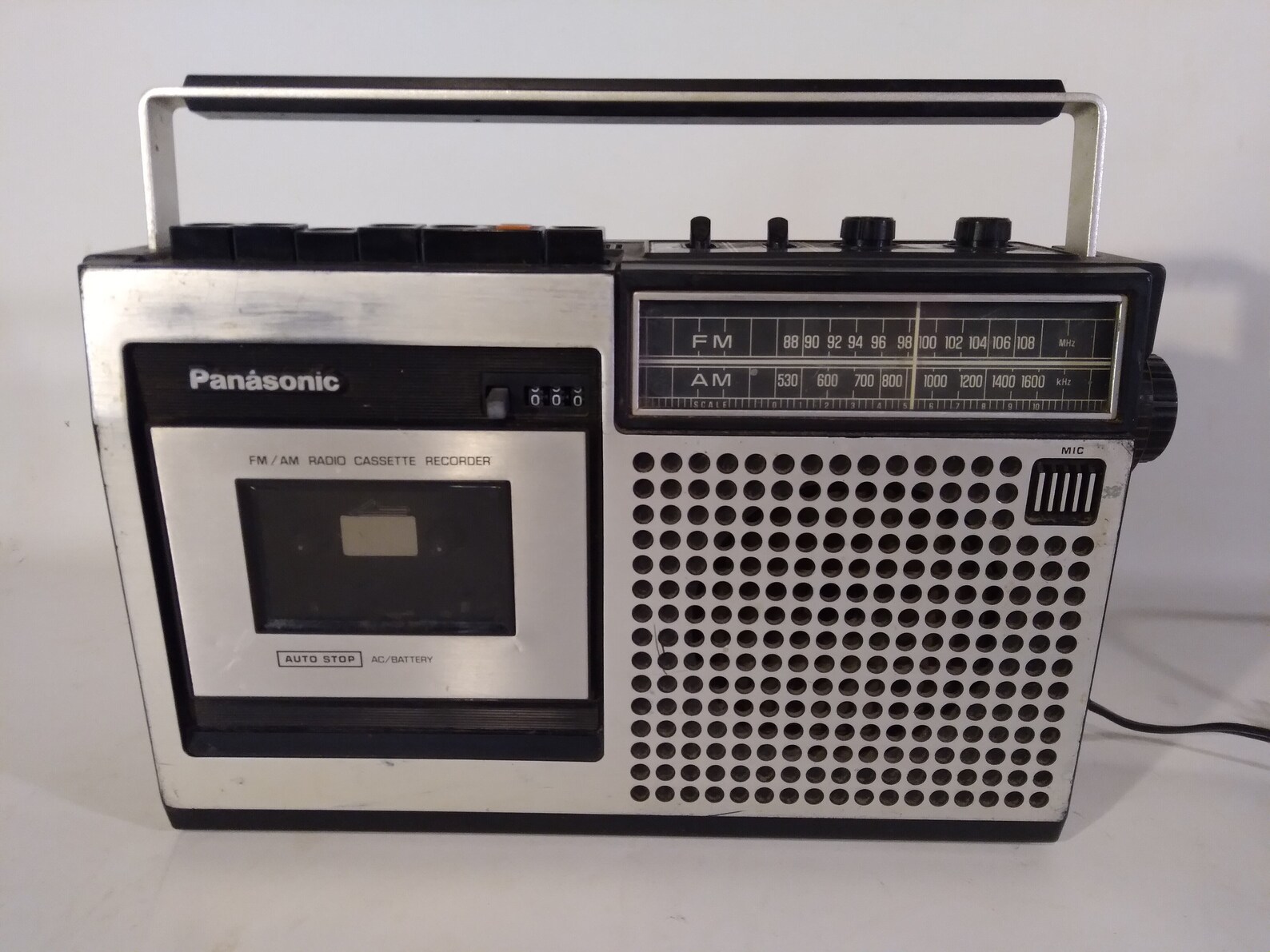
What I used to record portions of the Live Aid concert in 1985

In the days before the Internet and FaceTime and Zoom and texting, people wrote letters. A stamp, a pen, and a piece of paper were all you needed to share the contents of your mind and heart with someone who was worth the effort of your time and questionable penmanship. As is the habit for many people, I saved quite a few of the letters I received over the years from friends and boyfriends. I kept them in a box that once held my cassette player (back in the days when cassettes were a thing). Over time, that box got rather stuffed with random correspondence. I didn’t open it very often to read its contents, but I dragged it with me each time I moved. It would relocate from the top of one closet shelf to another, from apartment to apartment. There was something about knowing those letters were there if I ever wanted to trot down memory lane or perhaps clarify a memory that had become distorted or foggy.

When my husband and I got engaged and decided to move in together, he was helping me move boxes into my car when he came across that one. He asked me why I was bringing it. After all, if these letters represented relationships that had long since gone defunct, why was I clinging to them? I honestly could not give him a suitable answer. If I’d said I was keeping them for sentimental reasons, that would only make the box more of an issue in our relationship at the time. I didn’t know how to respond. In the absence of a viable response, he asked me if I could add them to the dumpster along with the wooden case holding 100 cassette tapes I no longer needed since he had a CD player he was willing to share. I acquiesced because he had never asked for anything from me, we were getting married and he was my future, and it seemed like a small sacrifice I should be willing to make for someone who had never been anything but kind, loving, supportive, and patient with me. With a pang of disappointment, I lobbed them over the wall of the dumpster, turned around, and tried not to look back. I was twenty-six then, he twenty-four.

In the years since, we both have felt deep regret over that event. He has felt horrible for asking me to toss a box of papers because he felt a little jealous about its existence. I have felt anger at myself for not defending my right to keep them because they were harmless mementos from my youth. But there is no unringing that bell. They are long gone. So now we just carry around the shame regarding that missing box instead of carrying around the box itself, which we have both agreed is so much more emotionally cumbersome than that damn box ever was.

This decision, made in our youth when we were not emotionally mature and had no real experience to gift us with greater perspective, has laden us with invisible baggage that we have hauled for decades. It’s something he doesn’t like me to mention because he feels just that bad about it, but I don’t blame him because the box is gone. I blame myself for not being self-aware enough to tell him it was part of my life I wasn’t ready to jettison. But it’s time for us to unload our disappointment in ourselves and the choices we made when we were younger and not able to see so far into the future. Seriously. Who can see twenty-seven years into the future when they aren’t even twenty-seven yet? The guilt and shame we feel needs to go. That box has long since been replaced by countless wonderful memories and experiences as our life together has been filled with love and fun and two absolutely-perfect-in-nearly-every-way adult sons, not to mention dozens upon dozens of cards and notes we have written to each other and saved. Therefore, I am declaring it time to move on. I may not be able to read those missives again, but I have something much more important. I would never trade my current life, our family, our shared experiences for those pieces of paper and neither would he. It’s way past time for us to toss the shame and self-flaggelation in the dumpster and move forward.