Hiking In The Dolomites: Day 2

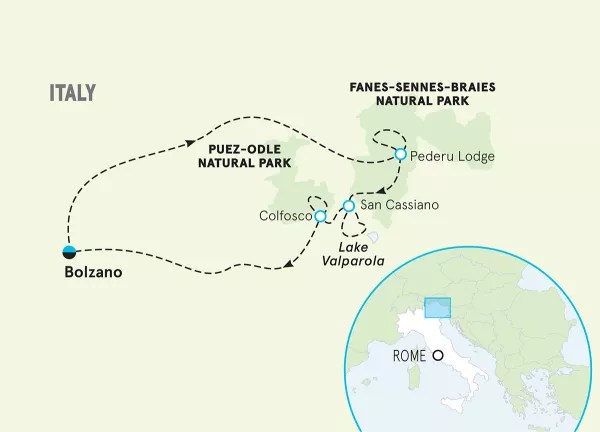
For our second day of hiking, our Backroads leaders had chosen the Sennes Loop, which would take us up 3000 feet in elevation. I had spied the road that would comprise the first part of our hike the night before, and I was already dreading the first part of the day. Still, I had breakfast to look forward to first, and breakfast on hiking days can be as indulgent as I want, right? Gotta have energy for the climb, I reasoned. So, after an Italian buffet breakfast of speck, cheese, fruit, and pastries accompanied by espresso, we were off. The road, which was unpaved and switchbacked its way up and over the valley, immediately became my Everest. It was steep. I am used to being the last one up a hill because I take medications that elevate my pulse rate, which means my heart often gets to racing more quickly in comparison with my fellow hikers. Steve was his usual gracious self, hanging with me each time I stopped and waited for my heart rate to drop again.

Although being the last person up used to make me feel bad about myself, I’ve learned to find the good in it. One of the best parts about being at the back of the pack on a trip like this one is you usually end up alone with a guide. Everywhere we travel, I find opportunities to have conversations, real, meaningful conversations, with people from the area we are visiting. The easiest way to do this is to take a tour and strike up conversations with the guide. On this day, we had Francesca and a naturalist named Lucia to walk with. Talking about southern Italian culture with Francesca, a native of Puglia, made my uphill battle less odious.

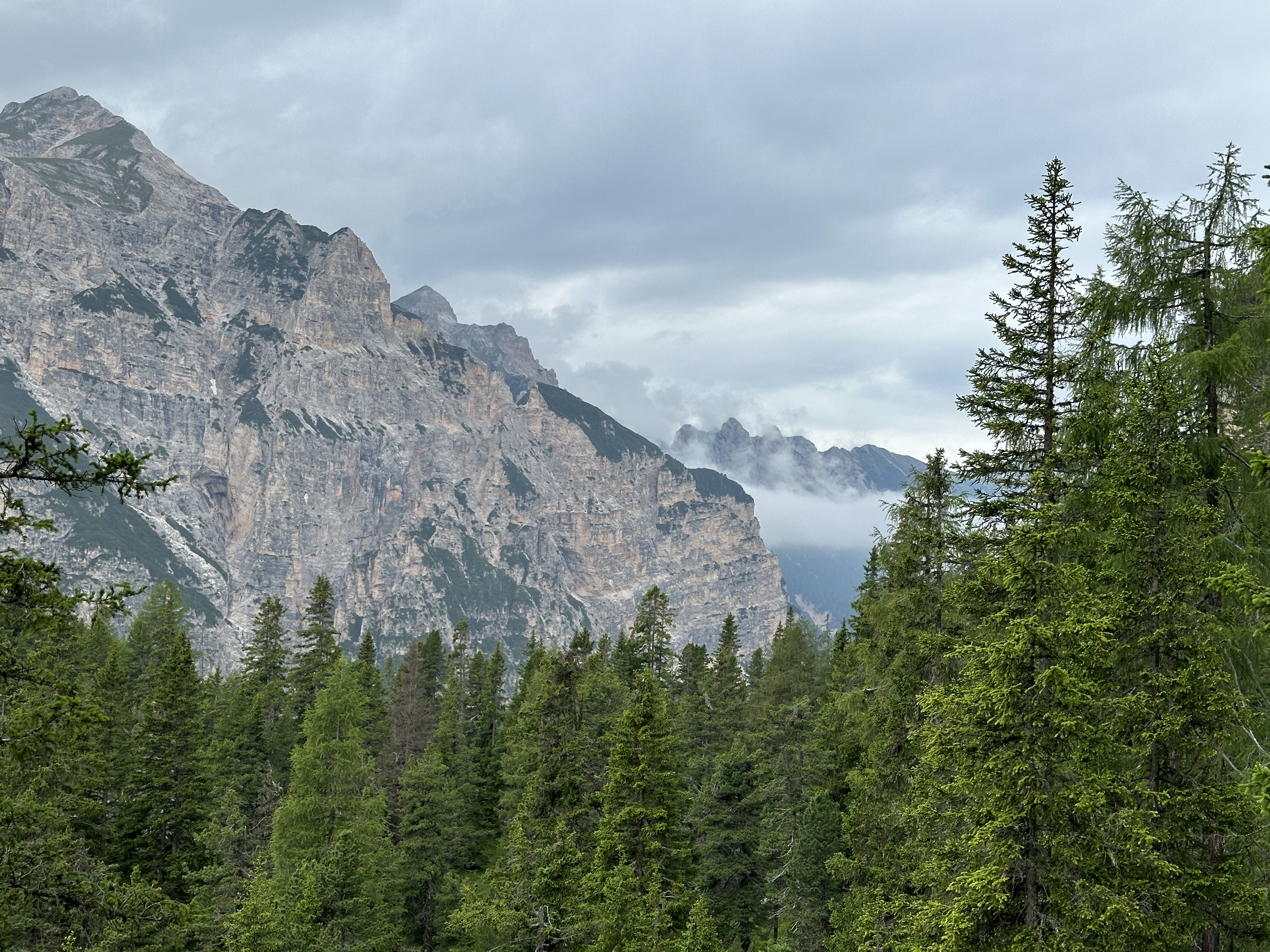
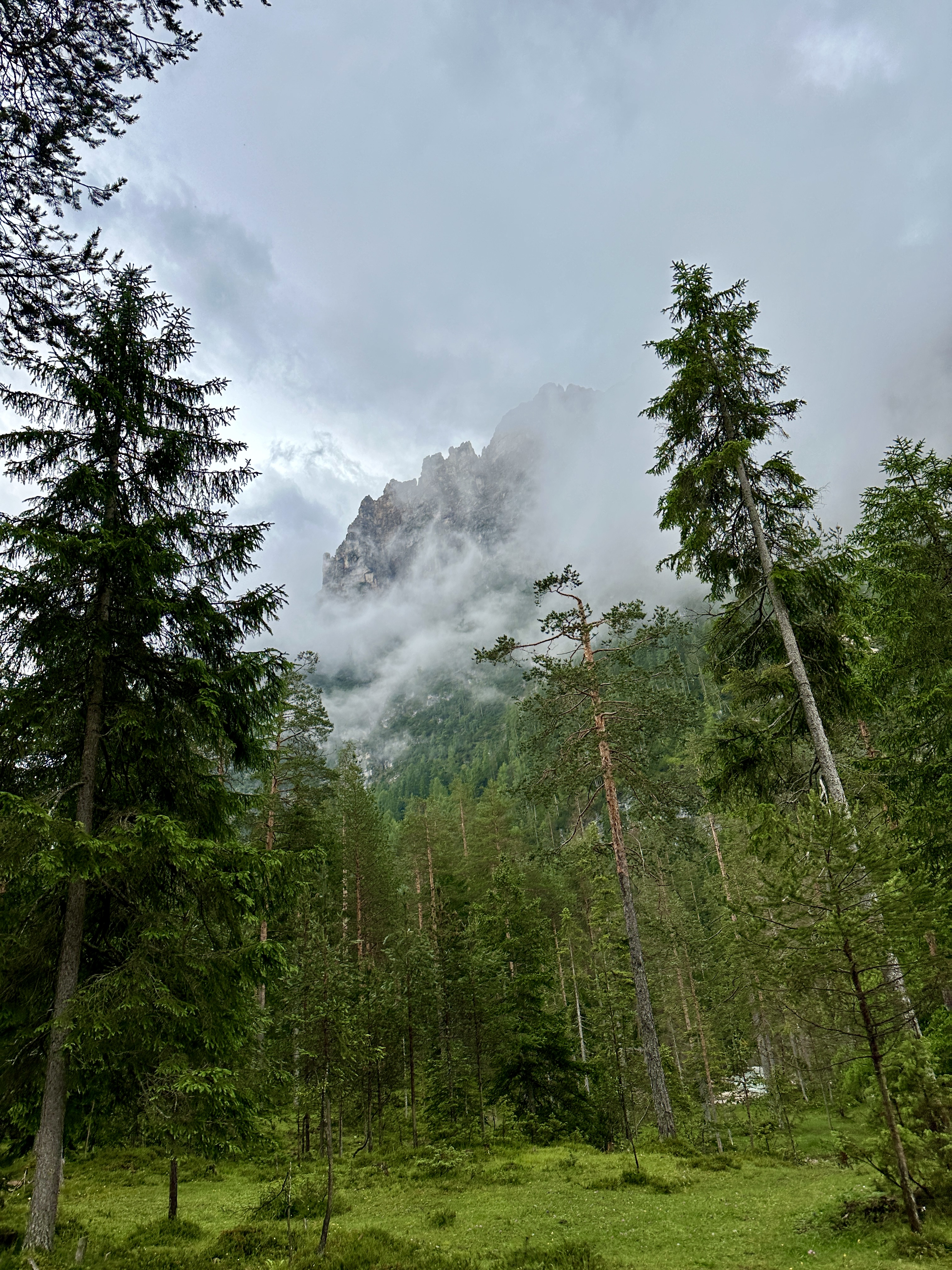
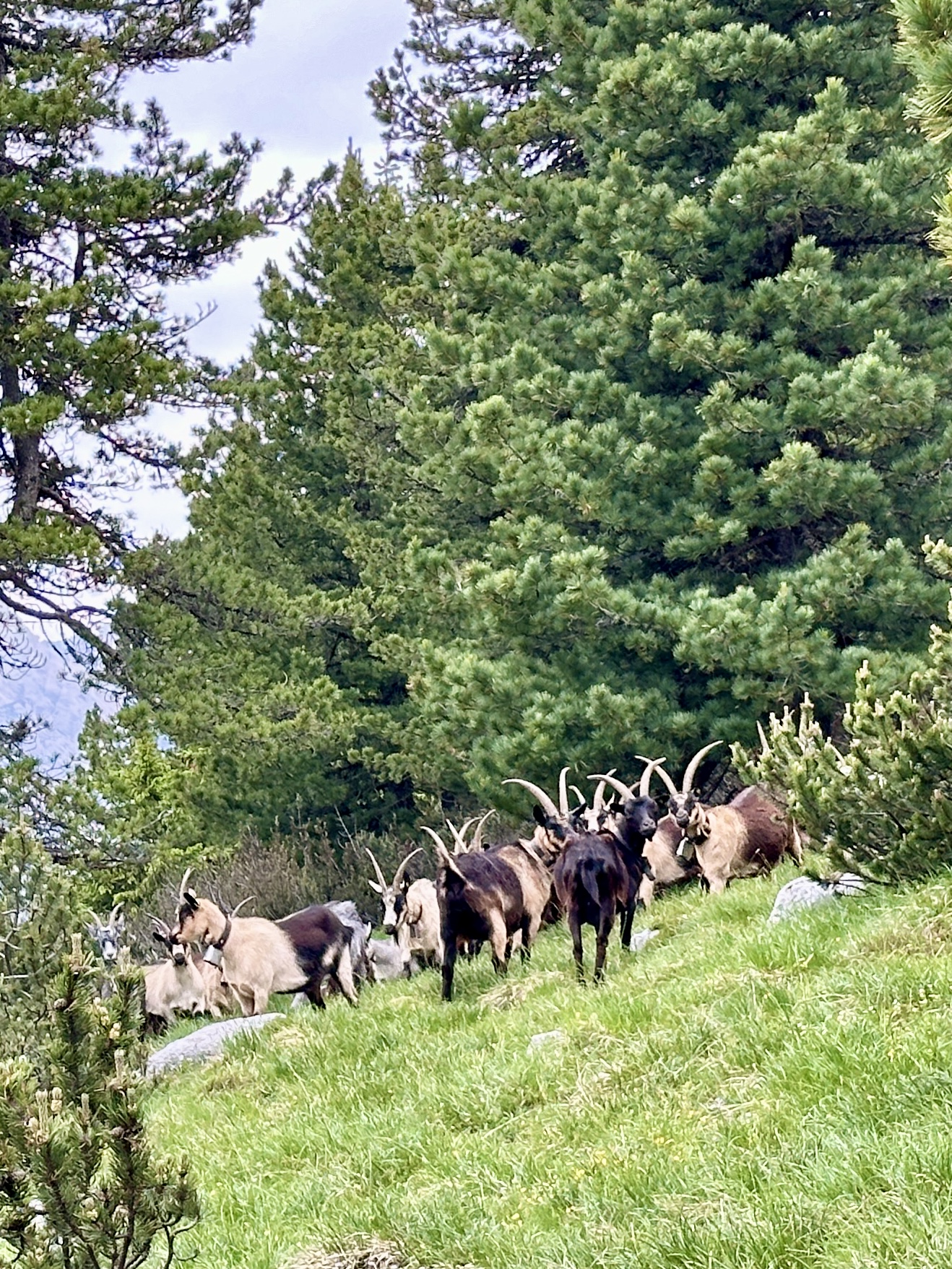
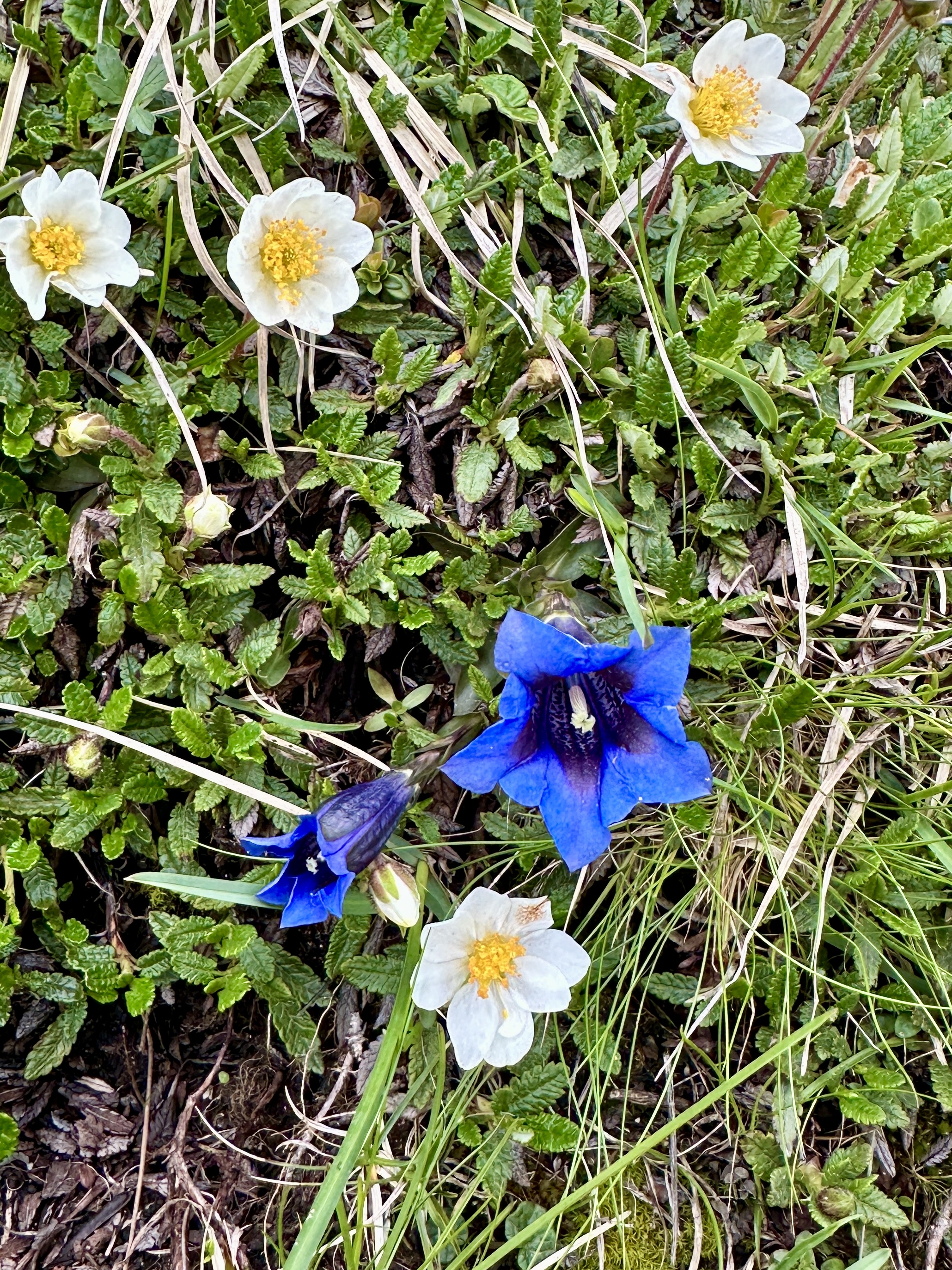
Once we got to the place where the road leveled off, we veered off onto a small path rather than continue along the road. We were taking the scenic route. It was cool and overcast, many of the peaks around us obscured by clouds. This pushed our focus to the green pastures and wildflowers. We walked along at a quicker pace now, trending upwards still and stopping to take photos as we went. We weren’t slowing anyone down, so why not enjoy? It wasn’t long before we heard bells ringing along the hillside. We were still below tree line, though, and I couldn’t see what was causing the racket. Then they appeared, a herd of goats with long, curved horns. They regarded us with some curiosity but no alarm, one following me up the path a bit before rejoining its amici on the grassy hill. I determined there is no hike more charming than one that includes animals wearing bells.
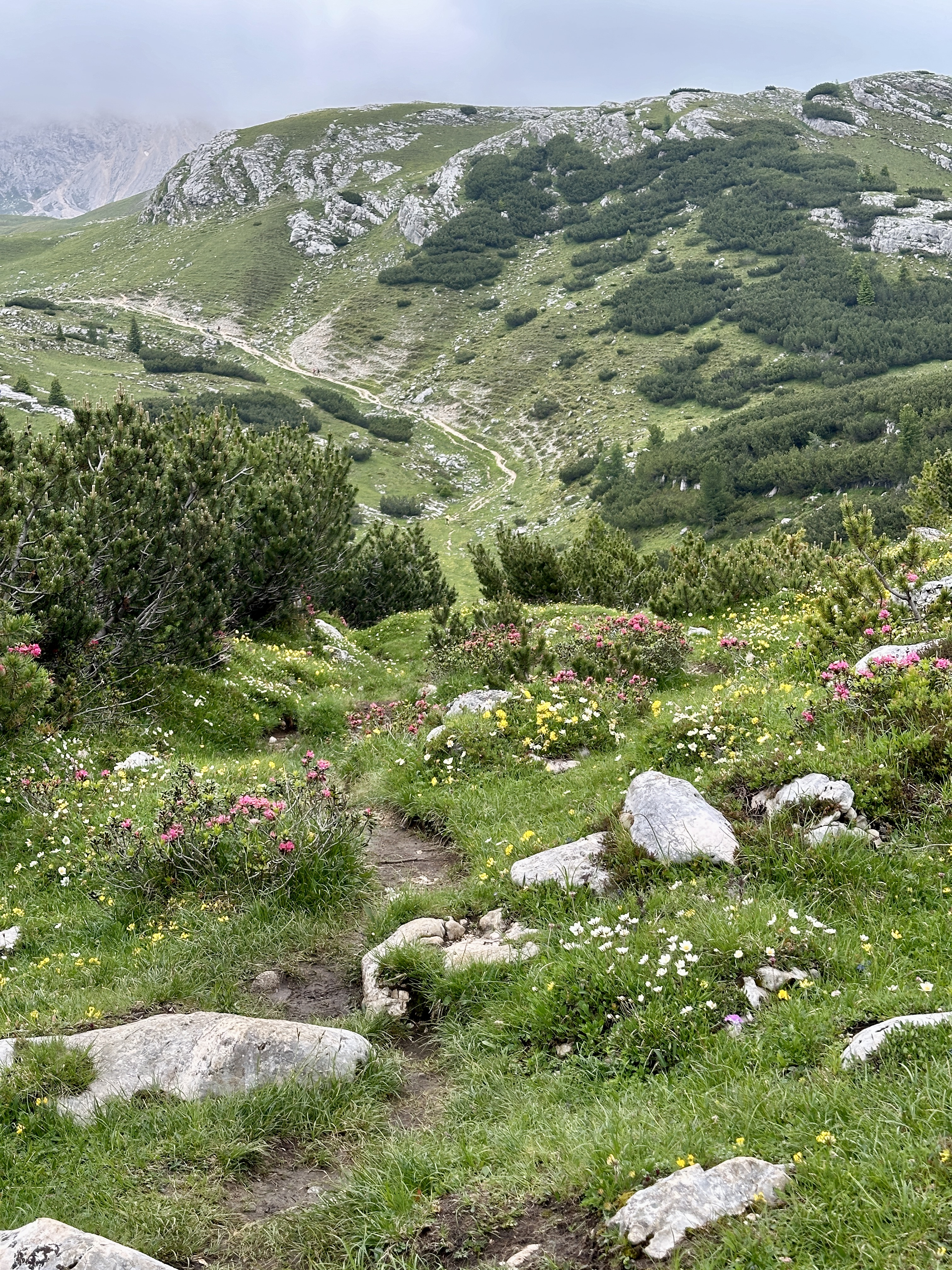
The path had become easier, and I was feeling confident about my chances of finishing this hike with zero problems. Then we came around a corner into a clearing and ahead of me I saw another damn hill. Yes. I knew I was in the Dolomites and there would inevitably be more hills. Francesca simply hadn’t warned me about this one which, in hindsight, was probably wiser. Ahead of us on the path, I could see some small dots, the rest of our group steadily making their way. This would be our last uphill I was told, and at the terminus of this section we would arrive at the Sennes hut where we would stop for lunch. I was all about lunch by this point, so I decided to attack that hill rather than saunter.
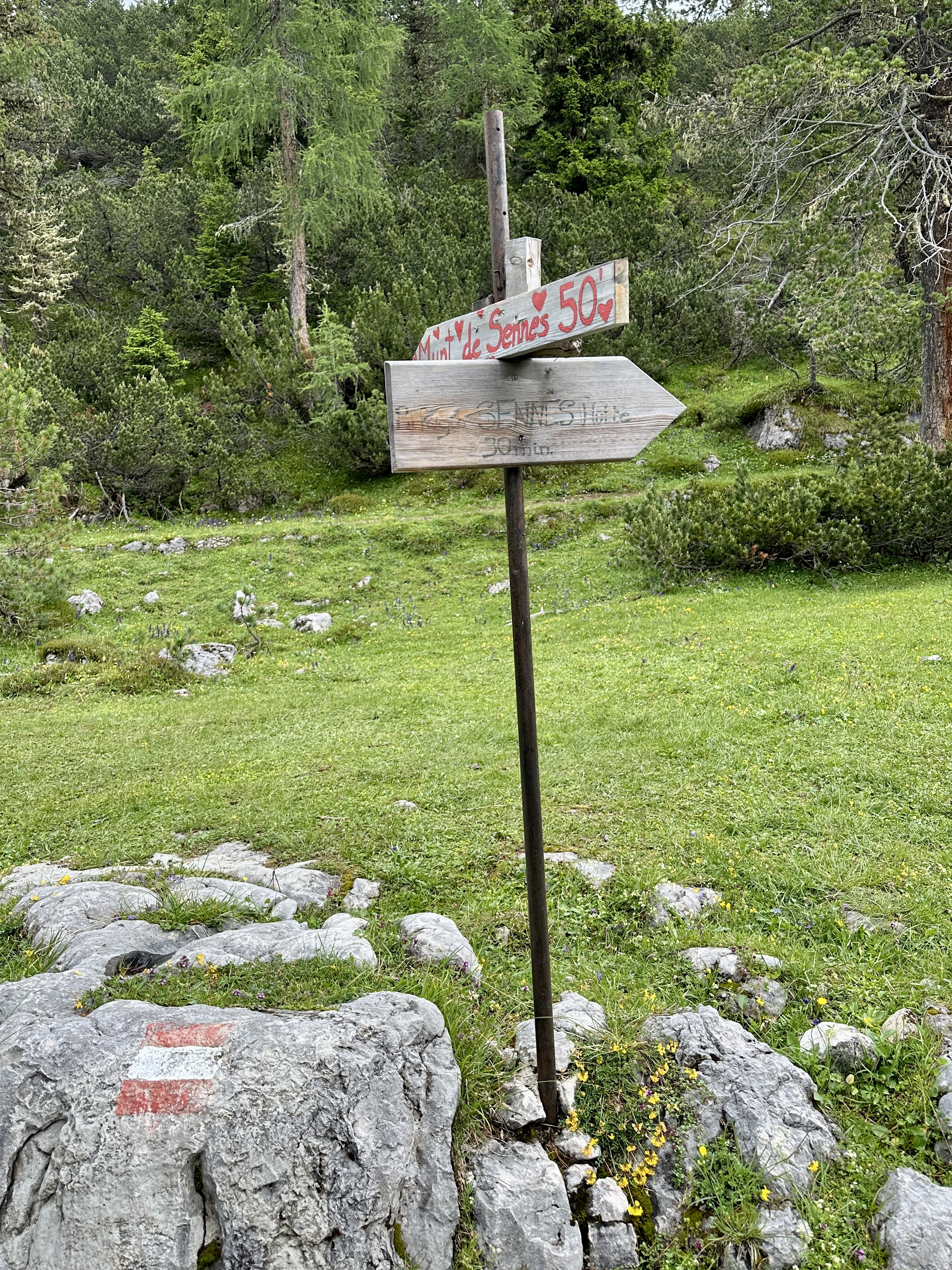
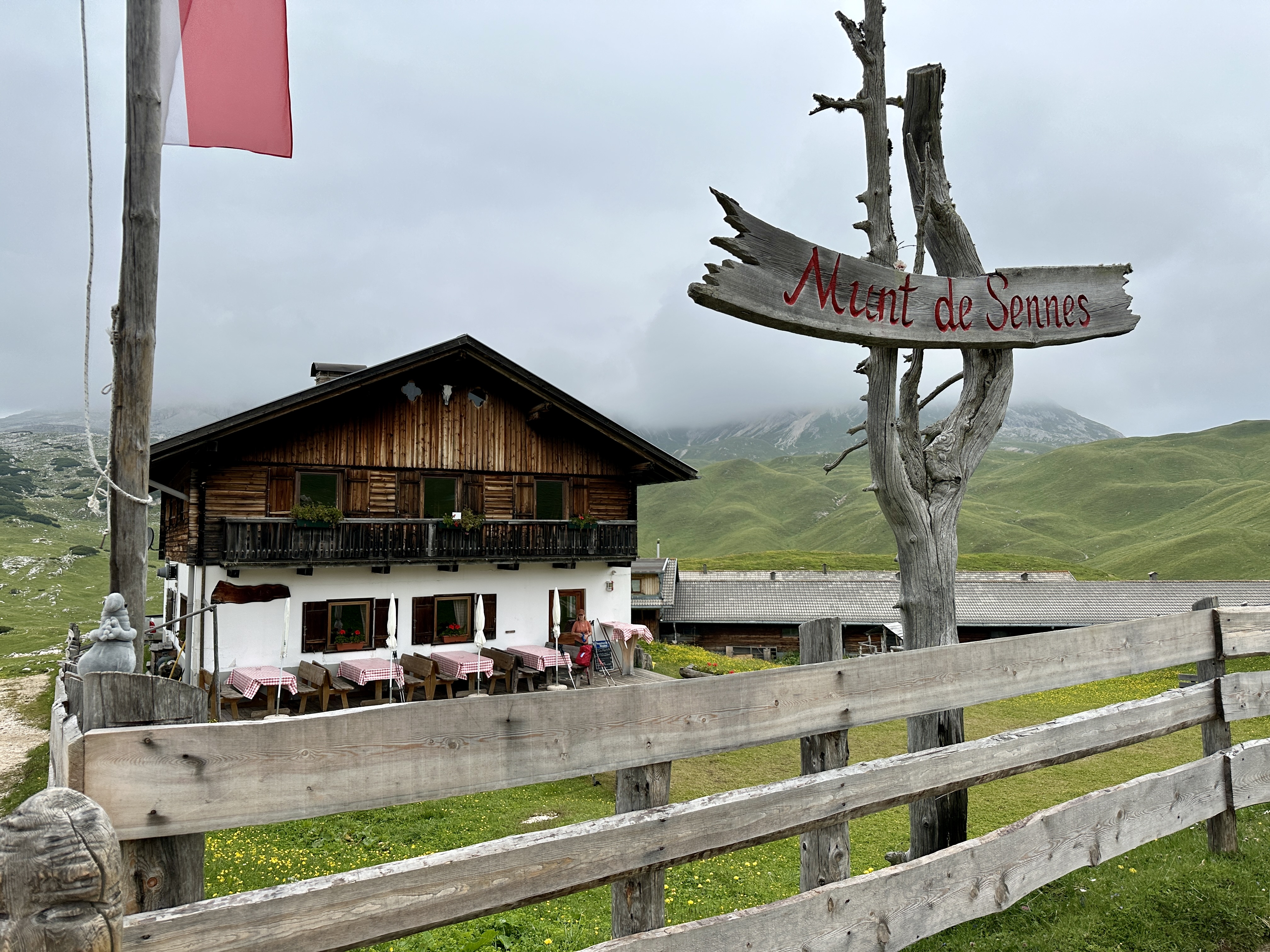
Near the top of the climb, Rifugio Munt de Sennes appeared around a corner. Hearty South Tyrolean fare loomed ahead, and I could not wait. Would it be another fabulous lunch feast with choices like beef goulash on polenta and fresh pasta with just-picked chanterelle mushrooms? Of course. We finished our meal with more strudel because vacation. I reflected for a moment about how hospitality is Italy’s gift to the world. I mean, here we were, hiking at 8000 feet, and continually happening upon establishments with comfortable rooms to rent, excellent dining options, and clean bathrooms with flushing toilets, in mountainous areas unreachable by car for part of the year due to snowpack. Damn, Italy. La bella vita, indeed.
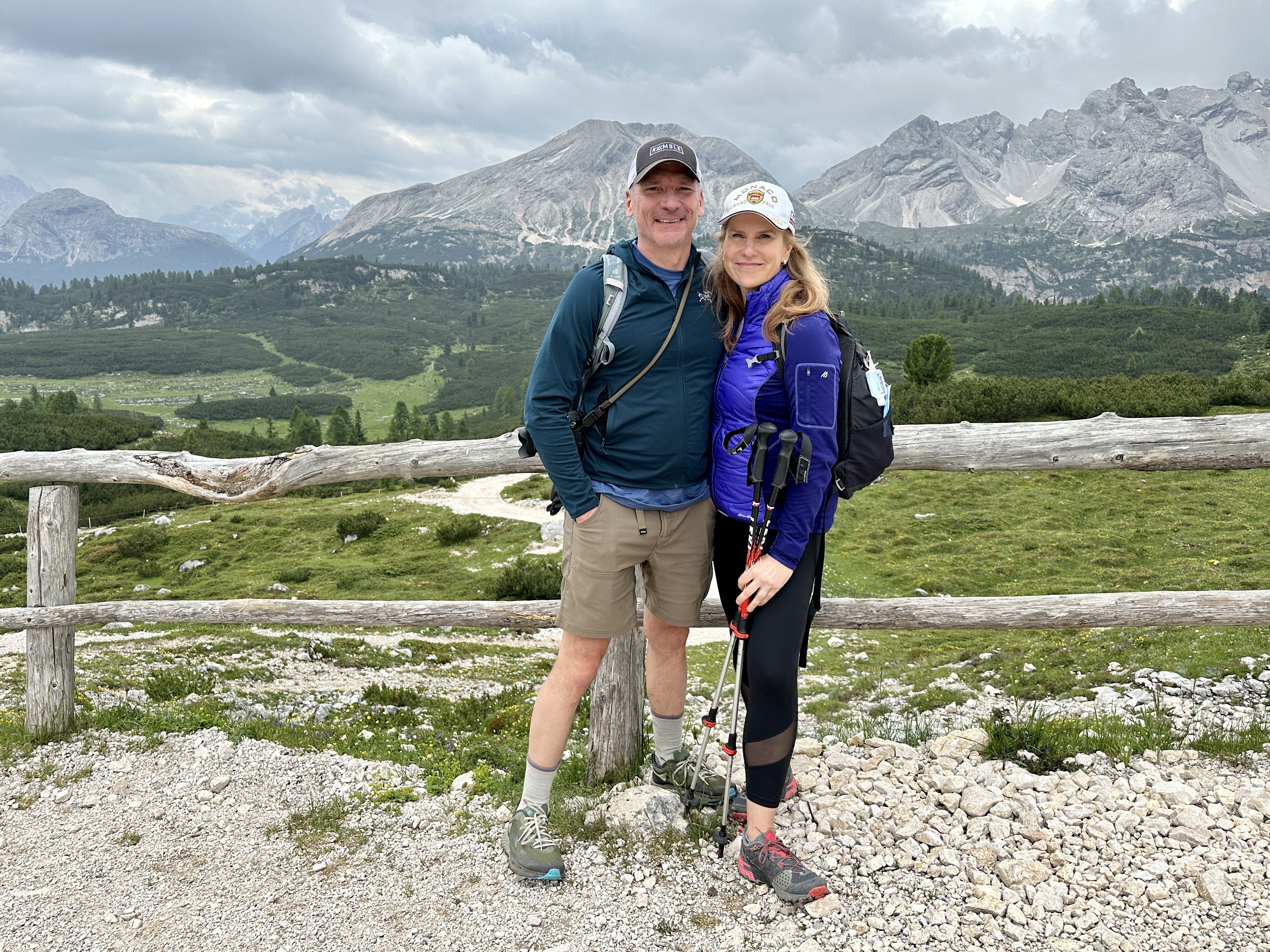
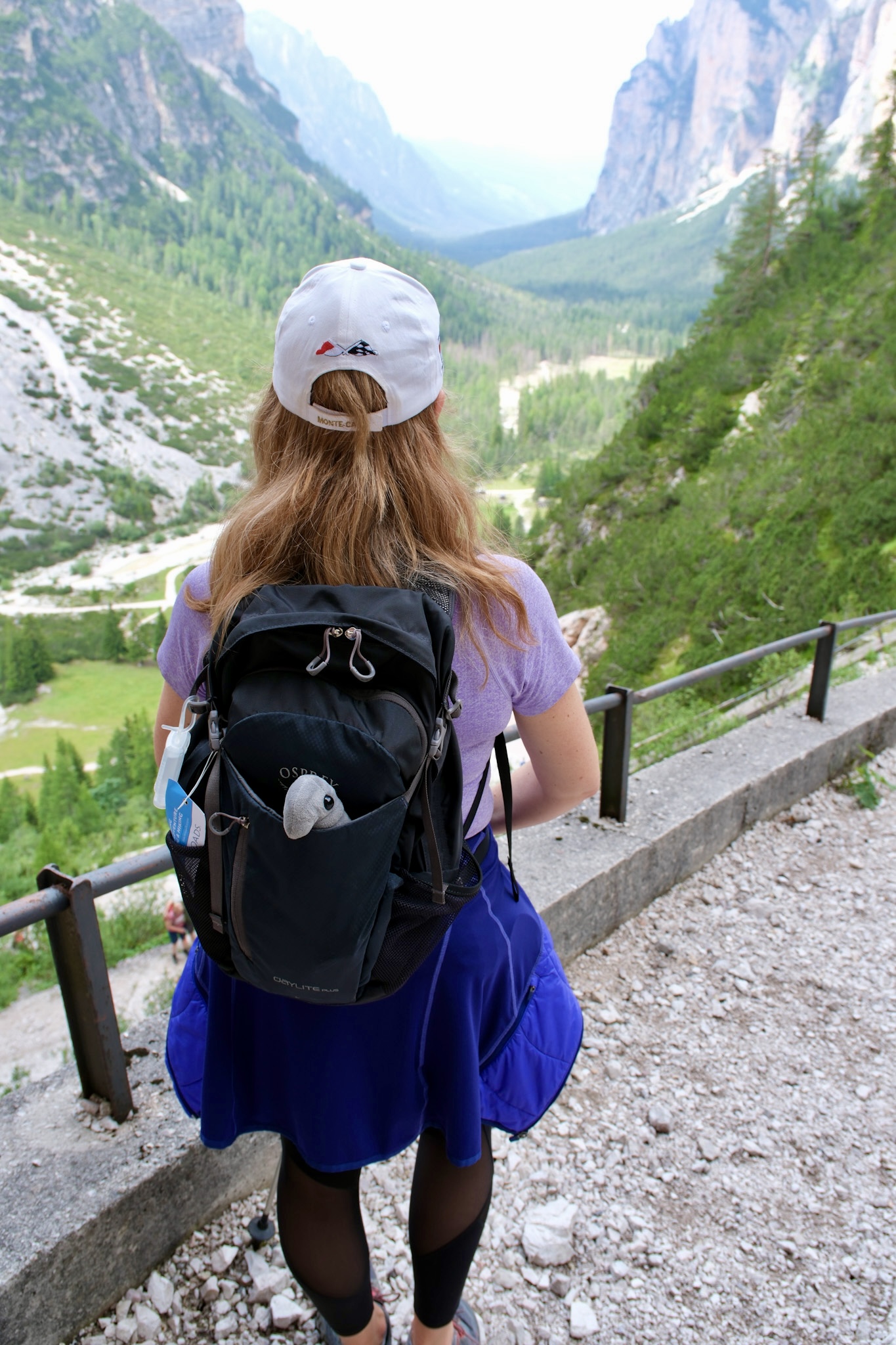
We left the hut and crested the hill just beyond it and were treated to a panoramic mountain view before we hit the descent to our overnight lodging. Lucia was with us for the afternoon, and she informed us about the political climate in Italy under far-right Prime Minister Meloni. She talked about peaceful student protests that had turned violent earlier in the year due to brutal police crackdowns on demonstrations. Lucia remarked it seemed eerily familiar to what she had learned about life under Mussolini. We discussed our mutual concerns regarding the slow but steady erosions of personal freedoms in our countries and what could be done to stem the creep of authoritarianism. It was a deep conversation for a serene day in the Dolomites, but it made the last few miles as much about education and global understanding as about exercise and nature.
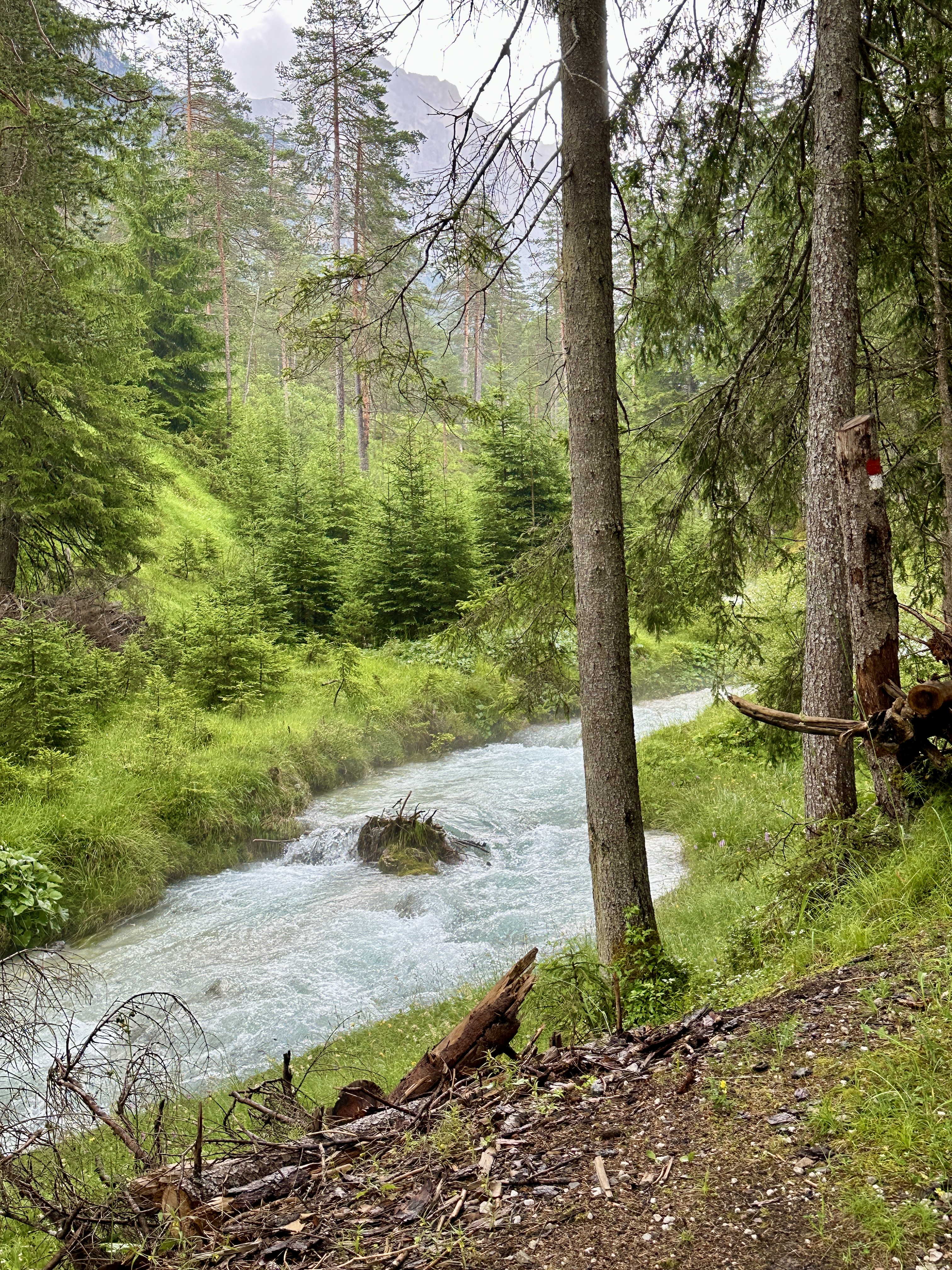
When we finally reached our lodge, Petra told us we should soak our feet in the icy stream that ran in front of the hut. She said it was “medicine,” which would help us recover more quickly for the next day. So we dropped our packs in our room, donned flip flops, and padded our way to the stream. Certain my feet would thank me later, I braved the frigid water. I’m no stranger to just how cold a mountain stream can be, yet I was still surprised at how quickly I had to pull my feet out of that water and onto the dry gravel to regain feeling in my toes. Steve and I spent about 5 minutes there, making bets about who could hold their feet in the water the longest. Steve won. Those five minutes turned out to be about as difficult as my climb had been that morning,. They were also just as beneficial. I felt refreshed.
With our hiking chores done for the day, we went up to shower. Wine o’clock was calling, and we didn’t want to be late. The rifugio offered house wine on tap that was a meager €2.5 per generous glass. It would be a crime not to support this local business family by having a glass or two of house merlot before dinner, and then maybe another glass or two with dinner. Steve and I strive to be goodwill ambassadors for the U.S. while we are abroad. It’s a responsibility we take quite seriously.

Hiking In The Dolomites: Day 1

“Only where you have walked on foot have you really been.” ~Reinhold Messner

We’ve known for years that we wanted to visit Italy’s Dolomites. We’ve also known for years that we wanted to take an active trip with Backroads. Backroads, founded in 1979 and based in California, will conduct over 4500 guided trips in 2024, allowing travelers to cycle, hike, and kayak their way through stunning locales worldwide. The trips are not inexpensive, so we’d been dreaming of this for about a decade. When we learned our sons planned to stay in their college town in Washington for the summer, we realized we could use our usual 4-person trip budget on just the two of us and decided to splurge and turn our dream into a reality. With the destination chosen (we can’t seem to get sick of Italy), the next decision was whether we wanted to cycle or hike our way through the Dolomites. We settled on hiking and chose to do a “hut-to-hut” trip where we would traverse from valley to valley, up over mountain passes, getting a close-up, personal experience of nature rather than a whiz-by-on-a-bike experience of it. We made the right choice.

On this first morning, we met in the lobby of our designated hotel in our departure city, Bolzano/Bolzen, in South Tyrol, Italy, to begin our exploration of the northwest area of the Dolomites. The Dolomites have contained a blend of Italian and German cultures since the end of WWI when the area once held by Austria-Hungary was ceded to Italy. In Bolzano, approximately half the population speaks German as their native tongue, while the other half speaks Italian. Truth is, though, most people in the area speak both. Here you will find schnitzel, dumplings, and strudel on the menu aside polenta, risotto, and tiramisu. Best of both worlds, really. Our guides, an Italian, Francesca, and a Slovenian, Petra, gathered up the 15 of us, gave us a brief description of the day, and loaded us onto a bus that would drop us at our hiking trail. As we headed north out of Bolzano into the foothills of the Dolomites, the landscape began to change dramatically. The canyon walls got closer, the vegetation became more lush, and we encountered some light rain. We were dropped at the entrance to Fannes-Braies-Sennes, the Dolomites’ gorgeous nature park, a UNESCO World Heritage area. Backroads schleps your bags between lodgings, so we donned our rain jackets and small daypacks and began our adventure. We would hike 7 miles to our lodging, stopping for lunch midway.

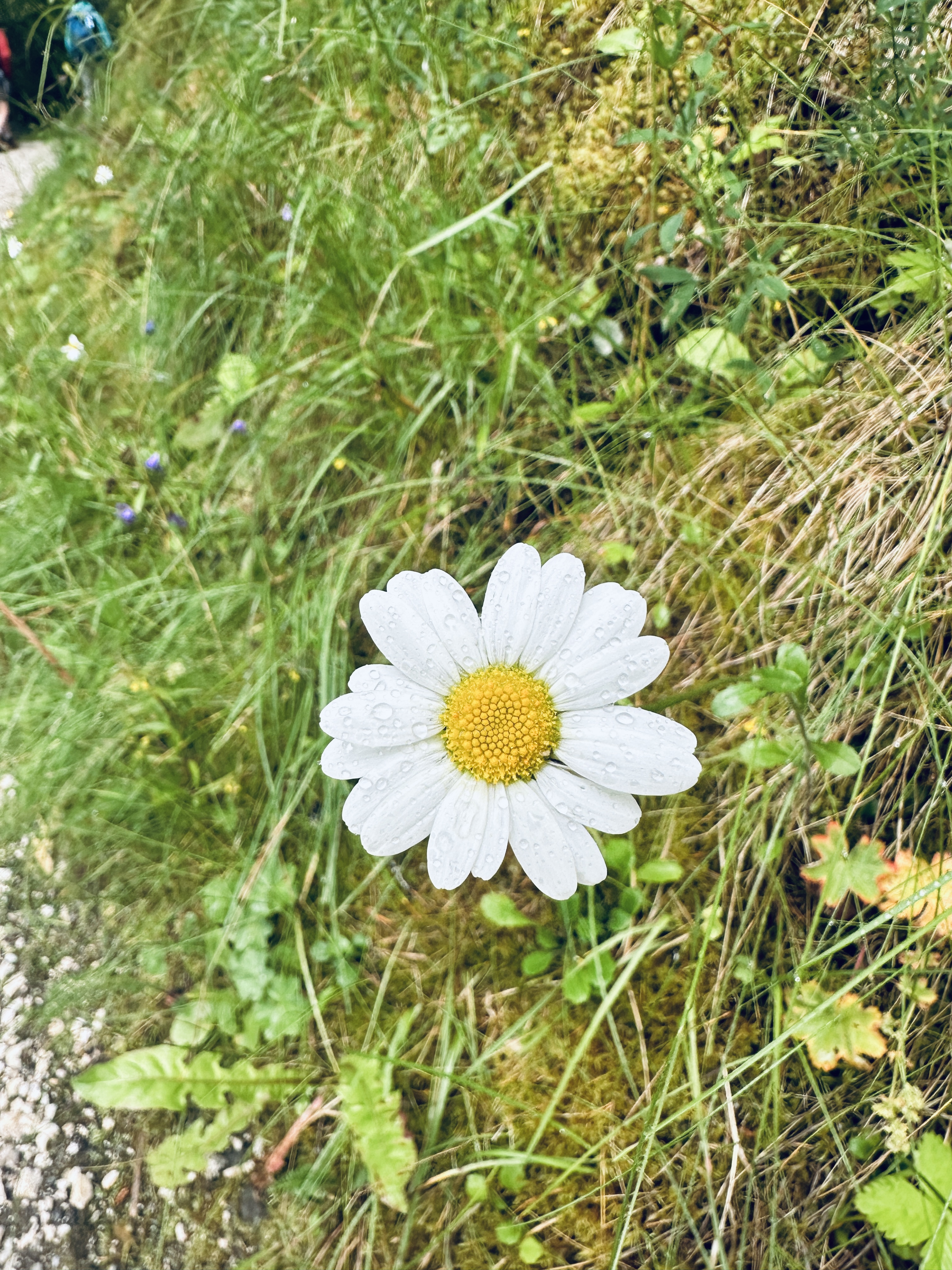
The rain fell lightly and we watched our footing, traversing cautiously over slippery tree roots and damp terrain. Wildflowers brightened the hike. We struck up easy conversations with our fellow travelers who hailed from across the U.S., from Washington to Vermont, Maine to Florida. We were hiking near a stream, under a canopy of tall pines, and the hike appeared to us like one we might do in our Colorado Rockies back home. The rain eased on and off repeatedly as we walked along. Soon we found ourselves at our lunch spot, set up outside a charming inn nestled in a cozy valley.

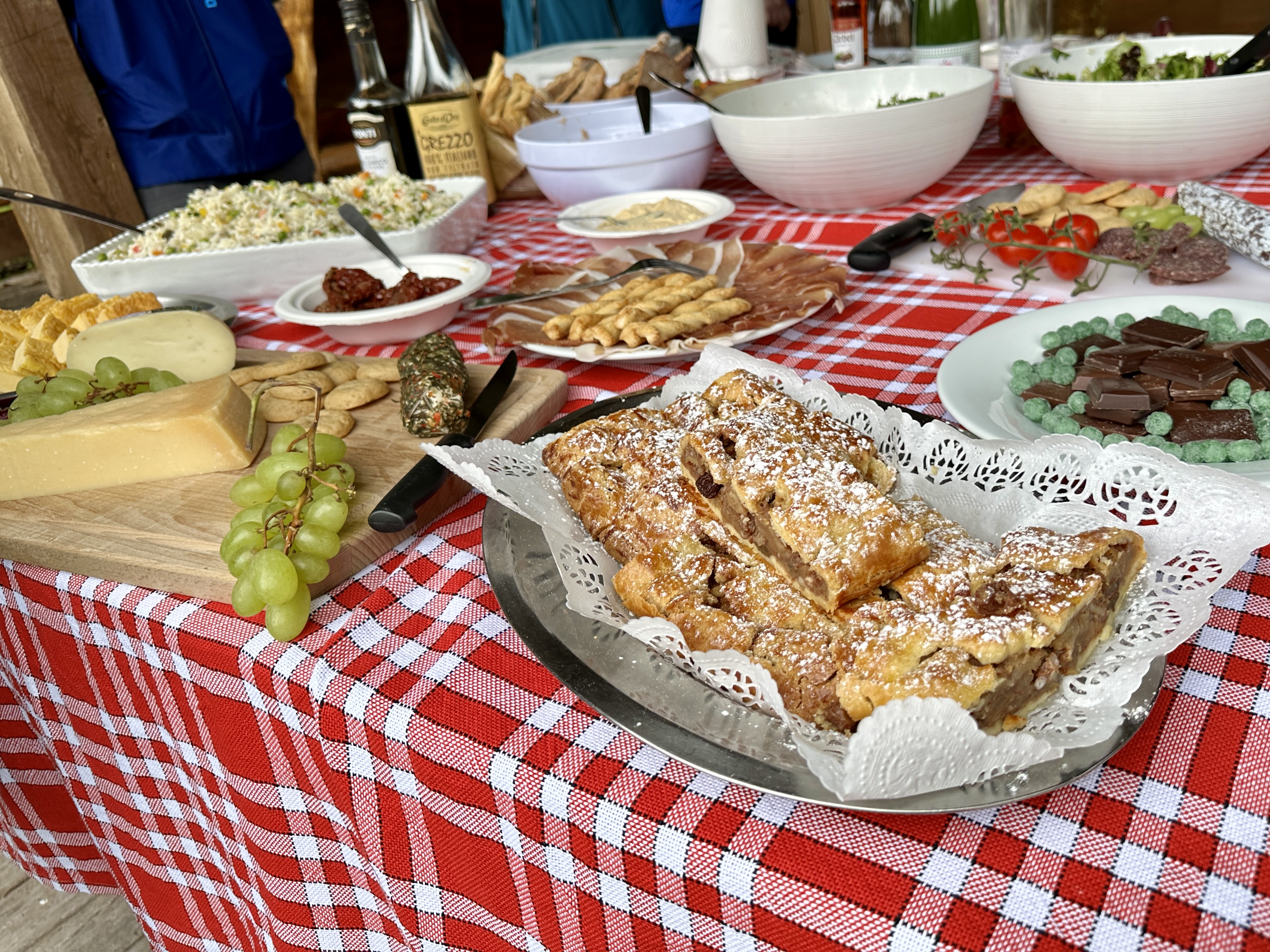
This was the first moment we experienced firsthand what Backroads does best. They spoil you. Waiting for us next to a small lake at the back of the inn was an elaborate picnic lunch set on two sheltered tables. The table was loaded with foods: sausage slices, cheese wedges, a variety of salads and breads, fresh fruit, and strudel. Petra told us it was our first strudel, not our last, and jokingly called our trip a strudel-to-strudel hike. Turns out she wasn’t kidding. So. Much. Strudel. While we ate, our guides shared with us a bit of information about the hearty Ladin people who live and work in the Dolomites and whose ancestors have resided there for thousands of years. Now a population of only about 30k, the Ladin people still employ their own, unique language and work to retain their cultural traditions and population by marrying within their community. These hardworking people maintain the land and the ski lifts and inns that dot the Dolomites. Their hospitality is gracious and efficient. Food is definitely their love language.

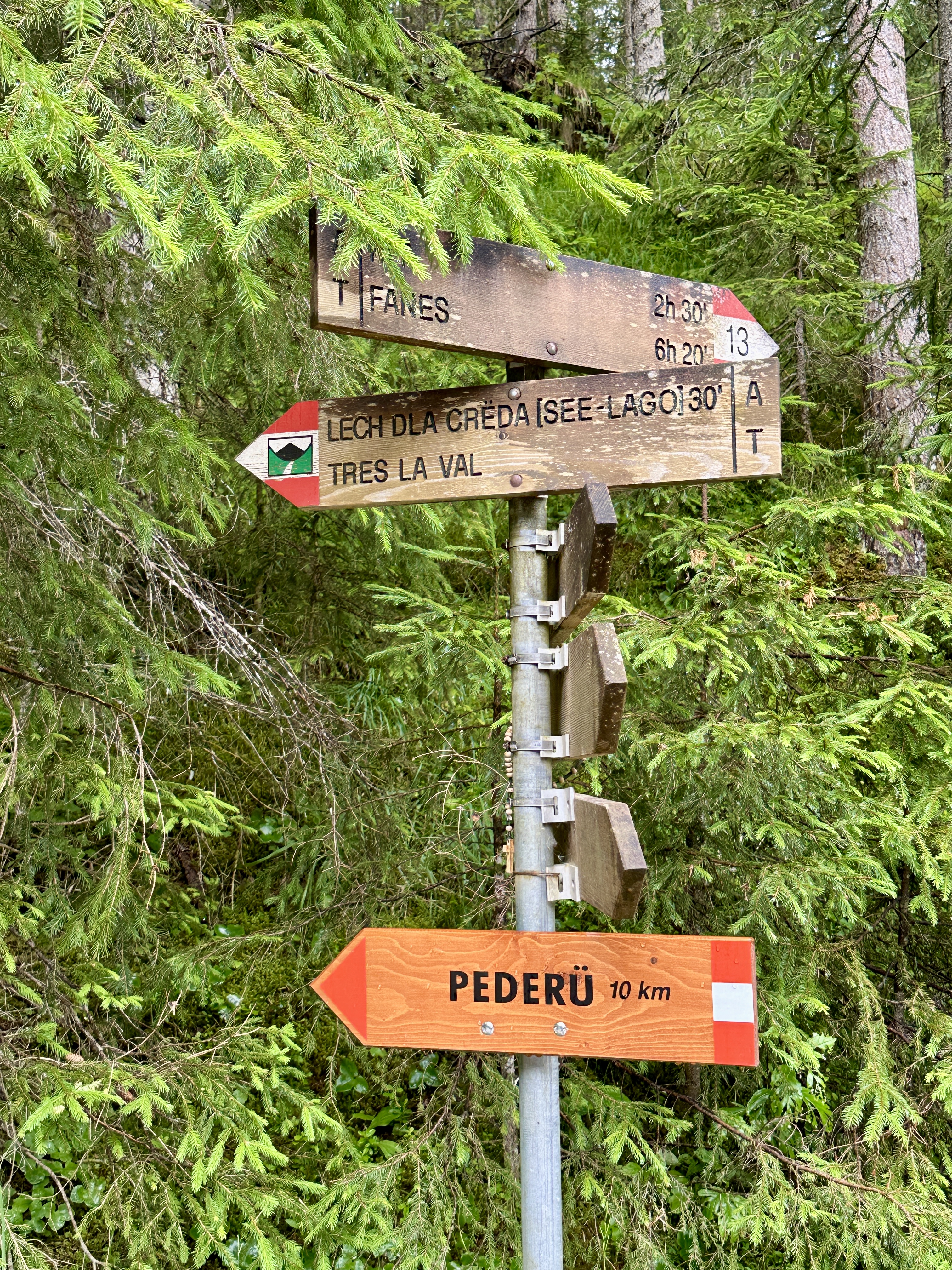
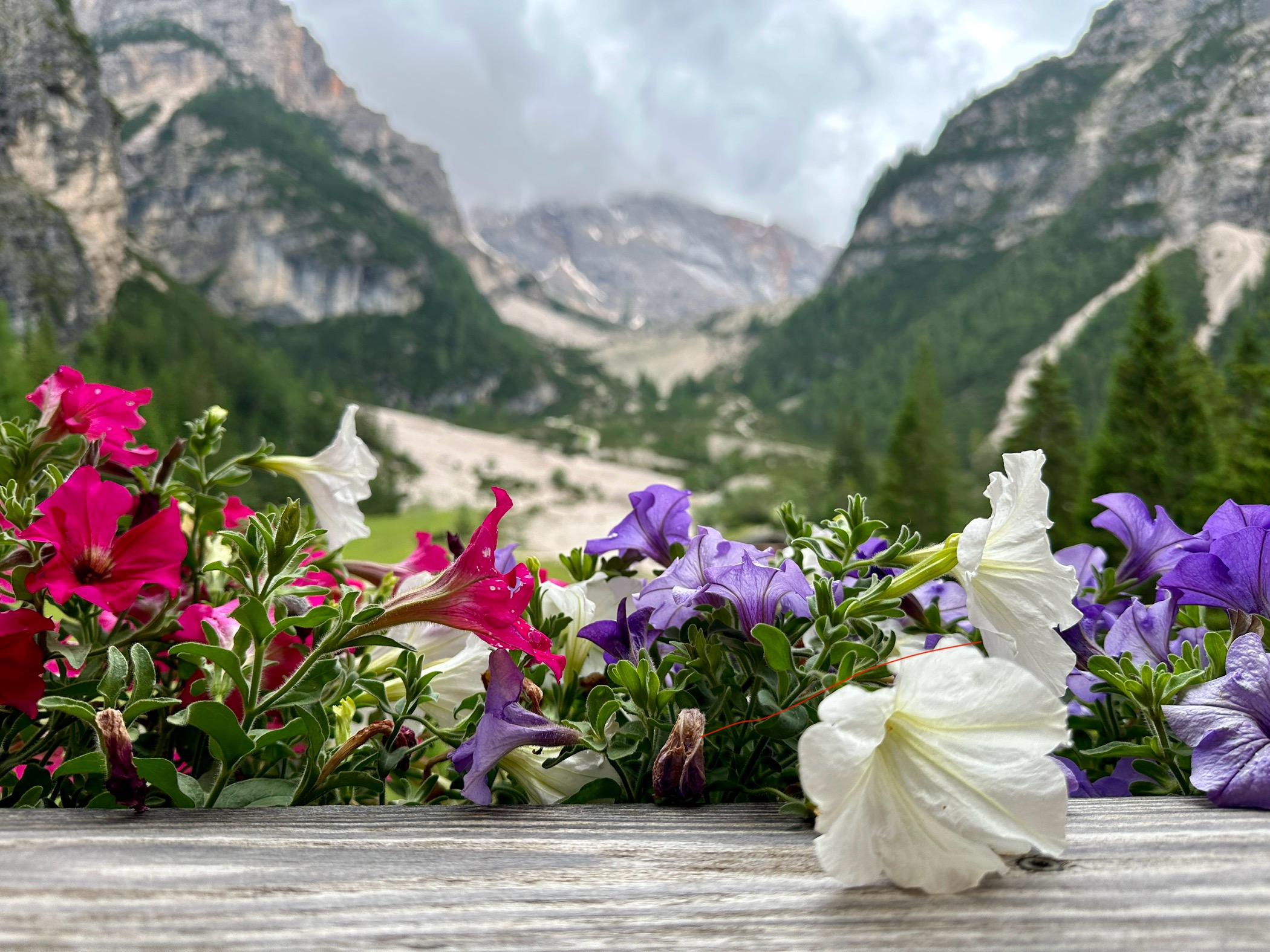
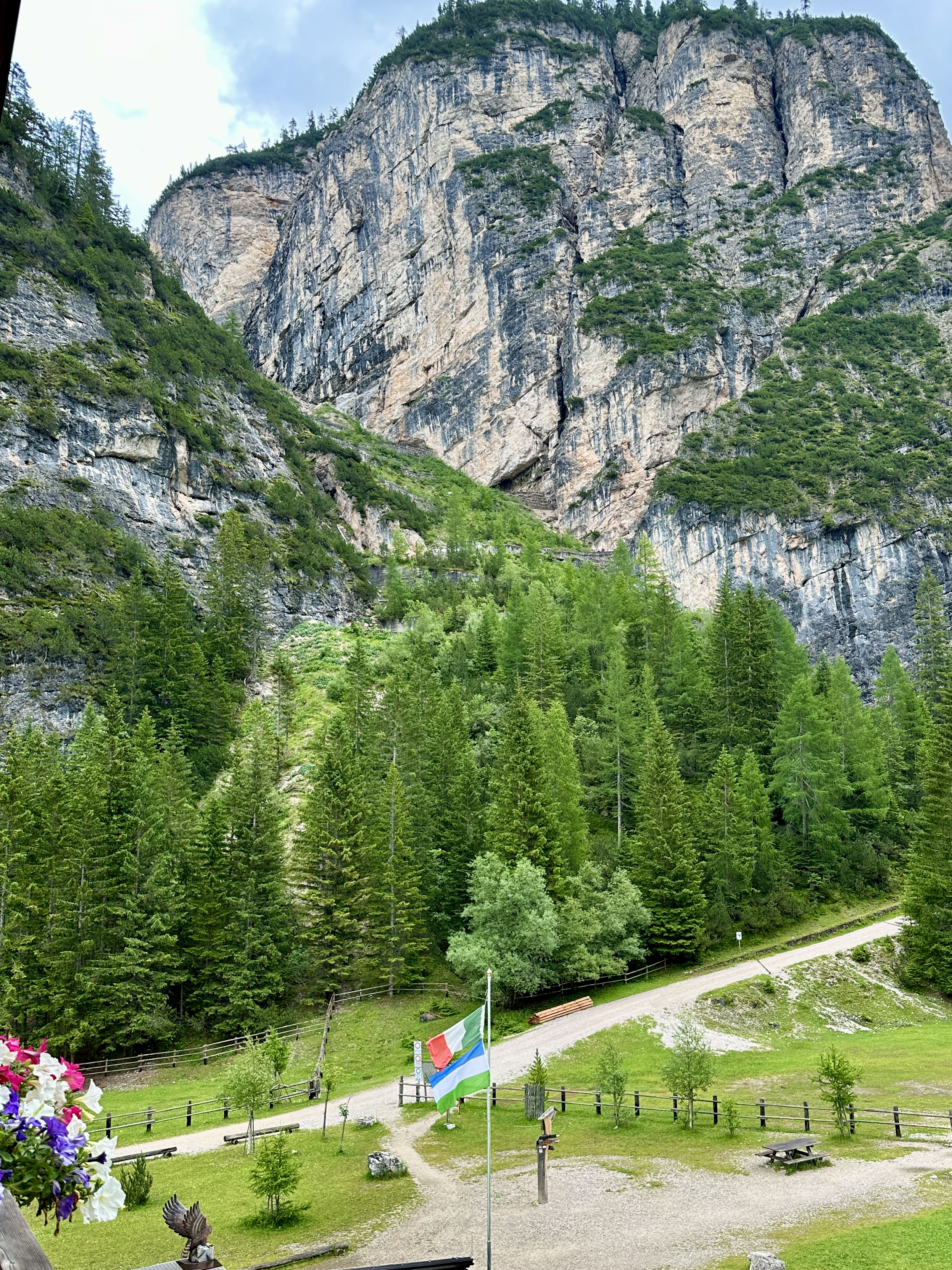
After we had polished off most of what had been presented, we picked up our hiking poles and set out again in the rain towards the Rifugio Pederü, our lodging for the next two nights. We were walking uphill, but it was a gradual climb and a perfect way to warm us up for the hiking that would follow the next two days. I was fully unprepared for the setting where we landed. The rifugio (Italian for “shelter”) was set at the back of a box canyon, which immediately made me a bit leery about how difficult our next hike might be. The only way out was up, way up. We settled into our room on the top floor (stairs are good practice for the climbing, right?) and opened the shutters to the most picturesque view from our balcony. We’d been told our lodging would become increasingly more impressive, but I was struggling to imagine how.

These “shelters” are rustic on the outside but well-equipped on the inside, so we helped ourselves to long, hot showers and headed down to dinner in the restaurant where we were treated to a welcome champagne cocktail and a menu as heavy as the one in a Cheesecake Factory. I’d recovered from my huge lunch on the hike and was so hungry by then I didn’t even bother to take a photo of my meal. Come to think of it, I didn’t return from our trip with many food photos at all. So at each meal I must have been too weak from hunger to lift my phone or too eager to wait. One thing about a Backroads adventure, there will be no lack of food or opportunity to earn it if that is your desire.

After dinner, we returned to our room and set out clothes for our early morning breakfast and departure. I’d spied our path out of the valley earlier in the evening and knew the next day was going to test me, so I checked off the accomplishment of Day One and mentally prepared myself for the challenge of the Day Two. So with the sun at last setting and the windows and drapes open, the fresh air of wild Italy filled our lungs and sent us off to sleep.

Cinque Terre: Our Stay In Manarola

Photos don’t do it justice

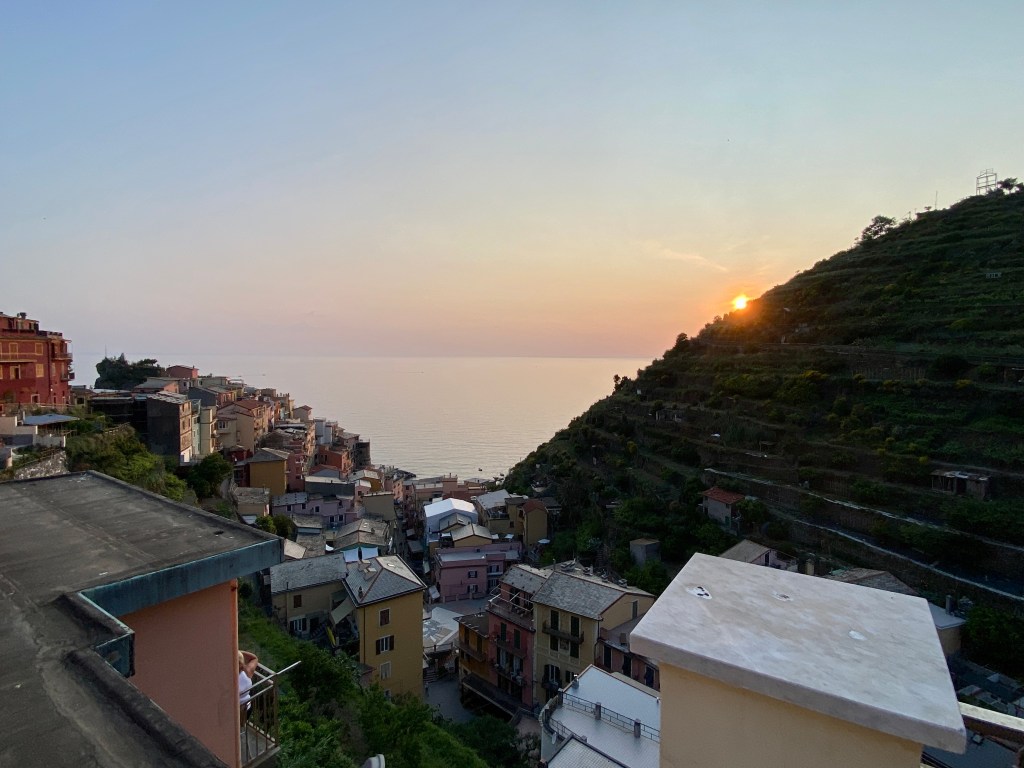
As if our once-in-a-lifetime trip to the Monaco Grand Prix had not been enough of a proper birthday celebration, we’d decided to follow it up by heading to the Cinque Terre. My sisters didn’t have a preference for which town we stayed in. After a lot of research on my end, I decided to go with Manarola as it was consistently listed as one of the most picturesque. I felt pretty comfortable about my choice after having eliminated the other four for various reasons: Corniglia (too small and not on the water), Monterosso al Mare and Riomaggiore (too big), and Vernazza (too packed with visitors). I absolutely made the correct choice. Manarola is big enough to have some wonderful restaurants and cute shops, but small enough to be peaceful at night. The size of our group necessitated reserving a large lodging. I chose one with a sizable terrazza with picture-perfect views down into town and on to the sea. At least that is what the Airbnb photos led me to believe.

We arrived late afternoon after a day spent on trains, which hugged the Mediterranean Riviera coastline offering either jaw-dropping views or no views at all (tunnels). The towns of the Cinque Terre are car-free, leaving only charming pedestrian streets to wander. They can more easily be accessed via regular ferry service and frequent trains. We landed on the platform in Manarola with nothing but mentally saved Google images creating expectations.

The town side of the tunnel

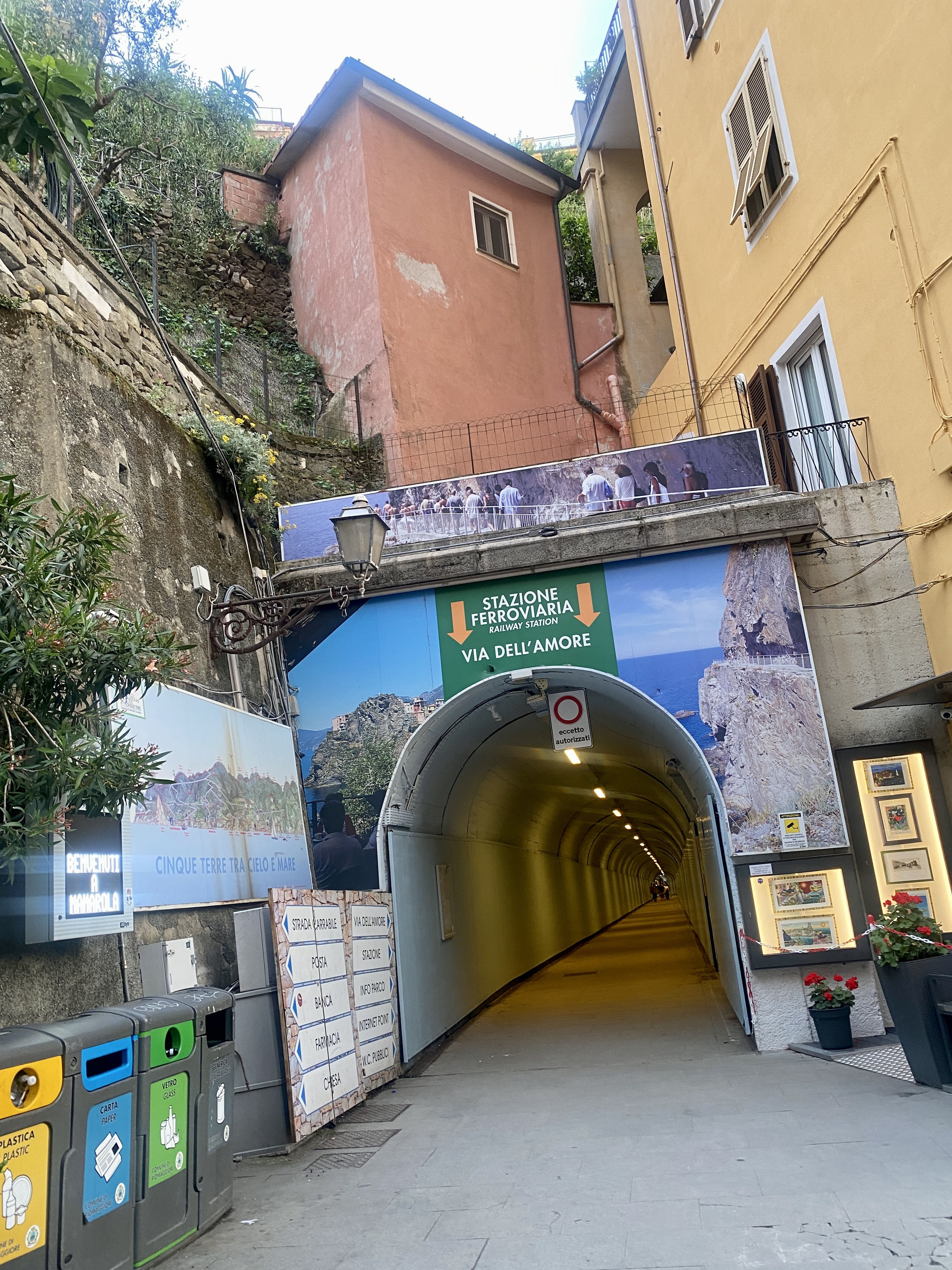
We followed the crowd of travelers from the full train down stairs and then up stairs on the other side of the platform. From there, it was a long tunnel walk to the vantage point on the other side where we were able at last to view Manarola. Much like my experience with Positano, it was love at first sight. The town is set in a narrow valley between two terraced hills and ascends precipitously from the sea, providing dining, shopping, lodging, and grocery options along the way. Part of the town exists to the left when you exit the pedestrian tunnel, closer to the sea, but the majority of the town rises beyond the tunnel on your right.

Part of the return to our place

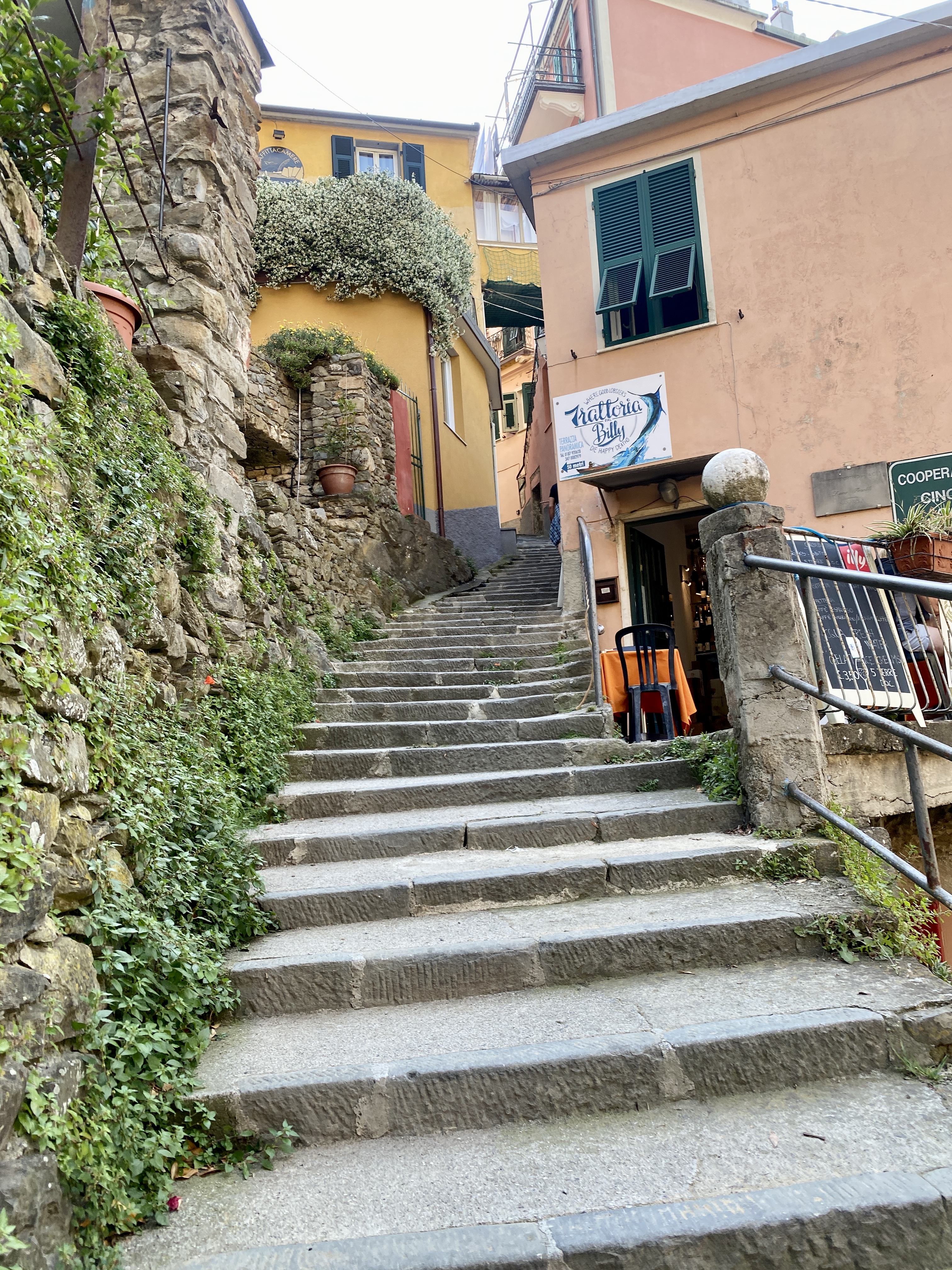
We met the rental staff for our lodging and began the climb with him to our temporary residence. If you want a view, you have to go high, right? To be honest, I knew the town would be uphill, but I really did underestimate exactly what that meant. To reach our rental, we climbed up the steep, well-paved street from the tunnel, which then rounded a sharp bend and continued up to the town church. Beyond the church, the road ended in a fork, one branch leading to the area where cars were parked behind a gate at the top of the town and the other branch heading up a stairway, wide at the bottom and narrow as you entered the pedestrian street. I never counted the number of steps, but I am certain it was at least 30. It was an insult-to-injury kind of situation.

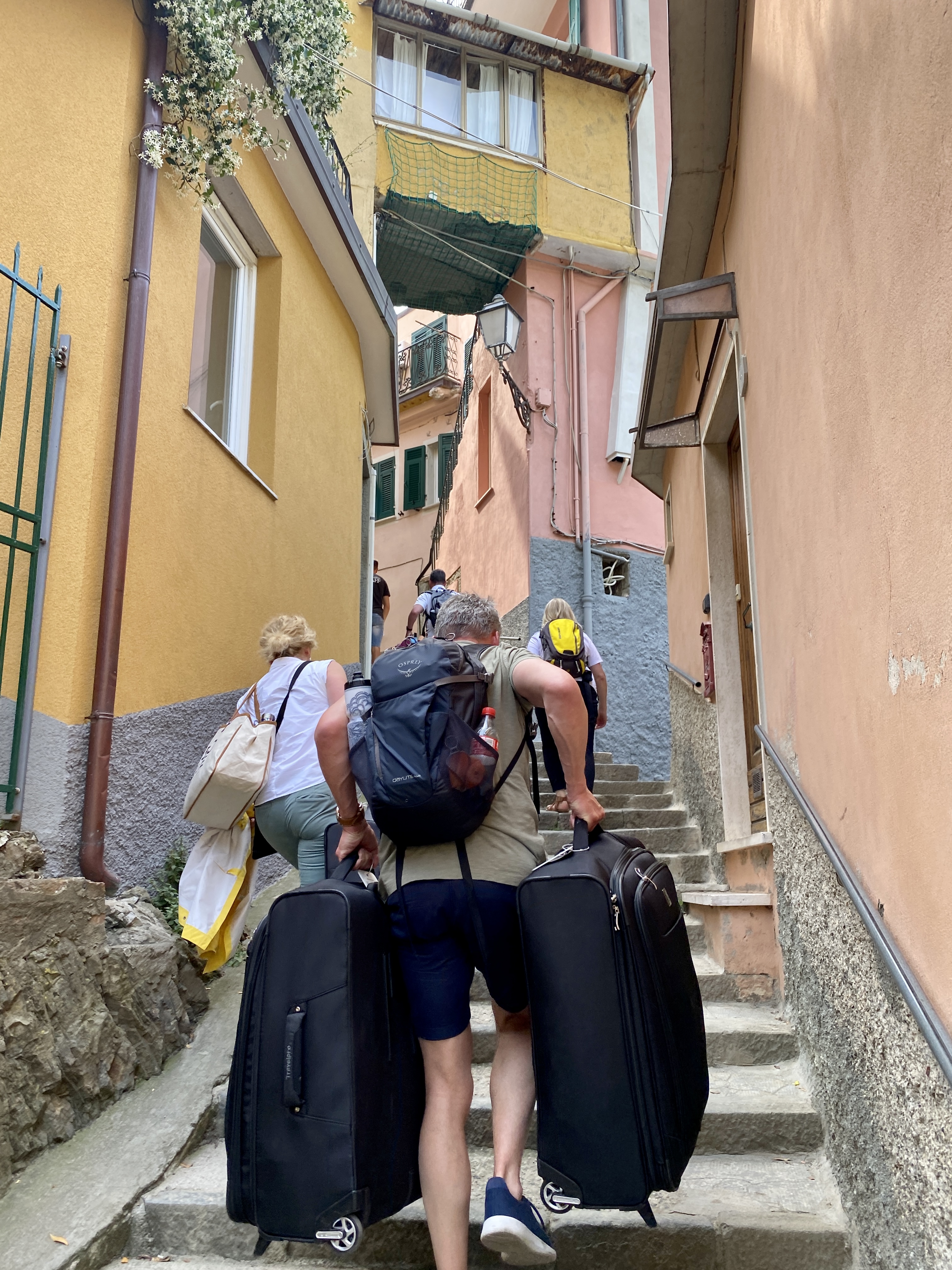
Sweet hubby carrying my bag too

We had been able to roll and pull our bags for the first part of the uphill journey, but the real muscle work hit when we had to slog 35-45 pound bags up those stairs. You may wonder if we wished we had packed smaller bags, and the answer is of course. Sadly, the trip we had arranged, a combination of F1 race, fancy dinners, and hiking in the Cinque Terre required bigger bags. I mean, you can’t exactly hike the Cinque Terre in a dress and heels, but you wouldn’t want to eat at a Michelin restaurant in Nice in shorts and hiking shoes. Still, we were grateful we were only going to have to traverse the stairs two times with bags during our visit and hoped the daily climbs to the apartment would become easier as the days rolled by.

Our guide led us to our door and showed us how to work the lock and handle. Doors in Europe don’t uniformly unlock and open the way ours do here in the US. With one door in Spain, we had to spin the key three times in the lock to get it to open. Here we had to turn the key and then put the handle in either a 45 degree angle up or a 45 degree angle down depending on if we were locking or unlocking the door. We were worn out from our Grand Prix weekend and our day of travel, so we nodded and said we understood it all and he left. We went in and checked out our digs. There were three bedrooms and three couples, so to keep it fair we drew numbers for the opportunity to choose from the rooms. From there, it was straight onto the terrazza we had fallen in love with through the rental listing. Would it prove as scenic as it had on the Internet? Definitely. I patted myself on the back for my find.

When we had settled into our new environs, we descended into town to get the lay of the land and to find a grocery store from which to purchase food and wine suitable for dinner on a warm, early summer day with a view. We happened upon a gelateria, of course, and some of us (the men) decided to have a pre-dinner snack. You can’t really blame them.

My sister made us pose for this

When in Italy, you gelato. Gelato consumption is compulsory before you are allowed to leave Italy. They have sensors at the airport that separate those who have eaten it from those who have not. Those who have skipped out are required to ingest some from an airport vendor before boarding their international flight. This is how they ensure you will return to Italy.

Next up was a stop near the harbor to take in the town from below. It was every bit as picturesque as I had been led to believe. A first Cinque Terre selfie was a must before heading back uphill to the store to choose ingredients for charcuterie and salad, you know, dining-on-the-patio food. I love shopping for groceries in Europe, be it at large open-air markets or small corner stores. Their choices are almost always more fresh and their packaged foods are prepared with better ingredients. So with fresh tomatoes, local cheese, basil, olives, crostini, pesto, salami, prosciutto, mortadella, a few bottles of red wine, and some limoncino in hand, we went home to enjoy the pleasant evening on the terrazza and wait for the sun to set on our introductory day in the Cinque Terre. Oh…and to drink too much and play Never Have I Ever and learn more about each other.

Shit Is About To Get Real — Can We Handle It?

This kid literally cannot

To protect my mental health these days, I keep most of my news consumption to online articles because when I watch television news and see the strength and resolve of the Ukrainian people as they undertake what may well be an in-vain attempt to salvage their nation, I often have to leave the room to cry. I just can’t. It’s too much. Coming off two years of a global health crisis that kept us indoors and away from the greater community that binds us, my coping strategies have reached their limit like an old, elastic band that has been sitting in a drawer for ages and now will break when stretched. Just when the light at the end of the tunnel came into view, an aging white autocrat in Russia decided to push his limits.

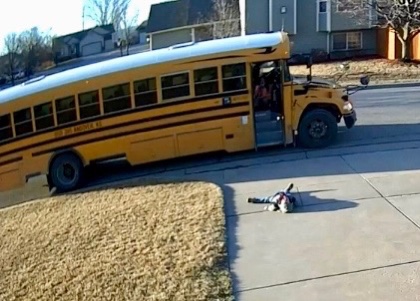
I saw a video today of a four year old who approached his waiting school bus, got within fifteen feet of its steps, bent over to put his mask on, and then fell backwards with dramatic flourish onto the concrete, as if the prospect of the school week was more than he was capable of handling at that moment. We are all that kid right now as we wonder how much more insanity, unrest, upheaval, heartbreak, hardship, and stress we can take both at home and around the world.

For almost 77 years, the world has known peace in Europe. That peace has existed my entire life and all but three years of my parents’ lives. While my parents had a solid concept of the horrors of war through their parents, I had only what I saw in films. Aside from the 1980s era nuclear holocaust fears I had courtesy of our Cold War with the Soviets and “The Day After” television movie that haunts me 38 years later, I have felt mostly safe in our geographically isolated American bubble. That ended the other day when Putin’s army invaded a sovereign Ukraine, and then shit got real when he dangled the threat of a nuclear attack.

In an opinion piece on the CNN site this morning, six global voices weighed in on Putin’s invasion. Marci Shore, an associate professor of modern European intellectual history at Yale, had this to say about Putin: “This no longer felt like a man playing a high-stakes chess game, now it felt like a scene from Macbeth. My intuition was that an aging man facing his own death had decided to destroy the world. Ukraine is very possibly fighting for all of us.” This does indeed feel like the situation. While texting with my geopolitically savvy son last night, we discussed what can be done about the war as Putin begins to feel the squeeze of the joined hands of the free world around his neck. Joe told me, “The goal of the west should be to sanction as much as possible and create a counter propaganda machine to turn the oligarchs and Russian people against Putin.” And while I realize he is 100% correct, it means this war in Europe does not stay in Europe. We are a global economy. People around the planet will feel the sting of Putin’s actions in higher fuel costs, and those higher fuel costs will trickle into the costs of goods manufactured and sold around the world. The sanctions imposed on Russia will touch us all one way or another.

These financial hardships will be our contribution to squashing tyranny and, hopefully, restoring stability to Europe. Are we up to this task? I’m not sure. For the past two years, we’ve witnessed a steady cavalcade of tantrums over wearing a mask. If we weren’t all on board with covering our noses and mouths to suppress a transmissible, deadly virus, how willing will we be to suffer financial hardships for the sake of protecting democracy on a continent across the Atlantic? Are we smart enough to recognize that our peace and freedom are tied to the peace and freedom of citizens on the European continent? Will we be able to channel the ghosts of our American predecessors and adopt the WWII war-effort mindset of “Use it up – Wear it out – Make it do – or Do without”? Will we withstand financial hardship inside our own households and country, however long it takes, to protect the freedom and peace we have taken as a given for three quarters of a century? Man, I hope so. I would like to think we still have better days ahead.

We are a global people now. We need to act in the best interests of others to maintain our own best interests. As long as the majority of us in free nations are able to comprehend and live with that fact, we might be able to vanquish Putin, return Europe to peaceful homeostasis, and avoid nuclear fallout. The question remains, though, do we have it in us to continue living in an uncomfortable and perhaps increasingly painful holding pattern until better days arrive or are we just too soft now?

Prisoners of Geography

We are all prisoners of geography — literally

I don’t normally offer book reviews or suggestions. I stopped being in book clubs years ago when I tired of other people ruining books I enjoyed. So I don’t feel like a free reading expert, and I don’t share often about literature. But today, given what is happening now in eastern Europe, I want to recommend Prisoners of Geography, written by Tim Marshall. I bought it years ago for our oldest son who is a geography whiz. When he was younger, he would zoom into a location on Google Earth and then ask me to guess where it was. He would then slowly zoom out, bit by bit, pausing after each change until he thought I should be able to get the answer about its location. He had to zoom out a lot. I rarely guessed correctly. He was often exasperated by my lack of knowledge about the globe. It was a game on his end, but it made me feel like a dolt. Ultimately, Joe took the book to college, and I forgot about it.

Then, a couple weeks ago we were with some neighbors when they mentioned they were reading that book together. I got intrigued. So I downloaded the book on Audible and started listening. It wasn’t long into the book that I realized I needed the maps the hard copy provided to help me visualize what was being discussed. So I picked it up and got back to work. It ended up being a timely reading choice because the day after I bought the hard copy and started learning about why we are prisoners of geography, Putin invaded Ukraine. For the first time, I began to understand Russia’s position in the world. I may not understand Putin (who does?), but at least I can somewhat comprehend now why Ukraine’s land is important to him and why he is so eager to reclaim it. Russia, both because of and despite its size, has geography issues.

The book also covers China, the United States, Western Europe, Africa, the Middle East, India and Pakistan, Korea and Japan, Latin America, and the Arctic. The author, a journalist and leader on foreign affairs, has reported from forty countries and covered conflicts in the former Yugoslav republics, Iraq, Lebanon, Syria, and Israel. His vast geographical and political knowledge, combined with his journalism skills, make the book not only highly informative but also accessible and interesting. I now have a better understanding of China’s treatment of the Muslim Uighur population in Xinjiang province. I understand why the concept of manifest destiny was important to the creation of the United States as we know it today. I also have a far better handle on how and why wars have been fought in Europe and why some countries have fared better than others. (I’m looking at you, Poland.) I’ll have to finish the book to learn more about Africa, the Middle East, and Latin America.

If you are looking for a greater understanding of the politics of countries, their prosperity or lack thereof, or the ways they are constrained, I can’t recommend this book enough. It’s a little outdated because it was published in 2015, but it is still useful. If you’re a big-time history or geography geek, this might be too basic for you; but for the rest of the hoi polloi, it is an education in geography, history, and our current political dilemmas in 277 pages. It isn’t going to make you feel any better about the humanitarian nightmare developing as Putin’s army rolls into and bombs the free and innocent people of Ukraine, but it will help you make a little more sense about why Russia is the way it is. Because of the Internet, we are more a global people now than we have ever been before. If you want a way into understanding that world, this is it.