
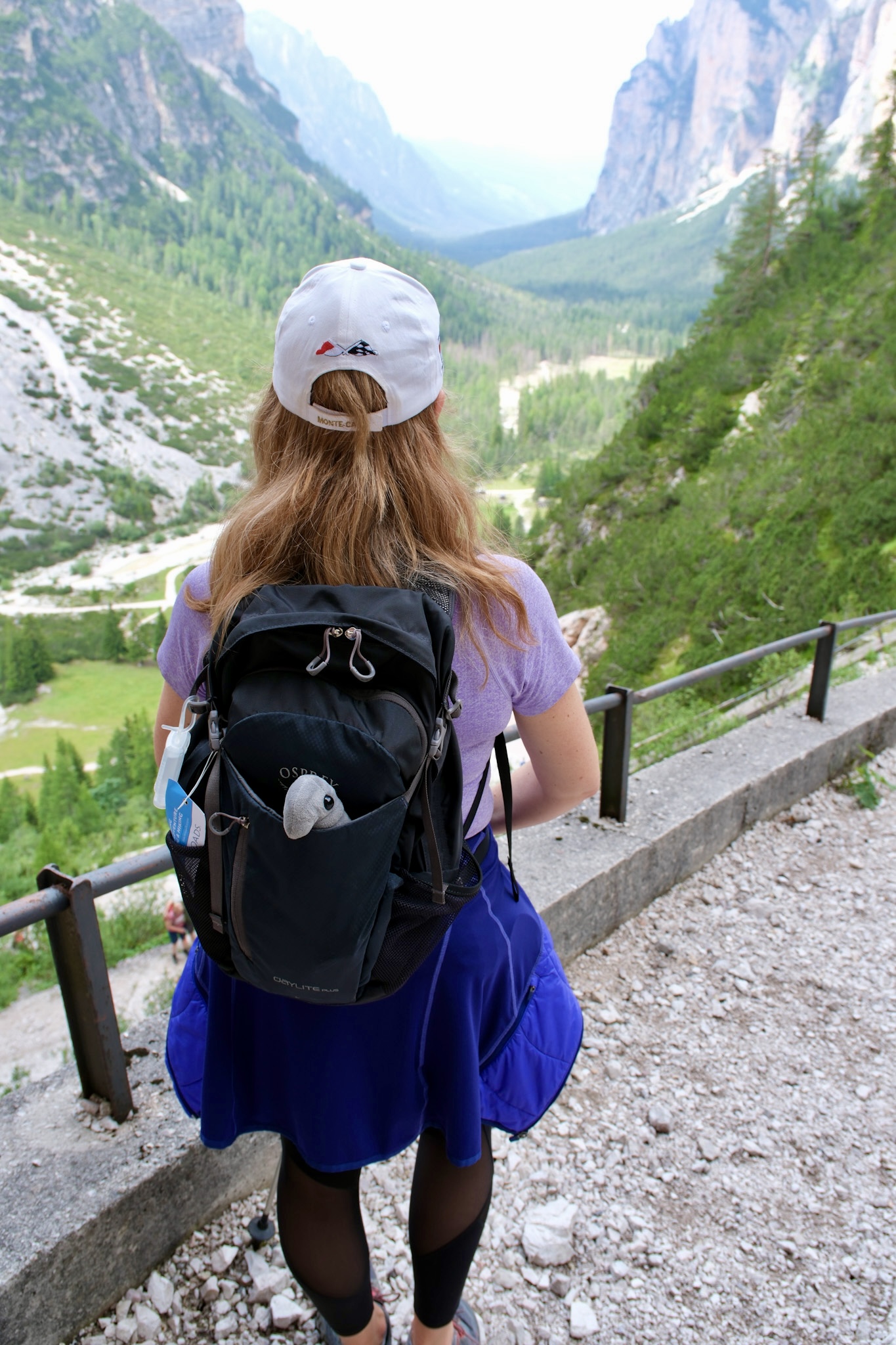
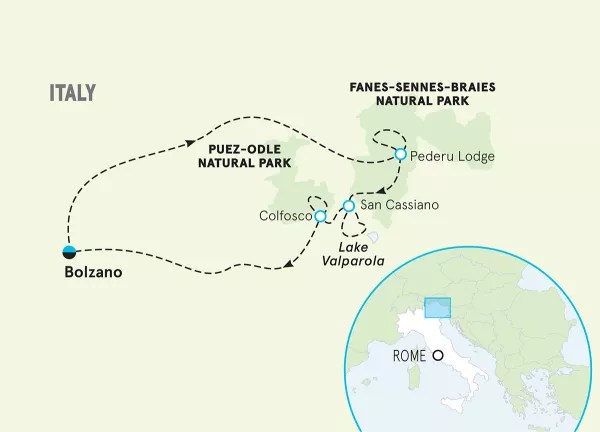
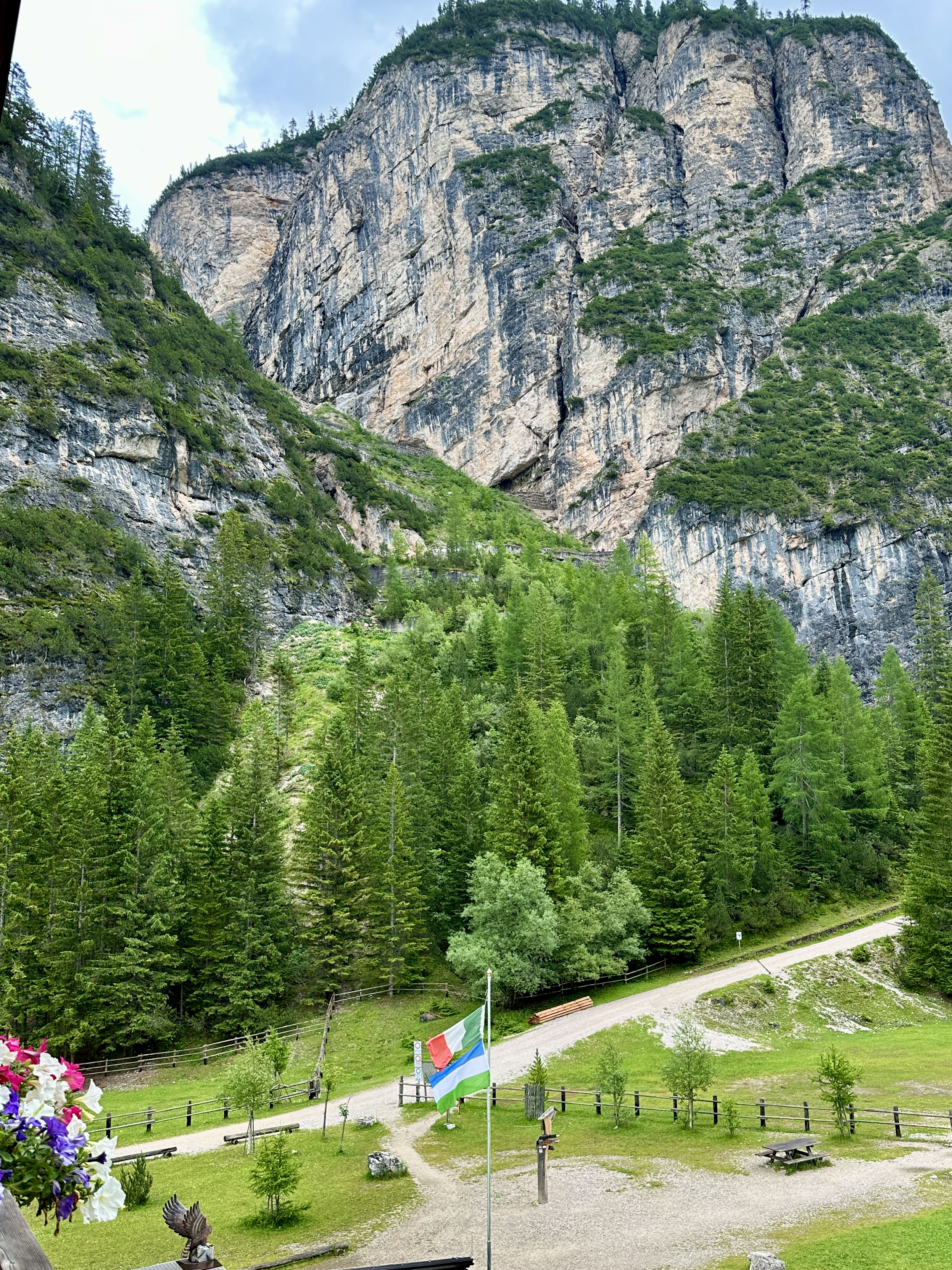
For our second day of hiking, our Backroads leaders had chosen the Sennes Loop, which would take us up 3000 feet in elevation. I had spied the road that would comprise the first part of our hike the night before, and I was already dreading the first part of the day. Still, I had breakfast to look forward to first, and breakfast on hiking days can be as indulgent as I want, right? Gotta have energy for the climb, I reasoned. So, after an Italian buffet breakfast of speck, cheese, fruit, and pastries accompanied by espresso, we were off. The road, which was unpaved and switchbacked its way up and over the valley, immediately became my Everest. It was steep. I am used to being the last one up a hill because I take medications that elevate my pulse rate, which means my heart often gets to racing more quickly in comparison with my fellow hikers. Steve was his usual gracious self, hanging with me each time I stopped and waited for my heart rate to drop again.
Although being the last person up used to make me feel bad about myself, I’ve learned to find the good in it. One of the best parts about being at the back of the pack on a trip like this one is you usually end up alone with a guide. Everywhere we travel, I find opportunities to have conversations, real, meaningful conversations, with people from the area we are visiting. The easiest way to do this is to take a tour and strike up conversations with the guide. On this day, we had Francesca and a naturalist named Lucia to walk with. Talking about southern Italian culture with Francesca, a native of Puglia, made my uphill battle less odious.

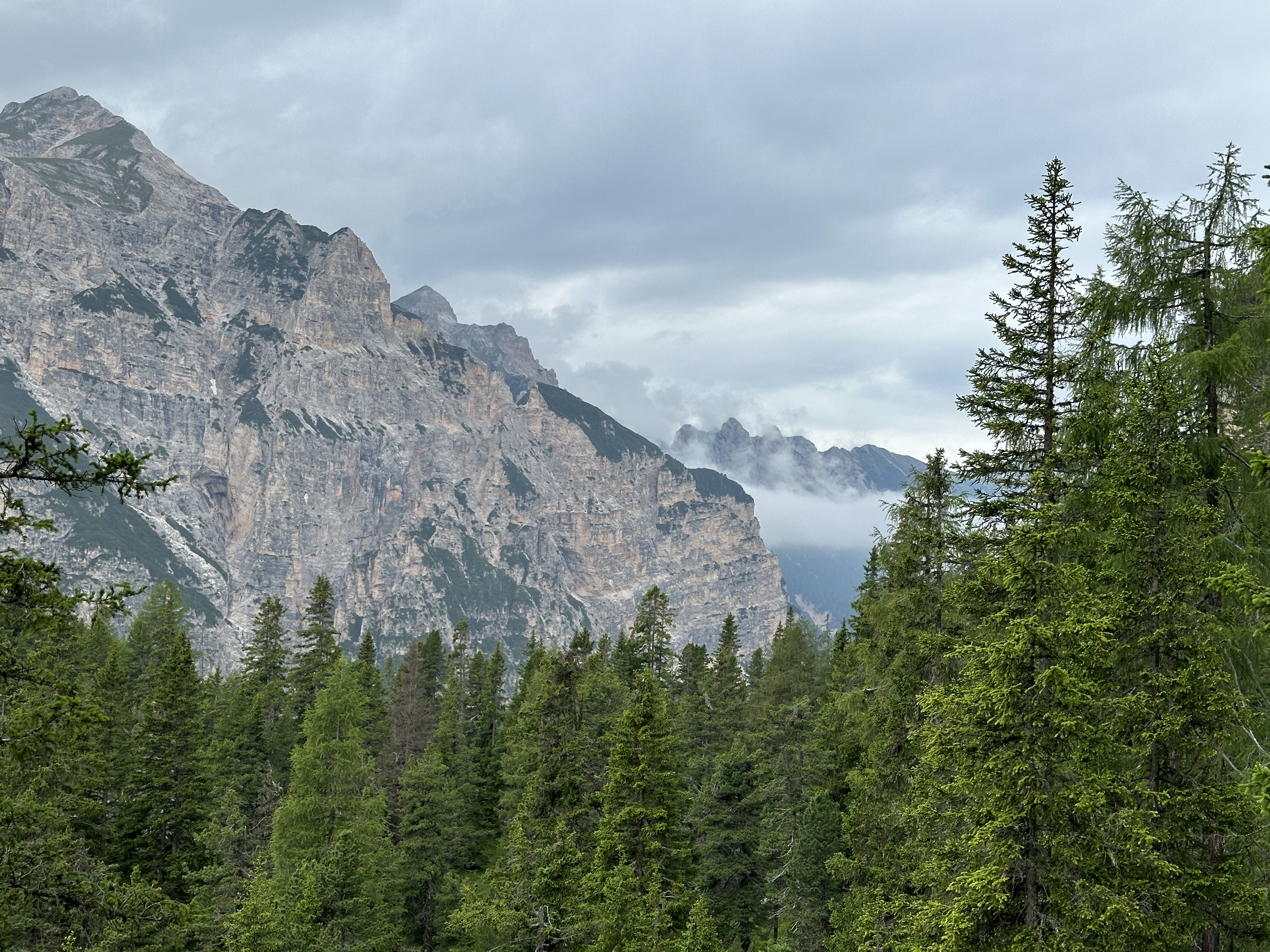
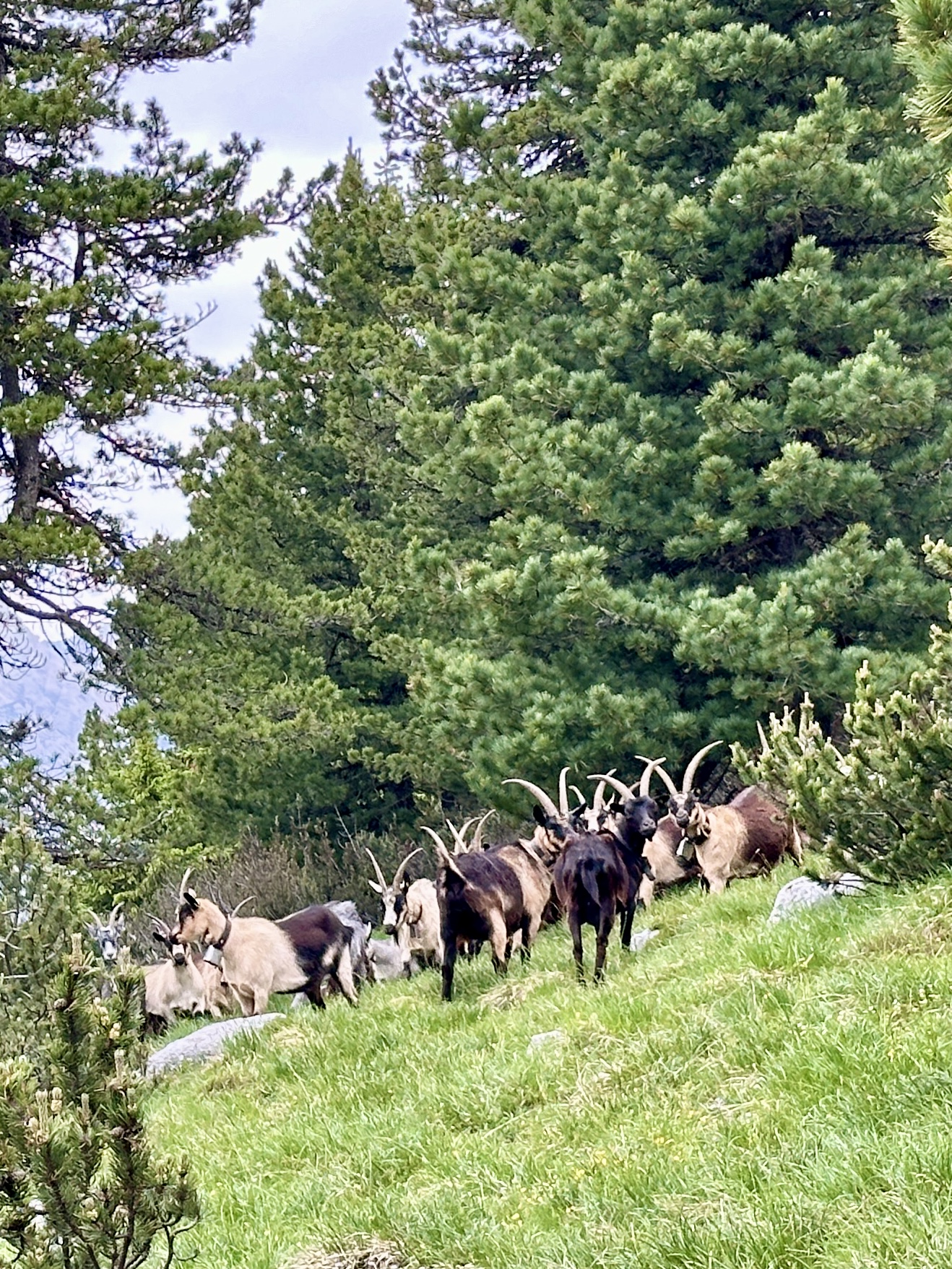
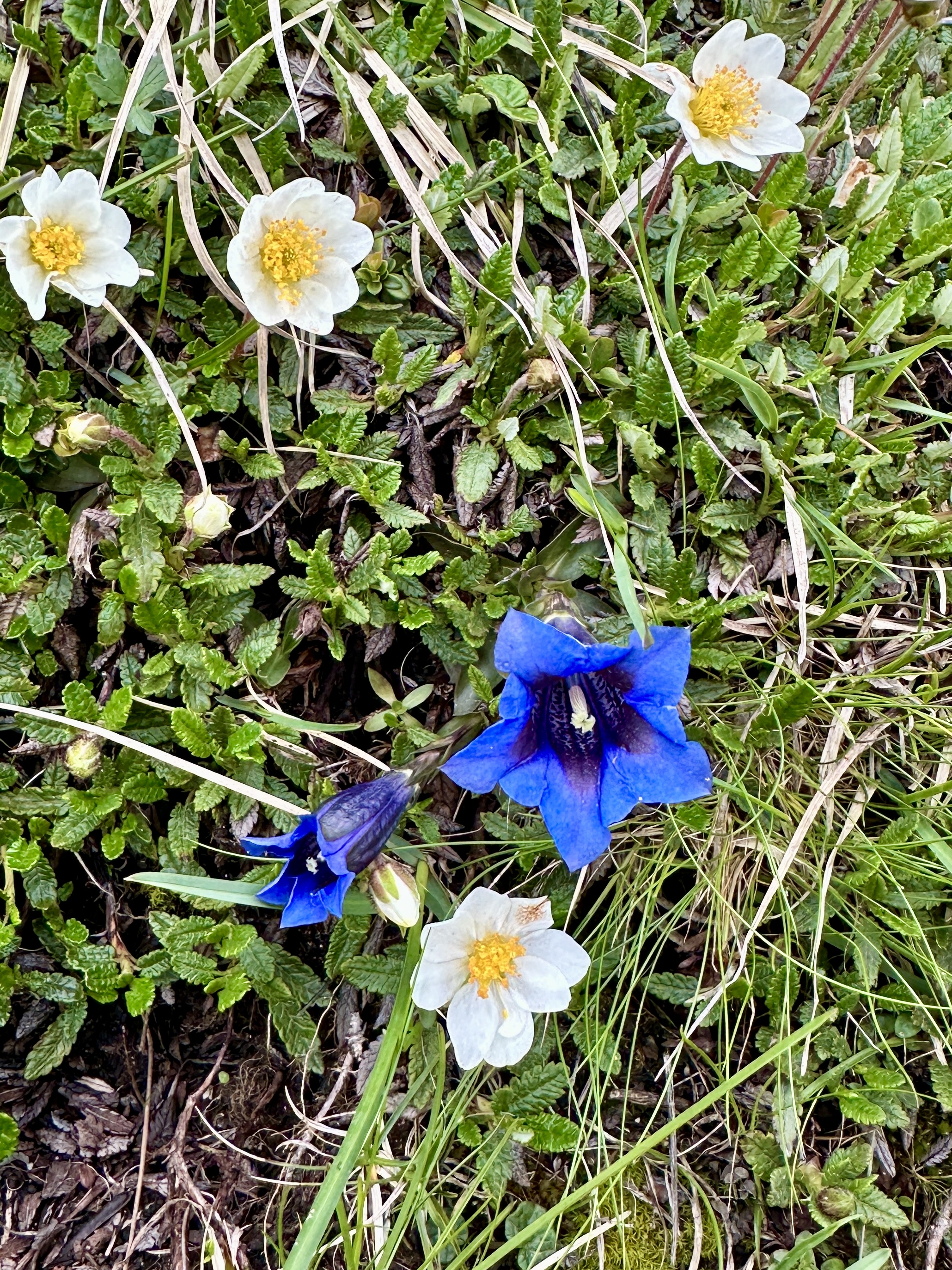
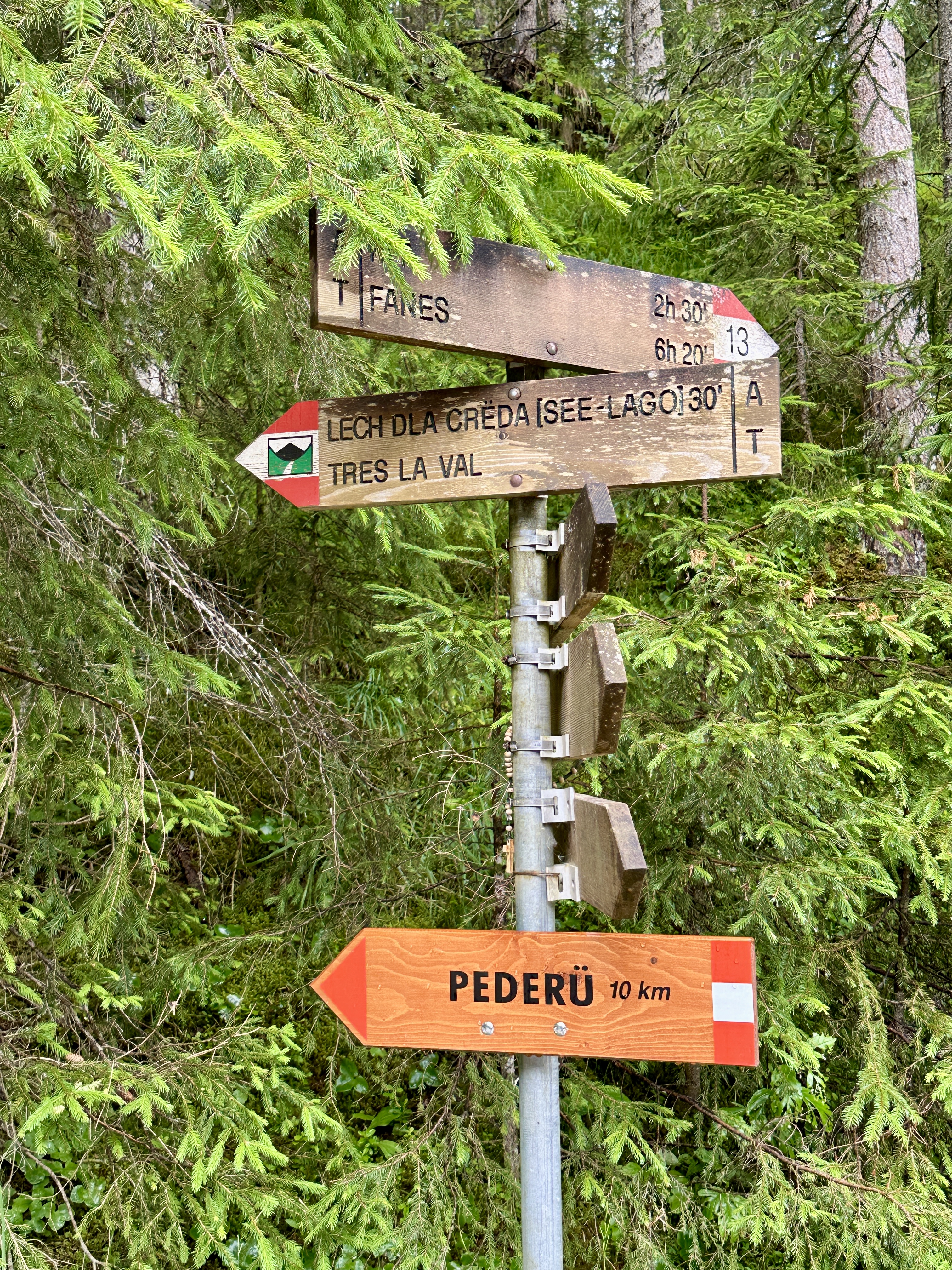
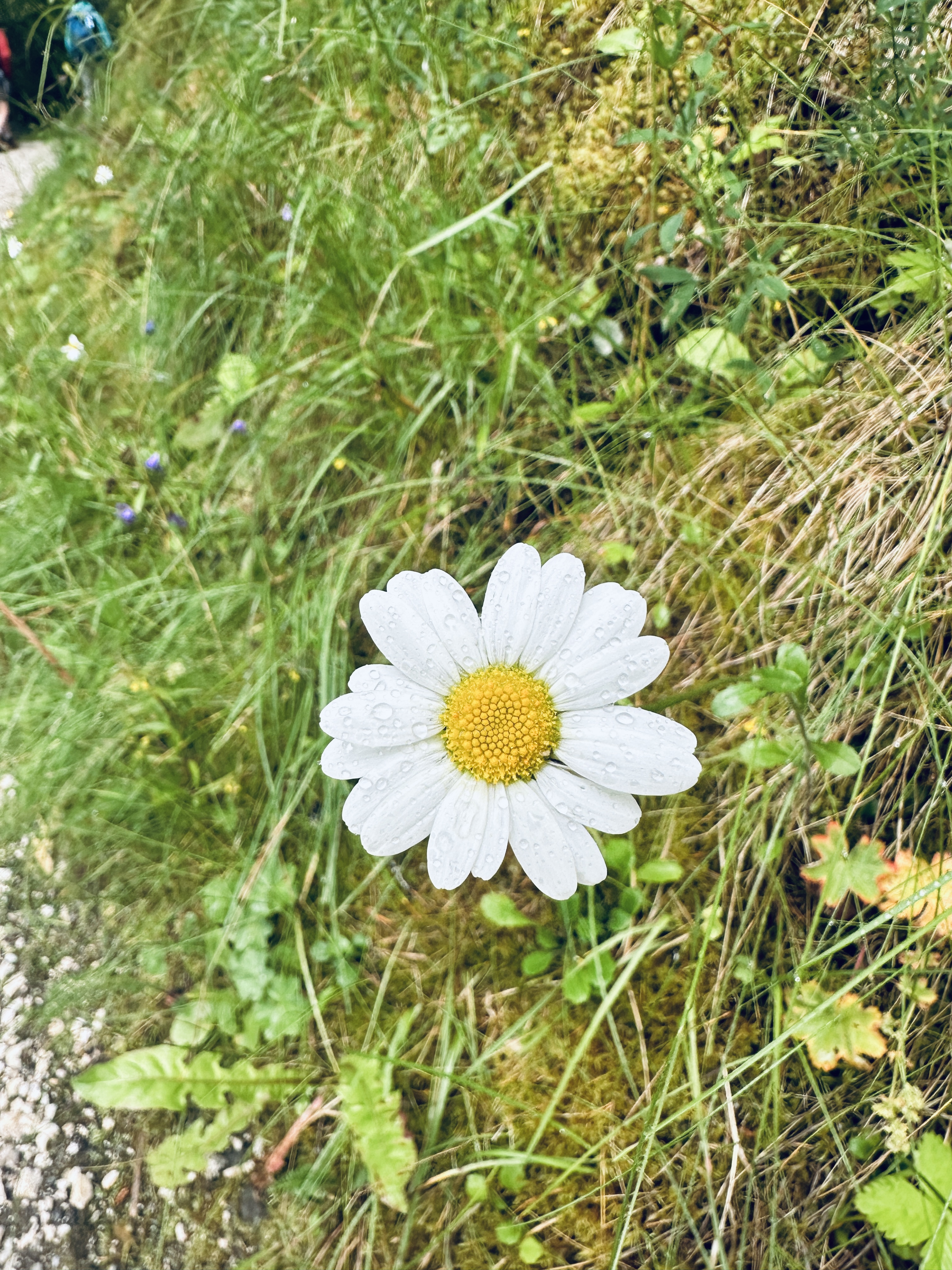
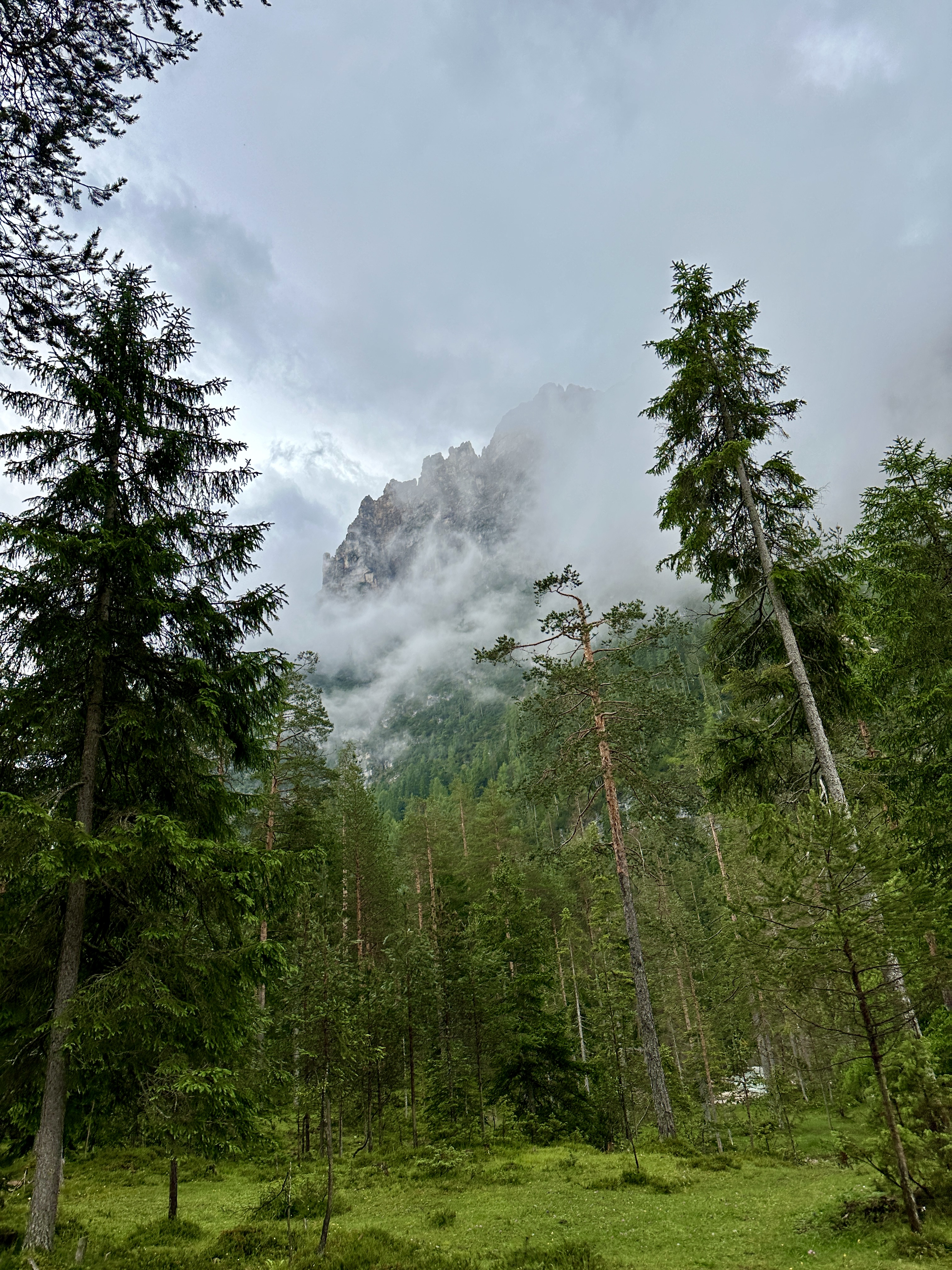
Once we got to the place where the road leveled off, we veered off onto a small path rather than continue along the road. We were taking the scenic route. It was cool and overcast, many of the peaks around us obscured by clouds. This pushed our focus to the green pastures and wildflowers. We walked along at a quicker pace now, trending upwards still and stopping to take photos as we went. We weren’t slowing anyone down, so why not enjoy? It wasn’t long before we heard bells ringing along the hillside. We were still below tree line, though, and I couldn’t see what was causing the racket. Then they appeared, a herd of goats with long, curved horns. They regarded us with some curiosity but no alarm, one following me up the path a bit before rejoining its amici on the grassy hill. I determined there is no hike more charming than one that includes animals wearing bells.
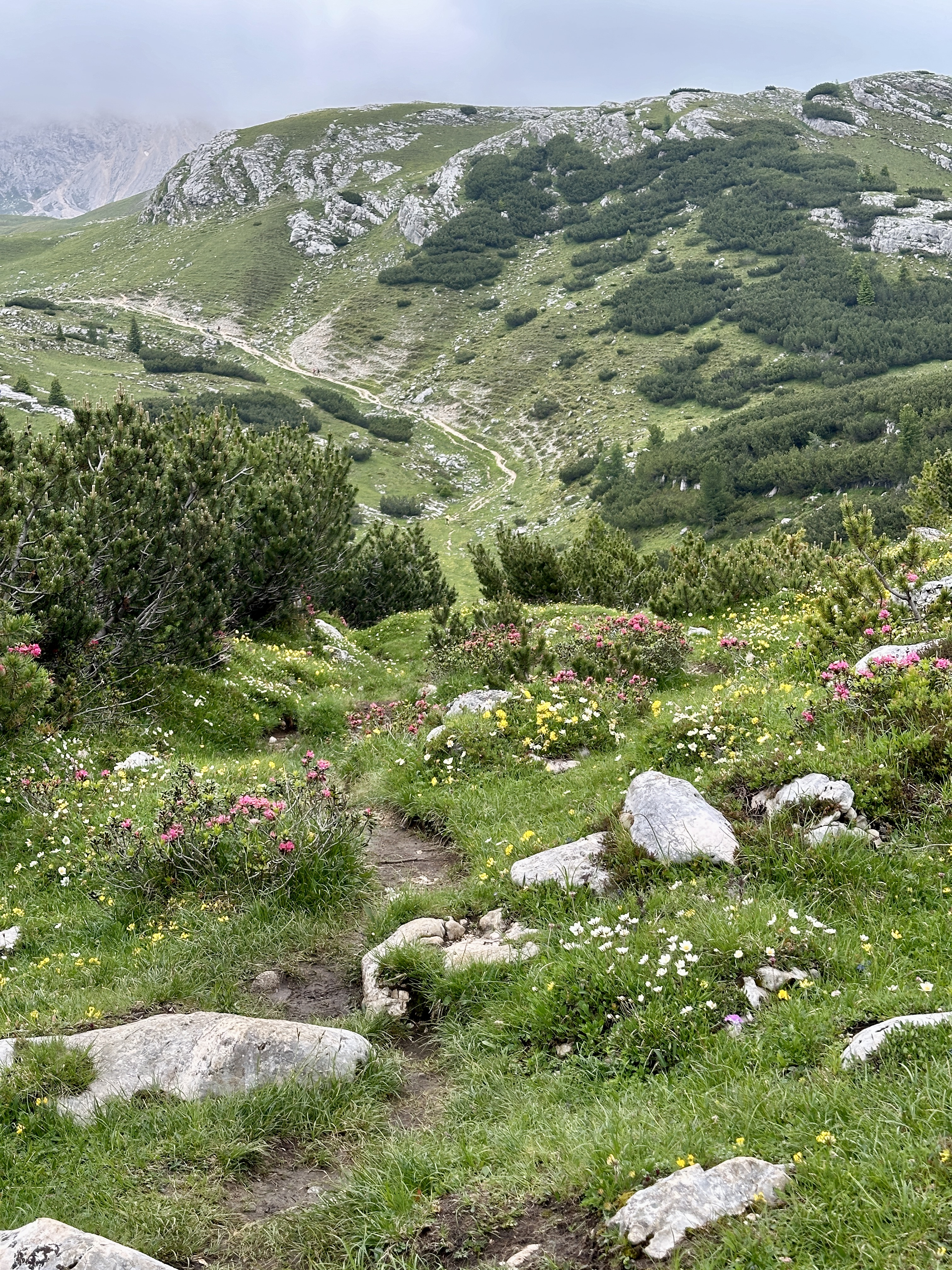
The path had become easier, and I was feeling confident about my chances of finishing this hike with zero problems. Then we came around a corner into a clearing and ahead of me I saw another damn hill. Yes. I knew I was in the Dolomites and there would inevitably be more hills. Francesca simply hadn’t warned me about this one which, in hindsight, was probably wiser. Ahead of us on the path, I could see some small dots, the rest of our group steadily making their way. This would be our last uphill I was told, and at the terminus of this section we would arrive at the Sennes hut where we would stop for lunch. I was all about lunch by this point, so I decided to attack that hill rather than saunter.

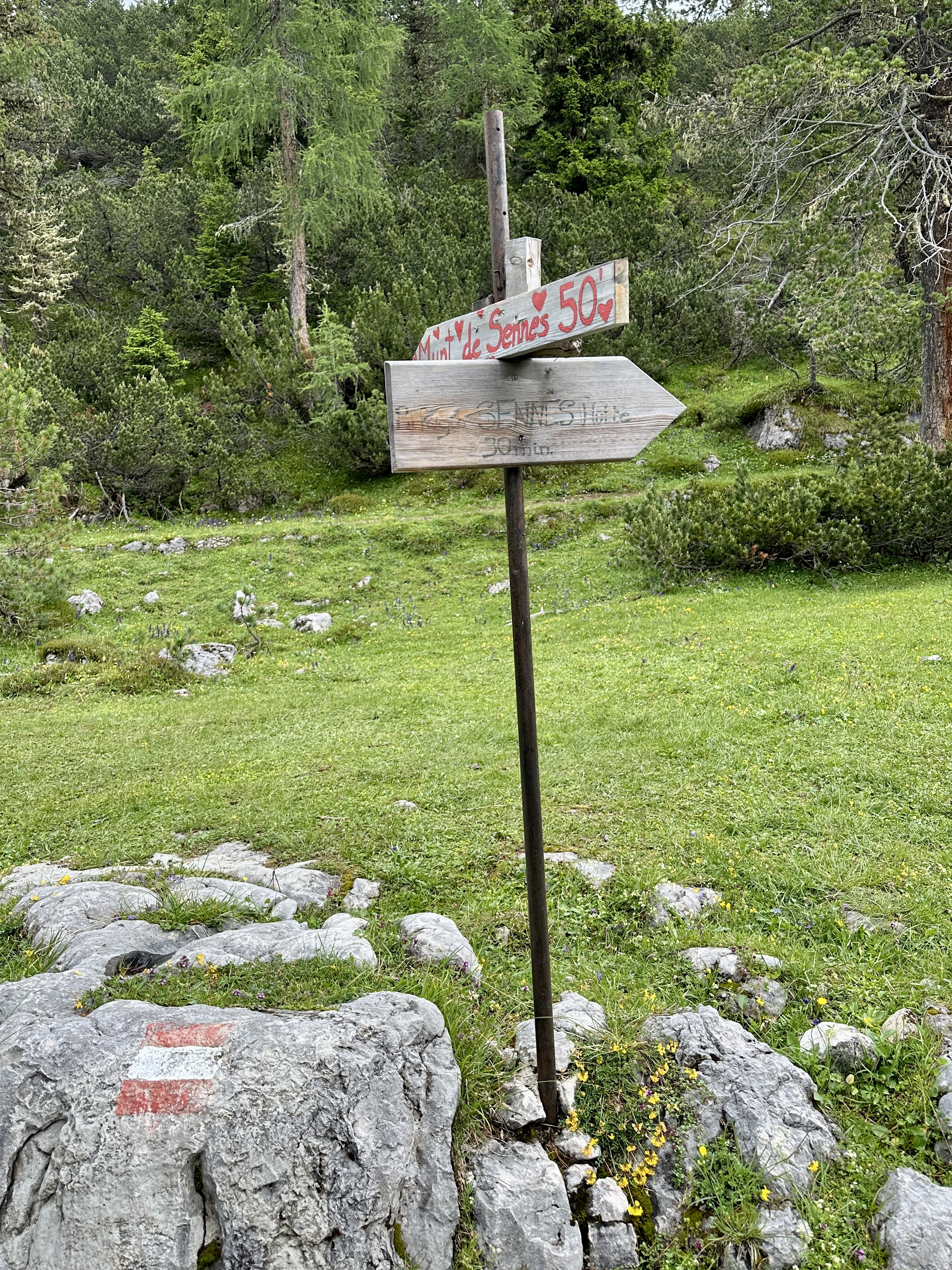
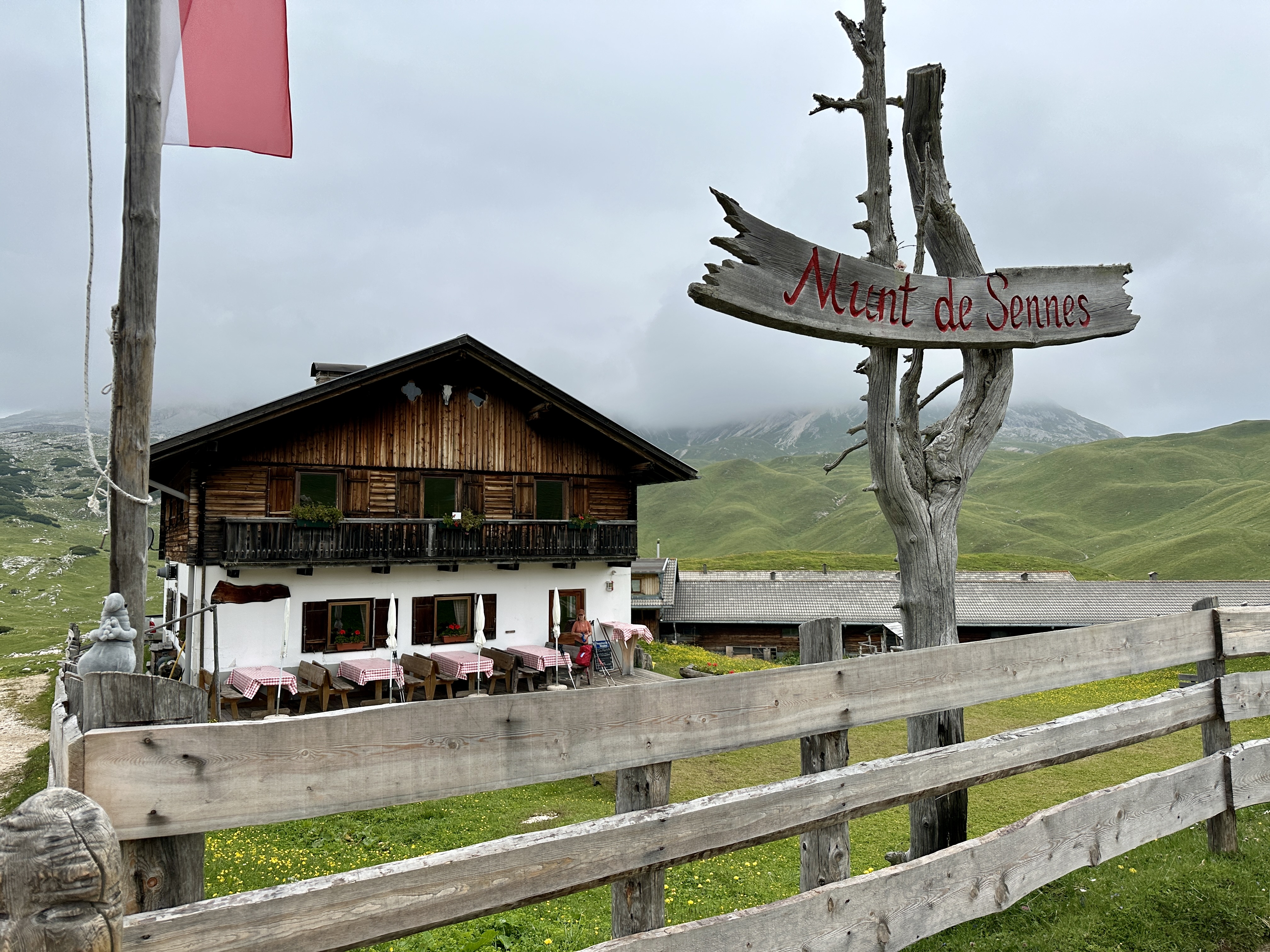
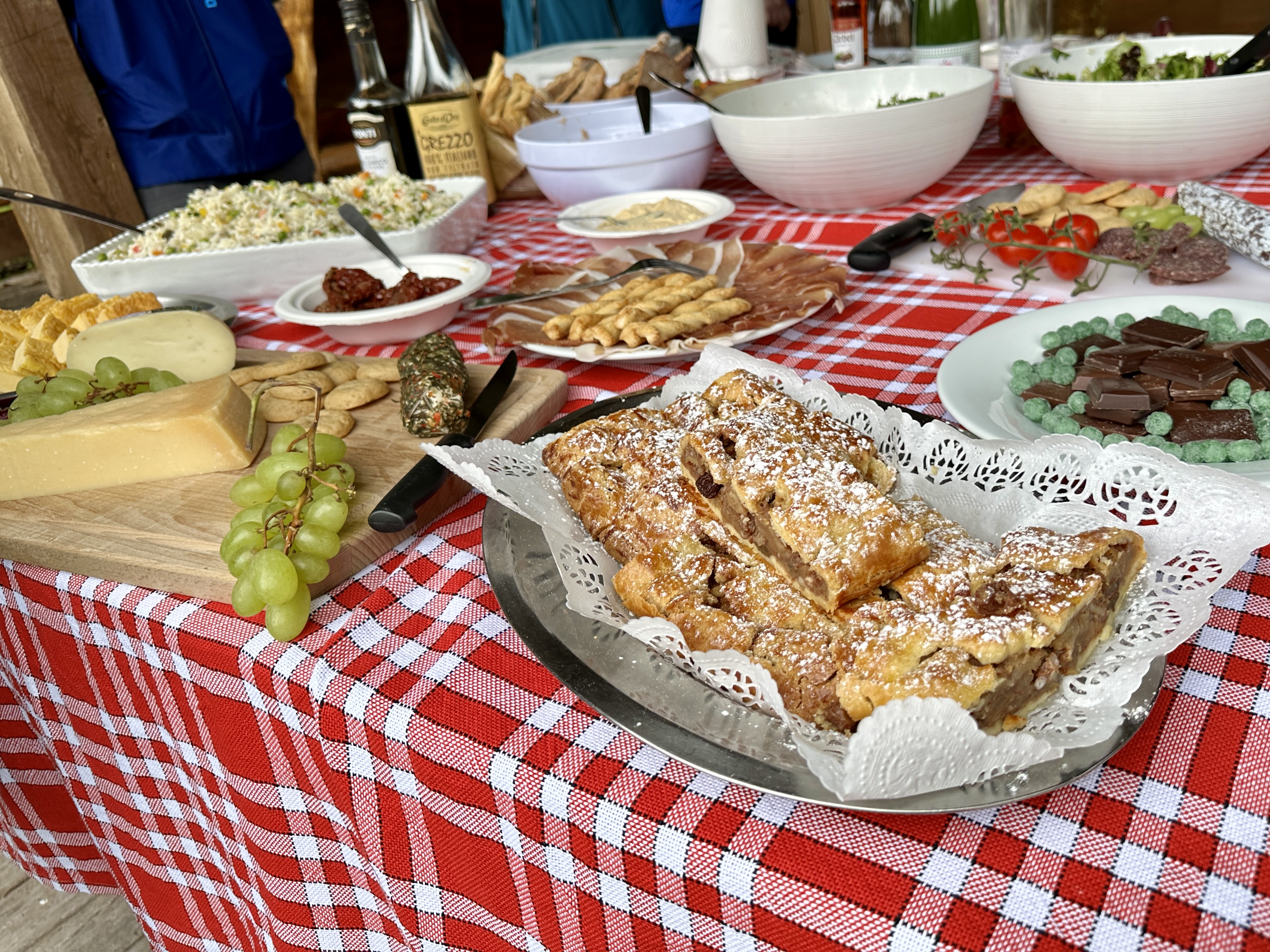
Near the top of the climb, Rifugio Munt de Sennes appeared around a corner. Hearty South Tyrolean fare loomed ahead, and I could not wait. Would it be another fabulous lunch feast with choices like beef goulash on polenta and fresh pasta with just-picked chanterelle mushrooms? Of course. We finished our meal with more strudel because vacation. I reflected for a moment about how hospitality is Italy’s gift to the world. I mean, here we were, hiking at 8000 feet, and continually happening upon establishments with comfortable rooms to rent, excellent dining options, and clean bathrooms with flushing toilets, in mountainous areas unreachable by car for part of the year due to snowpack. Damn, Italy. La bella vita, indeed.
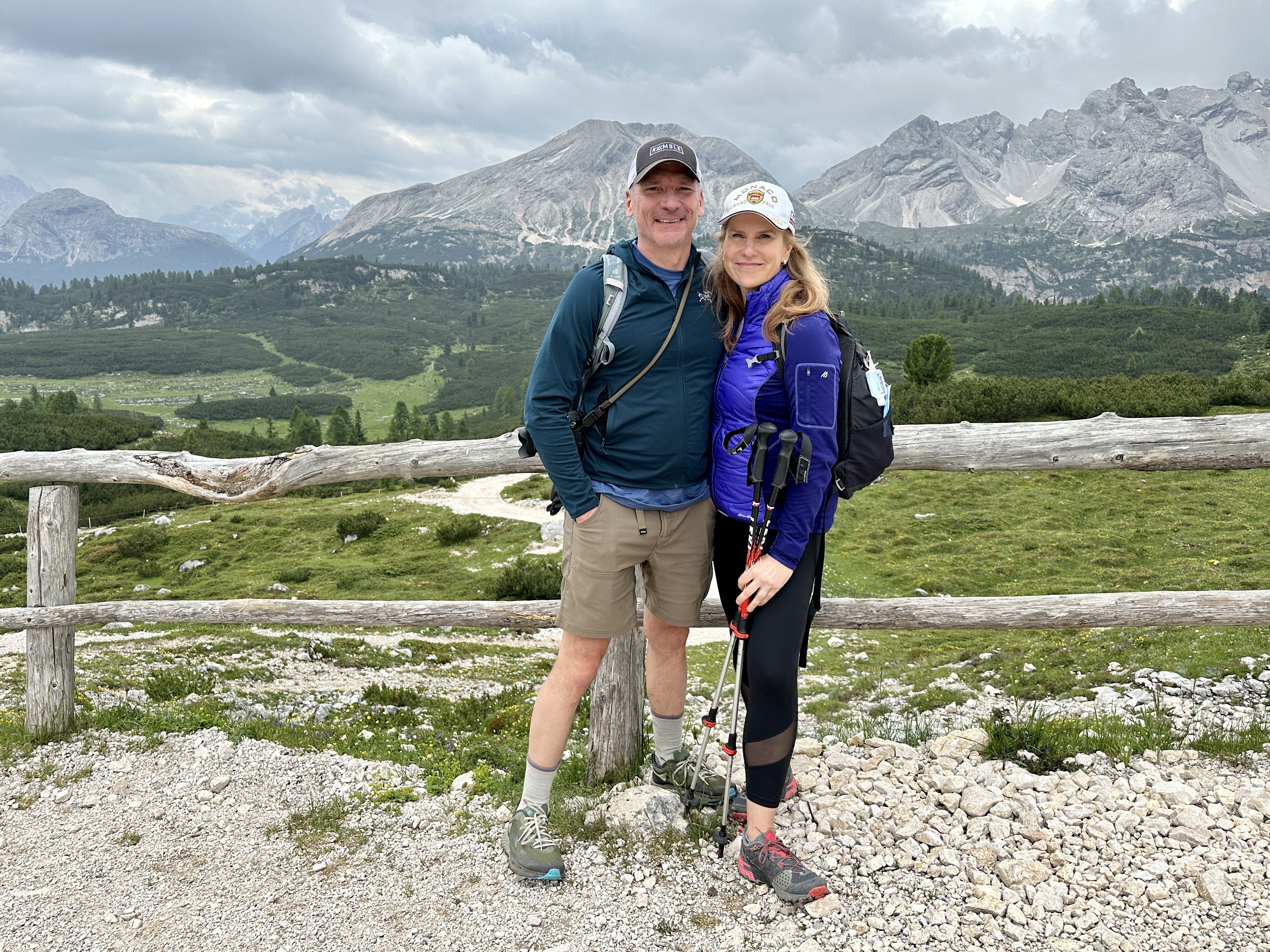
We left the hut and crested the hill just beyond it and were treated to a panoramic mountain view before we hit the descent to our overnight lodging. Lucia was with us for the afternoon, and she informed us about the political climate in Italy under far-right Prime Minister Meloni. She talked about peaceful student protests that had turned violent earlier in the year due to brutal police crackdowns on demonstrations. Lucia remarked it seemed eerily familiar to what she had learned about life under Mussolini. We discussed our mutual concerns regarding the slow but steady erosions of personal freedoms in our countries and what could be done to stem the creep of authoritarianism. It was a deep conversation for a serene day in the Dolomites, but it made the last few miles as much about education and global understanding as about exercise and nature.


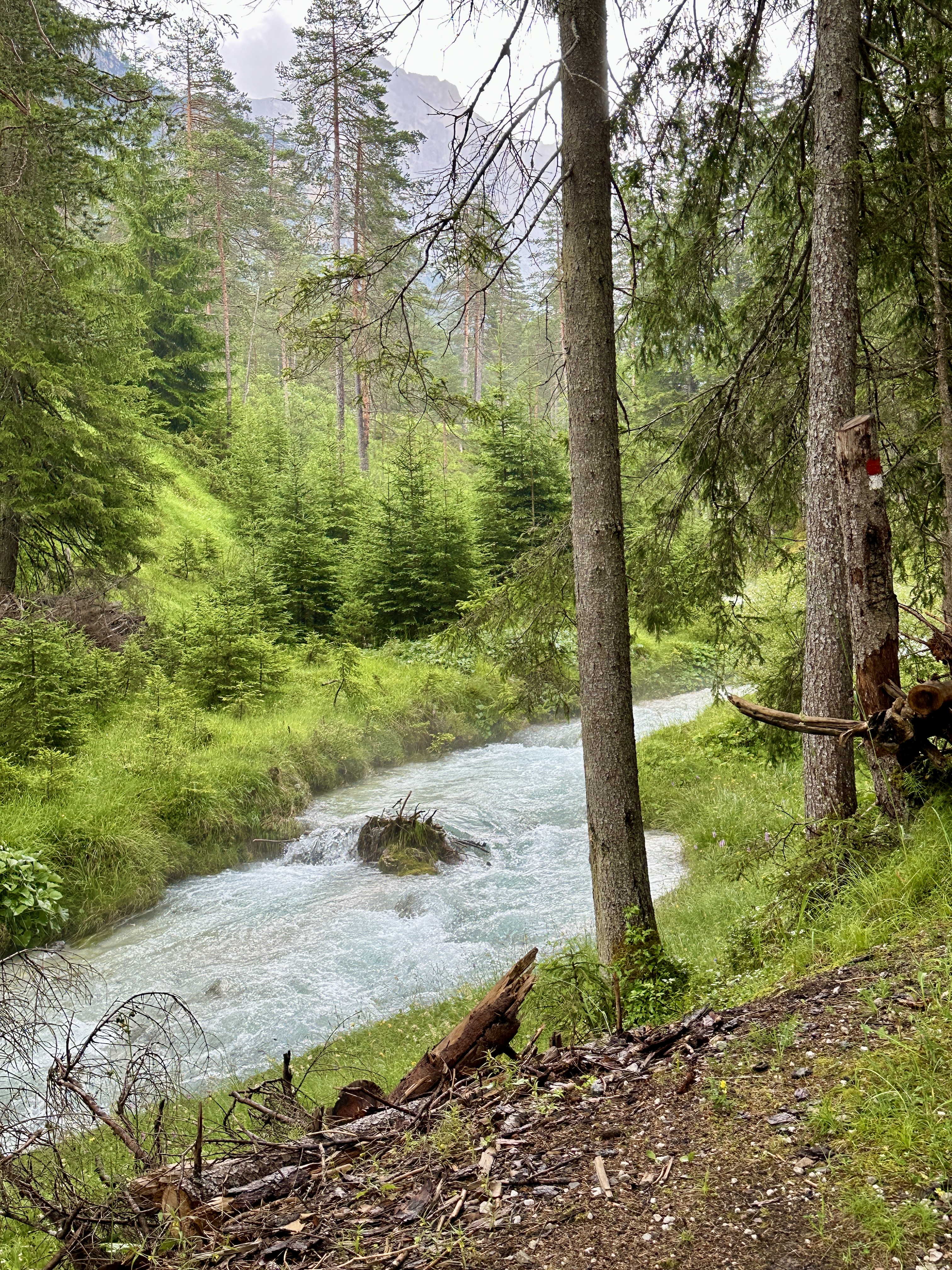
When we finally reached our lodge, Petra told us we should soak our feet in the icy stream that ran in front of the hut. She said it was “medicine,” which would help us recover more quickly for the next day. So we dropped our packs in our room, donned flip flops, and padded our way to the stream. Certain my feet would thank me later, I braved the frigid water. I’m no stranger to just how cold a mountain stream can be, yet I was still surprised at how quickly I had to pull my feet out of that water and onto the dry gravel to regain feeling in my toes. Steve and I spent about 5 minutes there, making bets about who could hold their feet in the water the longest. Steve won. Those five minutes turned out to be about as difficult as my climb had been that morning,. They were also just as beneficial. I felt refreshed.


With our hiking chores done for the day, we went up to shower. Wine o’clock was calling, and we didn’t want to be late. The rifugio offered house wine on tap that was a meager €2.5 per generous glass. It would be a crime not to support this local business family by having a glass or two of house merlot before dinner, and then maybe another glass or two with dinner. Steve and I strive to be goodwill ambassadors for the U.S. while we are abroad. It’s a responsibility we take quite seriously.








 Live Now and Zen