Asleep At The Wheel Again…ADHD and Motherhood

The day my 8 year old decided to cut his own hair and photograph it.
The day my 8 year old decided to cut his own hair and record the event. Not his best decision-making moment, but it has made for some good laughs.

It’s laundry day. Well…actually, every day is laundry day, but today I finally decided to toss a couple loads into the washer. As I collected the boys’ hamper, I noticed that Joe had thrown a couple of his jackets in. I hate it when he does that. Sometimes the hamper is replete with clean clothes he tried on but decided not to wear. While I’m grateful that he’s finally learned to put his clothes into a hamper after thirteen years, he now puts everything in there. He often puts his shoes in there. His shoes. It’s much easier to toss everything into the bin than to put it away, right? It keeps the floor clean and then he doesn’t have to listen to me complain about that too. It’s genius, actually. A simple, expedient filing system that gets me off his back, at least for the present moment. And Joe is 100% in the present moment all the time.

Frustrated by the discovery of the jackets, I confronted him.

“Joe…why are these coats in here?”

“I wore them,” he said with typical teenage attitude, eyeing me like I am a moron for not realizing that dirty clothes go in the hamper.

“You can wear a jacket more than once before it needs to be washed. Unless it’s got a stain or it stinks, you should just hang it up to wear again,” I informed him.

He appeared uninterested.

“Every time you do this, it’s more work for me. I know we’ve talked about this before,” I said with the usual tone of parental disappointment that is meant to encourage enough self-reflection and remorse to induce self-awakening and, hopefully, an apology. If you’re wondering if it ever works, the answer is no.

“I know,” he admitted.

“Well, then, why do you keep doing it?” I asked.

“I don’t know,” he said. “I don’t mean to do it. It just happens on accident all the time.”

And, there it is. A succinct description of exactly what ADHD is. Joe’s ADHD includes impulsivity, inattention to detail, and inability to focus. So many times when he was younger I would repeatedly scold him for the same behaviors. Once, before we’d diagnosed his ADHD, I asked him why he kept chewing on his shirts even though we had discussed ad nauseam that he needed to stop doing it. He said he didn’t know why he did it. He knew it was wrong, but he simply couldn’t help it. That explanation was mind numbing. Here was a kid who was obviously intelligent, who could repeat minutiae about different dinosaurs from different epochs, remembering the dates they existed and statistics about their size and weight, but there he stood telling me he didn’t know why he kept gnawing his clothing like he was a goat. As a parent, it frustrated the living hell out of me. How could he be so smart yet so unaware at the same time?

When we had Joe evaluated for ADHD, the psychiatrists at Children’s Hospital explained to me that the frontal lobe of Joe’s brain simply doesn’t work the way mine does, ultimately leading to his greater difficulty in choosing between good and bad actions. As a child, if I was punished for something one time, the frontal lobe of my brain would remind me of that event and help me make better choices the next time I encountered a similar situation. Joe’s frontal lobe, however, simply isn’t as active as mine. The doctors explained that it is as if there is a little man in there whose job is to help him make good choices but that little man continually falls asleep on the job. It wasn’t until much later, when Joe better understood himself and his brain, that he was able to admit that his inability to stop negative behaviors when he knew they were wrong frustrated the living hell out of him too. We’ve spent the years since his diagnosis working to understand how we can help Joe and what we simply need to accept is part of his make up. It’s a work in progress.

I’m laughing now thinking about the question I posed to Joe earlier. I know how he works. I just needed to remind him again and move on. He will eventually stop putting clean clothes in the hamper, just like he eventually started putting dirty ones in there. It’s merely going to take a lot of patience and a lot of repetition. Six years into my understanding of this ADHD world, I am still making silly parenting mistakes with Joe.

You’ve got to wonder when the little man in my frontal lobe started taking so many naps.

A Belated Holiday Letter For All The Late Bloomers

On their way to becoming awesome…someday

I was rifling through a stack of papers on the counter yesterday and came across a holiday letter that arrived in a card from some friends of ours around Christmas. Okay. I feel your sneer of judgment. Yes. I still have holiday mail on our kitchen counter. Guess what? We still have a broken, faux Christmas tree lying on the floor in the rec room too. I’m leaving it there at least until Easter to prove how very zen I can be in the face of ridiculous things. So there. Anyway, I opened the letter and reread it. It was, as most family holiday letters are, a beautifully composed, loving tribute to our friends’ apparently flawless, exceptional, decorous, loving children. I’m a natural skeptic, so I’ve always assumed children like the ones outlined in those letters are figments of fantasy, like Santa Claus, the Tooth Fairy, and men who multitask…a charming idea, but a complete fabrication. Still, we get many letters just like that one every year, rife with phrases like Eagle Scoutstraight A honor studentVarsity letter, State championships, class president, volunteer hours, and first place, which are aimed at making me believe that children like this exist in families all across this nation. It must be reality for some people.

Friends have asked me why I do not send out a letter with our Christmas cards. They figure that a writer should be at the top of the list of Persons Most Likely To Write A Holiday Letter. But I don’t because comparison is an ugly thing. We don’t have the kind of children who look good on paper. They’re off schedule and complicated and not in line with many other children their ages. In terms of learning, our children are classified as “atypical” and that doesn’t play well without lengthy and exhausting explanations. Even though we don’t write holiday letters, we think they’re awesome. We’ve just accepted that their beauty sometimes gets lost in the comparison game.

If I were to write a holiday letter, it realistically might contain paragraphs that read something like this:

Joe is thirteen and in seventh grade this year. He’s completely immersed in Pokémon and adores Japanese culture. He keeps asking when we can go to Tokyo. He used most of his Christmas money to buy Pokémon plush toys that he and his brother use in elaborate stop-motion video stories they are creating for their YouTube channel. Despite his ADHD and dyslexia, he’s making great progress at school. We are so proud that he’s using capitals and periods in his schoolwork on a more consistent basis these days. He’s still reversing his Bs and Ds, but we are hoping that he’ll have that mostly figured out by the time he’s writing college entrance essays. Joe has finally mastered the coordination and multiple steps to tie his own shoes now, which has taken one thing off my plate. He uses about 400 knots to make sure they don’t come untied, though, and that has created a different hassle as I now have to unknot his shoes each morning. Be careful what you wish for! After two years of private ski lessons, his core strength and coordination have improved enough that he has a mastery of most beginner slopes. We hope to have him exclusively skiing intermediate slopes by the end of next season. His favorite books are graphic novels, his favorite food is pasta, and his classmates call him “Puppy.” He never misses his nightly spa time, which mainly involves sitting in the bathtub while watching a continuing stream of Netflix videos on his iPad from across the room. Thank heavens he was gifted with great eyesight and the brains to know not to bring the iPad into the tub with him.

Luke is eleven now and in fifth grade. He is a talkative, class clown, and his teachers have initiated a rewards system to keep him reined in during class. So far it seems to be working because our last parent/teacher conference went off without tears. This year his decoding skills have gone off the charts and he is reading at a beginning of fourth grade level. He’s still struggling with fine motor skills and his pencil grip is downright bizarre, but his handwriting is bafflingly lovely. He loves to draw, write stories, build Legos, and watch episodes of Parks and Recreation. And, this year he began catching footballs successfully. He’s still two inches shy of being tall enough to ditch the booster seat in the car, but he’s getting there! His latest career aspiration is to be an entrepreneur/architect/engineer, but he’s planning to author books in his free time, which we think will make him quite well balanced. His sensory issues force him to sleep in a nest of blankets, pillows, and plushes, but he showers regularly, doesn’t eat in bed, and sleeps on the top bunk so we are reasonably sure there are no rodents up there with him.  All is well and we are grateful. 

Now, this holiday letter fodder might seem a bit hyperbolic, but overall it’s an accurate account of life with our exceptional sons. They are not straight A students. They are not athletes. They are not overachievers. They’re not on the Dean’s List. They’re not first chair in orchestra. They struggle a lot, work hard to catch up with other kids their age, and keep plugging away. They are, in every way I can see, damn near perfect human beings, emphasis on the human part. And I may never be able to write a holiday letter extolling the impressive scholastic or athletic achievements of their youth, but I could not be more proud of my young men.

I don’t begrudge any of our friends the joys of having children who are achieving at a high level already. After all, it’s a lot of work being a parent, and a smart, capable child who is excelling in many things can only do so with personal support and chauffeur services. My friends have earned the right to brag about their offspring. As for our boys, I suspect they are simply late bloomers. Sooner or later, all their hard work and dedication will pay off. And someday I’ll send out a holiday letter to share how far they have come. Our Christmas card with personal letter in 2035 might just blow your socks off.

Like Sands Through the Hour Glass…

Our water boy
Our water boy

Oh, boys. Today, Joe had a friend come over to hang out. Everything was going well until they decided to take a hockey stick and hit some home runs using Luke’s Lego models as the ball. The basement survived these antics, but of course the models did not. Luke, who was already feeling excluded and lonely, added furious to his list of emotions. We could not blame him. Demolishing Lego models, while impressive to friends, is not the way to keep peace with your younger brother. Now, we know that 1) Joe was just showing off for a friend and 2) his impulse control is not the best to begin with, but this was not the first time Joe has destroyed some of Luke’s Lego creations. He’s been punished for this infraction in the past. It hasn’t made an impression.

We decided to hold a family meeting over dinner to discuss what to do with the repeat offender. We offered Joe the opportunity to explain himself and argue his case. Then we asked Luke to rate his level of sadness about the loss of the models. With both boys still at the table, Steve and I began discussing punishments. Ultimately we decided that Joe would be allowed to rebuild the models to Luke’s satisfaction to lessen the duration of the punishment, which we determined was a week without his nightly baths.

Yes. It’s odd that our nearly 13-year-old son takes nightly baths in addition to his morning showers. As high as our water bills can be, it’s hard to complain that our son likes to be too clean because I’ve had the opportunity to catch of whiff of some other teenage boys and they smell. Badly. I write off Joe’s water obsession because he’s a Gemini with a Pisces ascendant and a Pisces moon, so water is his primary element. Joe says he’s water obsessed because he’s Sharkboy, and during the day he is just a fish out of water. We knew this would be a rough punishment, but we were determined to make it stick.

When we got home, Joe went to work rebuilding the models. He was able to fix one quite easily. The other one he recreated (albeit with modifications) to earn Luke’s stamp of approval. Joe came before the parole board, and we agreed to lessen his sentence to a meager two nights on Luke’s recommendation. (Luke, god bless his tender heart, hates to see Joe suffer.) The reduced sentence, which teetered on the edge of being way too lenient by our standards, did not appease Joe in the least. Nope. When he realized he still would not get his bath tonight, he perpetrated a sizable meltdown in protest. He wheedled. He argued. He cried. He wrote notes of apology. He wandered in and out of our room muttering curses until we were ready to tell him that although he couldn’t have a bath we wished he would go soak his head. Because we felt too generous already in the sizable reduction in his sentence, though, we held steadfast and refused to cave. He could live with two days’ punishment.

Joe’s meltdown continued for about 30 minutes. Finally I pulled out the Bunny Buddhism book and shared this doozy with him when he again wandered into our room in protest:

The wise bunny knows life is full of suffering and chooses not to create more.

He was not impressed with my bunny wisdom. Joe is the King of Drama. When he was younger and in trouble for a transgression, he would tell us that he wanted to beat himself as punishment. I started to wonder if he had been a member of Los Hermanos Penitentes in a former life and that was why he was advocating self-flagellation. It’s hard to know sometimes if his histrionics are the genuine result of his ADHD-enhanced lack of control or an elaborate ruse meant to elicit guilt. He is capable of working both ways.

I’m not sure why Joe insists on ratcheting his initial Level 3 DEFCON misery to DEFCON Level 1, but I keep hoping that he will learn what the wise bunnies know…that inventing additional suffering is ill-advised. So far that lesson has not kicked in, but I hold out hope. Hopefully he chooses to stop making unpleasant situations into unbearable ones. Hopefully he learns to channel his energy into reducing the drama in his life rather than creating more. If not, I guess there’s always a future on Days of Our Lives. Let’s just hope it doesn’t come to that. I’ve seen enough of Stefano and Marlena.

The Tale of Two Bunnies

These two bunnies may resemble each other but they are unique in their bunniness.
These two bunnies may resemble each other in form, but at the end of the day they are unique in their bunniness.

I have two sons. Although there are some similarities between them, mothering these two boys forced me to acknowledge the universal parenting truth. Parenting is not a case of nurture versus nature, but rather a case of how you choose to nurture your child’s nature. Now the fact that I know this to be true should in no way imply that I understand how one actually achieves this goal of parenting differently in the best interest of each child’s personal growth. I struggle with this daily because, like most parents, I would like to believe that in a nod to fairness I love my sons in the same way and treat them equally. It’s just not true on a day-to-day basis. They’re different people. They have different strengths and weaknesses and present unique challenges and lessons to me as their mother. They are both easier to raise than their brother in some ways and more difficult to raise in others. It is what it is.

My oldest son, Joe, has moderate ADHD. What that means for him is that he is impetuous, has a hard time focusing on anything, and even though he often knows the “right” way to do something he usually forgets to do it. As a parent trying to teach him to function in the world, his struggle with working memory has been a plague upon us both. When he was very young, his lack of follow through was something I did not think much about. I wrote it off saying he hadn’t yet reached that developmental milestone. But by the time he was six and his four year old brother began following through on things and completing multi-step directions where his older brother could not, I knew something was amiss. Still not aware that his brain struggled with working memory and processing speed, which was why he could listen to me rattle off a short list of things to do and then not remember to do them, I wrote it off as his personality. Joe was forgetful. It was his nature. It was my job as parent to correct this error in his way of doing things. I hounded him. I repeated things until I was hoarse. I followed him around, riding rough-shod over every single thing I asked him to do to make sure he would do it. About this time in my parenting journey, I really could have used today’s Bunny Buddhism quote:

I cannot impose self-discipline upon other bunnies.

I cannot force Joe to behave the way I behave because he is not me and he never will be. His brain does not work as mine does. It is as unique and interesting as he is. And no amount of badgering, belittling, or begrudging will make him act in the disciplined way I wish he would (if only for the sake of his own well-being and sanity). Even if I nurture him by providing charts and introducing him to life hacks to work around his memory issues, this is his dragon to slay. He will take from me what his mind is willing to accept and use and in time he will find his own way through trial and error, peaks and pitfalls. Likewise, I will never be able to stop his brother Luke from chewing on his shirts and leaving holes as if a goat has been wearing them. I don’t understand why he does it, but I know I can’t make him self-disciplined enough to cease and desist. It’s just not happening.

Perhaps someday Joe will remember to hang up his towel and put his clothes in the hamper. Perhaps not. He is his own bunny. He needs to find his own way in his bunniness. I can nurture his nature, but I can’t affect the outcome. And to try to do this only damages the relationship we have. I have made my own bunny peace with Joe’s memory issues. Oh. I still make him come back upstairs to hang up the towel he left on my bathroom floor because, well…I’m not his slave. But I no longer think it is my duty to turn him into the towel-hanging kid his brother is. He’s a different bunny than his brother who chews shirts who, in turn, is a different bunny than me (the one whose mother tried unsuccessfully to stop her from biting her nails).

My journey to zen is aided daily by my children who are teaching me more than I will ever be able to teach them.

Our Lady of Perpetual Slow Learners

Lovely couple of kids

If there’s one thing I’ve learned through my journey as a parent, it’s that expectations can be your undoing. In terms of expectations, mothers are doomed from the start. From the day we pee on a stick and see pink lines, we are an expectant mother. Our pregnancy bible is entitled What To Expect When You’re Expecting, and we devour the information between its covers because pregnancy is so new and different and impending parenthood is equal parts exhilaration and terror. We want to be prepared…as much as anyone can be prepared for the arrival of something so much a part of oneself and yet totally unlike anything anywhere else. While our children begin their lives unencumbered by the existence of expectations, we embark on our parental career ready to measure them against the rubric of the typical. And that’s the point when we make our first big mistake.

I knew fairly early on that our sons were not typical. They did not follow growth and development charts. They were on their own schedules. Things their peers were readily learning, our sons could not. They skipped letters in the alphabet  and struggled to write their own names. They were uncoordinated with sports and were unable catch a ball or skip or follow rhythm. Physicians noted their shortfalls while reassuring us that they were fine. In school, they displayed obvious intellect while retelling stories or playing creatively, but rote memorization of math facts escaped them. They began to get poor marks on tests science and social studies tests despite knowing the answers when asked orally. We were frustrated. We knew they were intelligent, but their grades didn’t reflect it. Teachers told me they weren’t trying, but I knew how hard they worked. I could see their constant struggle to keep up and fit in with expectations they now innately understood by watching their classmates and receiving their report cards. When we finally realized that they had learning disabilities, the damage had been done. Our sons no longer believed they could be successful. Expectations were crushing them.

This year we pulled them out of traditional school and did what we swore we would not. We put them into a special school, a school for children who think differently, a school for the atypical. We’d been hesitant to take this route, fearful of pointing out to them and to others that they weren’t measuring up in regular schools. But the time for denial being a river in Egypt was over. They needed help…no matter what that help looked like. Their new school was a big adjustment for me. You see, there are no grades there. None. Kids aren’t in 4th grade and they don’t earn letter grades. They’re not evaluated that way, and teachers and students don’t discuss grades. They discuss progress. They discuss solutions to struggles. While the kids are evaluated regularly, they are assessed solely on improvement. If they’re improving, they’re on the right track. If they’re not improving, it’s time to re-evaluate how they might learn better and pursue a different route. It’s so simple it’s scary.

And, honestly, this new system of analysis did scare me. I was so tied to our traditional conventions that the variation seemed dubious. As a culture, we subsist on numbers and quantitative results. Our conversations with other parents about our children often revolve around concrete standards. Bobby came in First at State. Jimmy has a 4.0. Sue got a 1300 on her SATs. Hey. I get it. It’s an accomplishment and a feather in our caps when our child is successful in a way that we can readily point out. I know from personal experience, though, the other side of that equation. When our sons were earning C and D grades, I perpetually feared having someone ask me about their report cards. I knew that based on their grades our boys would be marked as subpar by others, and that was frightening. And now when they’re getting no grades, well that’s even scarier. When you tell someone your son is “around the 4th grade level and is a consistently improving student,” they look at you as if you’re sporting three heads. No one is up for flexible standards of personal success although that is the only type of personal success there is…the personal kind.

If we’re going to live by expectations (which we seem bound by human nature to do), perhaps we could be a bit more flexible with our assessment of others? We could accept steady improvement as our rubric. We could value overall forward progress over typical milestones because the truth is that not everyone is typical in every way. Our sons are slow learners because their brains process information differently than the majority. So what? It’s taken me almost 46 years to believe that a piece of paper doesn’t prove wisdom and all the outward success in the world doesn’t make you a better person than the next guy, and that makes me a pretty slow learner too. I’m learning to let go of expectations and becoming more patient with myself and with others. It might be two steps forward and one step back, but I’m making progress just like my sons. By the end of my life, I like to think I will have evolved not just to standards but beyond them in ways that are immeasurable.

I threw away the books that told me how my children should be. I now appreciate them for how they are.

You’re Unique…Just Like Everyone Else

My "different" children
My “different” children

“Always remember you’re unique…just like everyone else.”

One of the biggest challenges being a kid with a learning difficulty is feeling different. I’ve watched both my sons as they tried to acclimate themselves to their differences at school and, by far, the biggest stress they faced was worrying about what the other kids would think of them. Joe, for about a year, did not tell anyone about his ADHD. He simply was not comfortable. He worked hard to try to fit in and that was how he wanted to deal with it. Eventually, he told a few friends who handled it just as I expected they would. They did not care. They attend a small school, and this group of 13 children have been together for 5 years. To his classmates, Joe is just Joe and knowing about his ADHD didn’t make him any different. When Luke was diagnosed with dyslexia in November, he also was adamant that he did not want anyone to know. I didn’t push him into telling anyone because I respected his apprehension, but I did mention to him (with permission) that his friend Annie Oakley (not her real name) also had struggles. I suggested that it might be good if both of them could talk to each other about their difficulties. He looked at me dubiously and took my counsel under advisement.

Early this past week, out of nowhere, Luke announced to most of his classmates that he had dyslexia. Like Joe’s classmates, they looked at him with a quizzical so-what attitude and moved on. No one understood or cared or asked questions. It was no big deal…with one exception. His partner in crime and fellow horse-lover friend, Annie, immediately glommed onto him, happy to have someone with whom to share her differences. Right after Luke’s confession, he got into the car and declared that he and Annie needed to have a play date (I love that he still uses that term) soon so they could “talk.” I thought that was about the cutest thing ever, so I set up a time for Annie to come to our house on Friday and stay for play time and dinner. The two of them were so excited they could barely focus at all at school before the play date. As proof, I offer up Luke’s spelling test grade, which has never been great but this week hit an all time low of 52% on a list that was not the toughest one he’s ever faced. Their palpable excitement would have been amusing if it weren’t exhausting me.

We had scarcely gotten everyone settled in the car Friday afternoon and weren’t even out of the school parking lot when Luke piped up.

“Okay. So, let’s talk about this ADHD and dyslexia thing.”

Instantly, Annie opened up. She told our boys about how she found out about her ADD and how her life has changed since her parents told her. She and Joe talked about attention-deficit with each other, and she and Luke talked about how hard it was needing special accommodations at school. They all talked about how demanding school was and how much they grappled with reading and timed tests. They talked about it non-stop for 20 minutes on the ride home, sharing stories, successes, and tips. They all felt comfortable about their differences because for those 20 minutes they weren’t different at all. It was, by far, the best 20 minutes I have ever spent in a car with children who weren’t sleeping. I was a fly on the wall for the most genuinely sincere conversation my boys have shared about their trials. Listening to them open up and, above all, be at peace with themselves was the greatest gift I’ve received since learning about their amazing brains.

The rest of the play date was a rousing success. The three of them had a blast being the funny and ingenious kids they are. They took turns making videos with Luke’s iPad as they pretended to be news reporters, fashion icons, and pop stars. Luke hammed it up for the camera with long, improvisational monologues that kept the others in stitches. At one point, Joe was wearing one of my dresses over his jeans and t-shirt and was topped off with a tangled mullet wig as he sang into a magic marker. My sons may not be A students, but their creativity knows no bounds. And Annie, who I have always regarded as very bright and sweet, met them as an equal the entire time. Hubby made his famous chicken nuggets and handcrafted milkshakes for them and that was the only time they were still and semi-quiet all afternoon.

When they were young and I had no experience with children, I had a hard time recognizing that our boys didn’t fit in with their peers, mostly likely because I didn’t want to admit it. Even when their teachers made reference to slower progress, I reasoned it away as late-bloomer syndrome. I subjected them repeatedly to age-appropriate activities that the books said they should be able to do but at which they continued to flounder. I could not understand why school was so difficult for them when they were creative problem solvers who made connections between disparate topics with ease. I grew increasingly frustrated when by age 8 they could not yet ride a bicycle or tie their shoes despite constant instruction. When it was spelled out to me by professionals that my children had actual, brain-related differences from other children, I was heartbroken. This was not what I expected when I signed up for parenthood. I thought we would have children who sailed through school like hubby and I did. No one wants their child to be “different” because “different” kids get beaten up. Eventually, though, to help them come to terms with their differences I had to make my peace with them. I stopped looking at my sons through the eyes of the struggles I knew they would have and instead allowed myself to see the benefits their unique brains would provide them. Sometimes thinking differently can make you highly successful. You need look no further than Richard Branson, Steven Spielberg, or Ted Turner to recognize that. The other day, though, I have to admit that it felt pretty good to see them play in a group and feel for a while just like everyone else.

My Kids Aren’t Cheap Circus Ponies

Portrait of our family

This past Thursday, prompted by recommendations from not one but two special education professionals, we trekked to Children’s Hospital so Luke and I could visit with a psychologist and determine whether he might (like his brother) have ADHD. Honestly, neither hubby nor myself were 100% convinced that Luke would be diagnosed. We thought that if he perhaps did have some of the markers, his symptoms at this point were mild. But, when we learned that ADHD and dyslexia occur together up to 25% of the time, we decided it was best to cover our bases.

During the course of the hour and a half we spent talking with the psychologist, she asked innumerable questions. Most of them were about Luke, but some were about our family life. When she asked me about how we discipline our boys, the strangest thing happened. I drew a blank. The more I sat there searching for an answer, the more shocked I was to realize that we don’t discipline our boys very often. I couldn’t decide where to go with that realization in terms of answering the psychologist’s question. I decided to come clean.

“This is going to sound strange, but we don’t discipline our sons very often. We set clear, realistic expectations, and our boys most often meet them.”

“Well, when you do have to discipline, what kind of discipline do you use?” she inquired.

“Most often we take things away from them…their iPads and video games, opportunities to play with friends, that sort of thing. But we’ve never done it for more than a day or two. They respond to that type of punishment fairly well and typically avoid having to repeat it,” I told her.

She seemed appeased by my answer and moved onto another question. Quietly, though, I wondered if she thought I was either a) lying to make our boys sound better than they are or b) simply another overindulgent parent with little control over her children. The test came when she asked our boys to sit on the floor across the hallway from her office while she asked me some questions. She told them it would be 10 minutes and that they needed to be quiet. At one point during the interview I started to become uncomfortable because it had been too long and they had been far too quiet. When she finally opened the door, I checked the time. They’d been out there for 20 minutes. I peered my head around the corner to see that Luke was shutting down the Dragonvale app he had been playing on my iPhone and Joe was putting his homework back into its folder. I felt vindicated. My 9 and 11 year old sons had sat alone quietly on the floor in a dull hallway without any adult supervision for upwards of 20 minutes without incident. See. They are good kids, just like I said.

Maybe it’s because our boys struggle so much with their issues that we go easy on them with other things. Their rooms are messy. The number of chores they’re asked to complete is minimal. As they’ve gotten older, we’ve chosen to let go of some things so that they can be kids. Their school work takes such an enormous amount of effort that we cut them slack in other areas; it’s not right when they break down in tears because they’re overwhelmed and miss their friends. We do expect things of them. We expect their best effort on their school work, but not A or B grades. We expect them to be polite, most of the time. We expect them to be kind and to try to get along with others. We expect them to work out their own differences and to recognize their own responsibility in a disagreement. We admonish them if we feel disrespected. In exchange for these things, though, we’ve given them a voice in our house and our trust. We ask their opinions. We let them make choices. And, yes, we pick our battles. We’ve decided that it’s better to give in on the things that don’t really matter so that when we ask them to yield on the things that truly do matter to us we’ll have the backing to gain their easy compliance. They understand that as part of a family sometimes they get what they want. Sometimes they don’t.

I don’t expect that our boys will never need more serious discipline. They’re boys. They’re getting older. They’re going to make bad choices. We all do. When I make mistakes with my sons (which happens far more often than I wish it did), I openly apologize to them. I show remorse. I make amends. I am not the Queen of Do-As-I-Say-Not-As-I-Do. I’m the Duchess of I-Try-To-Set-A-Good-Example. I told our boys the other day that my job is to make sure that they grow up to be the kind of men I still will want to spend time with, the kind I will invite into my home again once they’ve vacated. Discipline is important. My actual job as Mom, though, is to make sure they feel unique, important, and unconditionally loved, and not to ride them like cheap circus ponies. Just don’t tell them I said that. I’ll lose my edge.

Yep…They’re Special All Right

IMG_5889
Definitely our special kids!

A couple days ago I had to do something I’ve been dreading doing for a while now. I had to visit the principal at the boys’ small, private school and tell her that it’s likely that our boys won’t be returning next year. I had to tell her this now, months in advance of fall registration, because I need to pass along some evaluation requests about our boys from the school in which we’re hoping to enroll them next year. I wasn’t dreading this conversation because I thought I would get grief or because I eschew conflict (which I truly do). I was anxious about this conversation because for the past eight years this school has been a safe haven for our boys, a place where they felt loved even though they knew they weren’t exactly like all the other kids. It’s been a place where they’ve always felt special.

When Steve and I first received Joe’s ADHD diagnosis, the psychologist told us he might benefit from a more specialized learning environment or, at the very least, a school with special education services. We looked at our bright, articulate son and couldn’t even begin to imagine him at a special school because the term special somehow implied slow. Jokes from our childhood about the short bus began driving through our head. We considered switching him to a public school but, after talking with several special ed professionals, we determined that Joe might not even qualify for special ed assistance in a public school because the need is so great. I couldn’t imagine transferring him to our local public school, where the class size would be double the class size at the private school he was in, on the off chance that he’d receive enough services to make up for the deficit in personal teacher attention. So, we kept him where he was because at least there we knew they would accommodate his needs, and we knew he felt comfortable.

Turns out, though, that his comfort level isn’t enough of a reason to keep him at the school he’s always known. He and Luke, we’ve discovered, will benefit greatly from placement at a school that specializes in teaching students with learning differences. I recently read that 1 in 7 people have some type of learning difference. These type of issues often run in families. They are not indicative of lower intelligence, although most people seem to think they are. The truth is that a learning difference is just that, a different way the brain processes information. Because schools have to cater to the majority, most teaching is done in the systematic way that works best for most students. Our sons are not in the most category. It’s taken us a while to accept that they’re different. It’s taken us even longer to acknowledge that putting them in a special school doesn’t mean that there is something wrong with them.

So, we’ve at last arrived at the place where we’re ready to make a big leap and switch them to a special school. As parents we’re finally able to admit that our boys are different and to believe that, although their differences are difficulties now, someday those differences will be valued as strengths. When I began to explain to the boys why they struggle the way they do, I wanted to put a positive spin on it for them. So, I did some research. I told them about Richard Branson, Albert Einstein, Charles Schwab, Bill Gates, and Steven Spielberg. I told them how thinking differently made those men special in a good way and how their differences made them successful. I told them that while they may struggle greatly on the front end learning a new task, in the long run they may be better off for the unique perspective. Funny how the more I did research to try to help my boys feel better about themselves, the more I found myself feeling better about them and their potential. I no longer look at dyslexia as a life sentence (although Luke will have it for life), nor do I look at ADHD as an impenetrable road block. Do they make things a bit more difficult for my guys? Absolutely. But, as Luke told me after we watched The Big Picture: Rethinking Dyslexia with them a few weeks ago, maybe true success requires a special brain, the kind of brain he knows he has. Go ahead. Call my kid special. I dare you. He’s just different enough to understand it’s a compliment.

My Boys: Like The X-Men Only Not

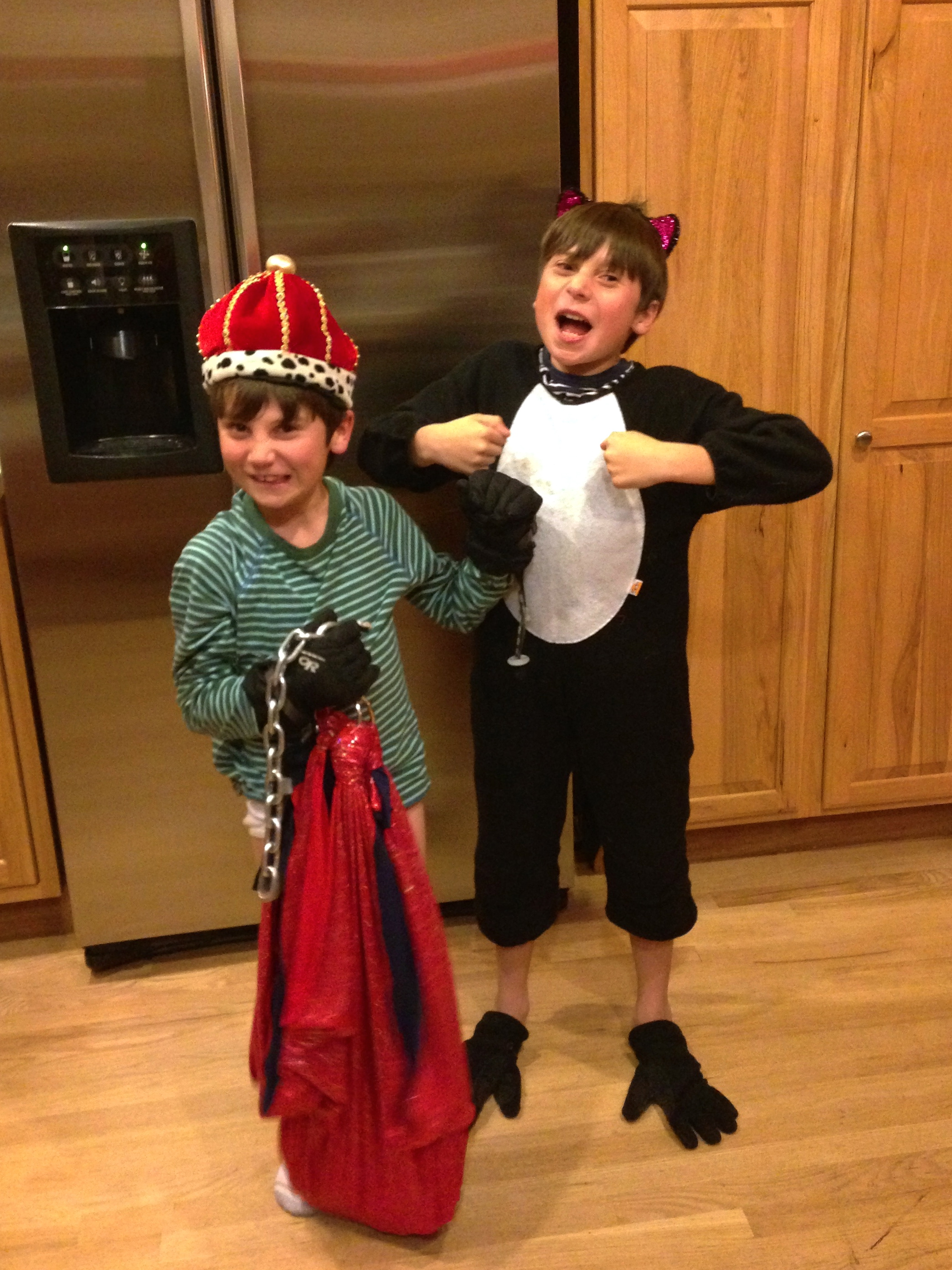
I asked them to create their own X-Men/superhero character. This is what I got. Monkey-cat man and a pants-less king/robber dude. I’m at a loss. 

After school today, I had to stop to talk to Luke’s teacher about some accommodations we need to get in place for him for his schoolwork while we begin his tutoring for dyslexia. On the way home after my conversation, the boys and I were talking about how much they dislike having people know that they’re struggling. They don’t want to feel different than their classmates and they don’t want their classmates looking at them differently. Luke hadn’t even wanted me to talk to his teacher, but I convinced him that she needed to understand his difficulties so she could help him. Even at that, he was insistent that we find a way to help him in which no one in his class need ever find out about his dyslexia. Since I just last night wrote about the boys and how grateful I am that their struggles are occurring earlier in their lives rather than later, I thought I would take the opportunity to reinforce my thoughts on the subject by talking to them about it.

“You need to step back and look at the bigger picture on this, Luke. You’re having some difficulties on the front end, but these things you’re going through will just make you stronger in the long run.”

“I just don’t want any of my classmates to know I’m different,” he replied.

“Why?” I asked.

“I’m afraid they’ll think I’m weird,” he said.

“They already think you’re weird,” I added.

“I don’t want this to make me unpopular,” Luke continued, unabated in his concern for his reputation as class clown.

Unpopular? Seriously? The kid is 9 years old. Is he already planning on being Homecoming King?

“Seriously, Luke?” Joe asked. “Everyone loves you because you’re so cute and funny. I don’t think they’ll stop liking you because you can’t read. I told my classmates about my ADHD and they don’t even get what it is. I don’t think your classmates will care.”

“I don’t want them to know,” Luke insisted.

“Luke, sweetie, you’re looking at this all wrong,” I tried again. “All these struggles you’re having now are going to help you later in life. You’re going to be able to face anything because you’ve had to be so brave and dedicated through all this. Dyslexia is not a problem. It’s a gift.”

“It’s not a gift,” he whined. “It’s a curse.”

It got quiet while I tried to figure out how to convince Luke that his embarrassment now at not being able to read as well as the other kids is actually a good thing for him. Then, out of nowhere, Joe piped up.

“Luke…it’s like the X-Men. They have powers and abilities that other people don’t have. They want to keep them a secret because they feel like freaks. Some of them think their powers are a curse. But, they’re not. Their powers make them special. They’re different and it’s not bad. They can use their special abilities to do all kinds of things.”

“Exactly,” I replied. “What Joe said.”

Okay. Okay. So, my boys aren’t exactly the X-Men. I mean, they’re not telepathic, they can’t shoot people with a high-powered optic lasers, and they’re not exactly conjuring up storms to smash their enemies. On the flip side, though, they are special in their own right. They may wish now that they were just “normal” like other people. But, I hold out hope that someday they’ll see that the challenges of being different have been a gift and not a curse. Maybe someday they’ll be proud of their own accomplishments and maybe they’ll even think they’re cool, even if they don’t have retractable, razor-sharp claws like Wolverine.


I Hate It When The Talking Heads Are Right

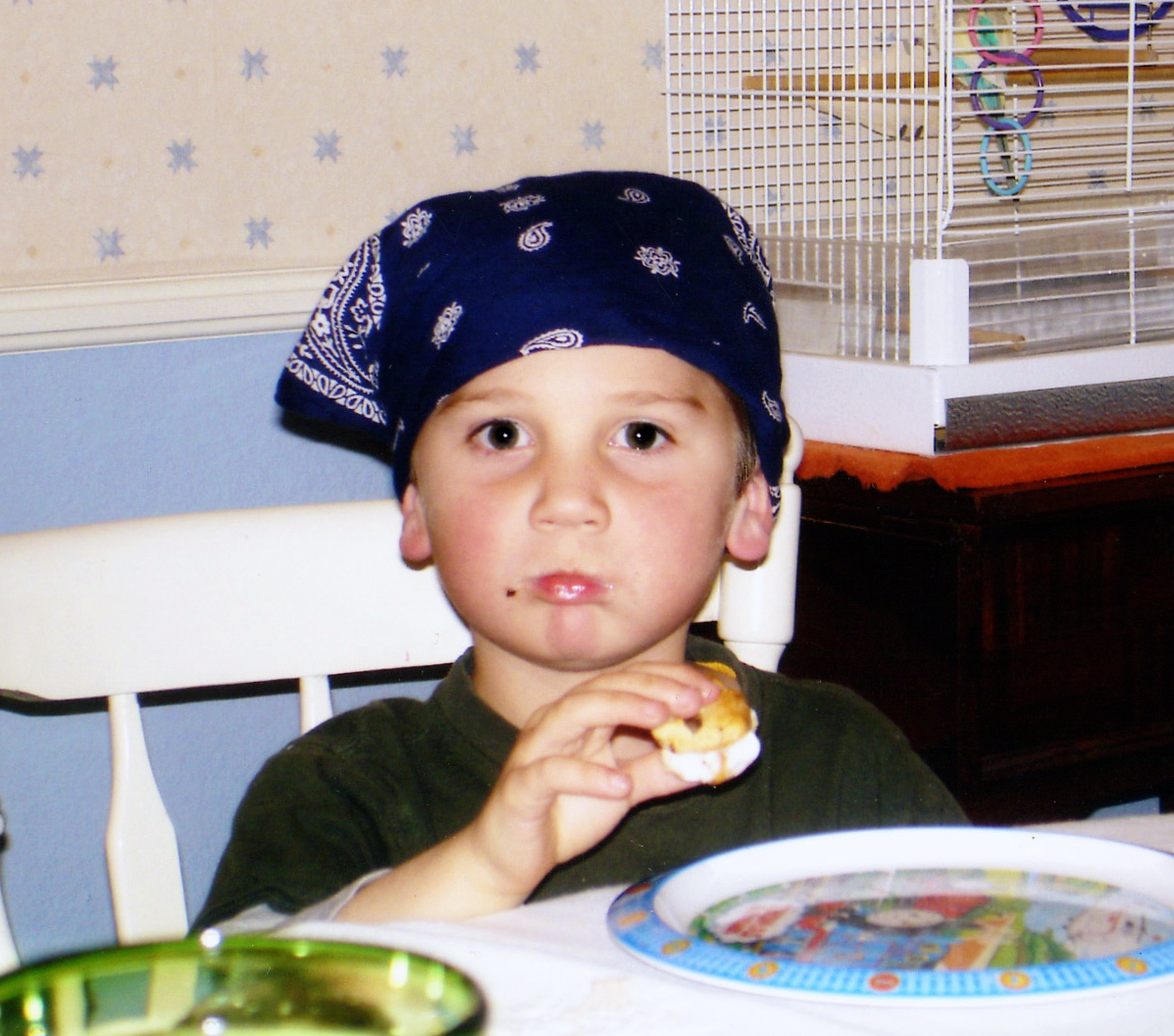
Luke back when life was all do-rags and cream puffs.

A little less than two weeks ago, I wrote about a terrible nightmare I had about my boys. That nightmare, similar to another one I had a couple years ago, highlighted some underlying guilt I have about not having devoted as much time and attention to my youngest son as I have to my oldest. My oldest son, diagnosed as ADHD three years ago, required a lot of extra time and effort from me. I felt incredibly grateful that Luke was an easy child who was plugging along in school and appeared to be relatively average. That was until the bottom dropped out.

Luke had a delay with his reading skills, but he was holding his own. While not reading at the same level as his classmates, his teachers had seen some progress. We had too. His school grades were decent. All was fine as far as we could tell. Then, with the start of this school year, I noticed that my son who had gotten mostly A and B grades in spelling was suddenly unable to pass his spelling tests. Something seemed off, so we paid a school psychologist to test him for possible learning difficulties. After reviewing his school work and spending six hours testing and observing him she told us that she suspects he is dyslexic and most likely ADHD like his brother. She suggested we immediately get him into intensive tutoring with a dyslexia specialist.

Today, Luke started that tutoring. Mrs. B spent an hour with Luke in our kitchen. I could hear bits and pieces of the session, but I stayed away so as not to be a distraction to my son who is already somewhat easily distracted. When the session was over, Luke ran upstairs and I went down to speak with the tutor. When she asked me to sit down, I should have known I was in for it. She told me that not only was she sure he’s dyslexic but she believes he has “severe” dyslexia and dysgraphia. In other words, not only does he struggle with reading but his writing is also a problem. She spent about a half an hour with me, scrawling information on a lined piece of notebook paper about holistic treatments, dietary changes, dyslexia support groups, books I should read, a summer camp Luke should attend, and specialized schools we should look at getting Luke into as soon as humanly possible. I was dumbfounded. I did not see this coming at all. She put her hand on mine and told me (as a fellow parent of a dyslexic child) to “have a glass of wine and a good cry.” Seriously? Thanks, lady.

I took her advice, though, and was crying as I locked the door behind her. My first stop was the basement where through clouded eyes I spied a shiraz, pulled it from its storage space, and cradled it lovingly as I ascended the stairs. I was uncorking the wine when hubby came through the door and I was able to share the news with him. I’m an introvert. I need time to process things. I don’t think quickly on my feet. As the tutor was being straight with me (something I am grateful for even though what she said sucked harder than my Dyson), my brain shut off. It took me a good hour to get my bearings again, to stop feeling sorry for myself, and come back to the place where I usually live, where I know that my sons are gifted in their own way and will be just fine.

Still, I can’t help but think back to those dreams…the ones where I have so much guilt for not being there for Luke. Someone or something in the universe heard my complaints and my concerns. I’m being afforded the opportunity to make up for what I’ve been lax about. Luke gets to be my focus for a while. I get to spend some time making sure he is getting the help he needs to be successful. I will get to learn an entirely new vocabulary to help me deal with his learning differences. I will start using phrases like IEP and 504. I will get to spend hours at the Children’s Hospital of Colorado again, devoting my energy to Luke. Luke will no longer be neglected. This is the universe’s way of correcting the slight I noticed. I sincerely hope this means those horrific nightmares will become a thing of the past. There had better be some payout from this, right?

As I sit here tonight, a catchy Talking Heads song keeps playing in my brain…”Watch out, you might get what you’re after.”