I started reading (okay, fine, listening to) a new book today, now that I have finished The Gifts of Imperfection. This book is a novel by Matt Haig entitled The Midnight Library. My sister mentioned it in passing twice last week and seemed so taken by it I decided to go ahead and get on the bandwagon. I also jumped on the Wordle bandwagon yesterday, but that matters not at this point. In any case, I’m a few hours into this damn book, and my mind is in classic overthink mode. This means it is a meaty story.
The Midnight Library is about a woman named Nora Seed who, feeling lost and depressed about her life, decides she no longer wants to live. She takes some pills and washes them down with wine. She drifts off and ends up at a library. The librarian, a woman Nora knew from her childhood, shows her a book filled with Nora’s life regrets and tells her she can go to any of a million different iterations of places her life might have led had she made different choices. She simply needs to select a regret and she will be transported to that divergent life, already in progress. The books allow Nora to answer the age old question “what if.”
It has taken me a long time and a lot of therapy to land at a place where I no longer abuse myself over my “what if” regrets. I’ve discussed that here before. Your what ifs are impossible because in the past you made choices based on who you were at that time using information you had available to you at that time. Looking back now, with a different mind and different experiences, alters the light you shine on those past events, people, and opportunities you let slip away. It makes them either shinier and more attractive or duller and less attractive but, either way, your current consciousness transforms them into something they are not. All of this makes our regrets like our worries…thinking about them will give you something to do, but it won’t get you anywhere.
I am curious to see where Nora lands after exploring these alternate-ending lives. If she finds a better existence for herself or if she decides to go back to her old life or if she dies from her overdose as she had originally intended. But all this thinking about disparate endings to our one (as far as we know it) life has me stuck on one thought. We can’t go back and change our past, which has led us to our present. We are, for better or worse, here where we’ve arrived as the result of millions of small, insignificant choices and a few quite large ones. Our story, thus far, has already been written. It’s the future that has yet to be determined. In some cases, our what ifs might still be able to come to fruition if we take steps in that direction today. We just have to find the courage to believe we can change the outcome. If we couldn’t do it in our past, perhaps we can now.
And while I noodle on what I want my life outcome to appear, for as much control as I have over it, please don’t comment here about the book if you have finished it. I will likely finish it tomorrow, and we can talk about it then. I look forward to it.
“Through dangers untold and hardships unnumbered I have fought my way here to the castle beyond the Goblin City to take back the child you have stolen, for my will is as strong as yours and my kingdom as great. You have no power over me!” ~Jim Henson
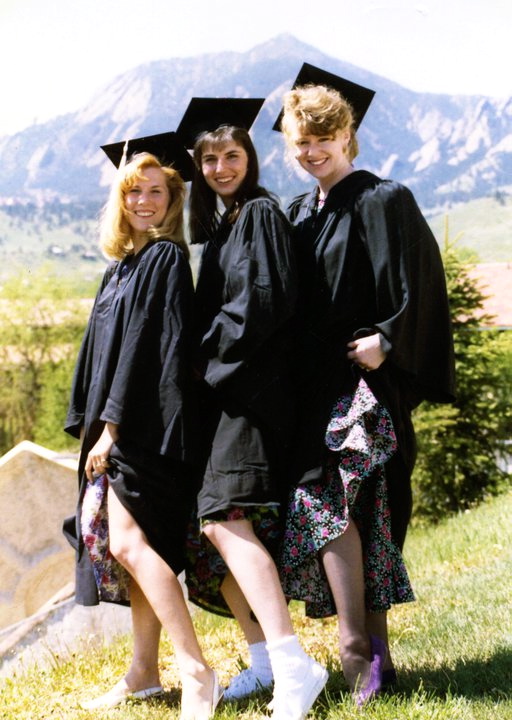
Me at a time in my life when I almost made my shame escape
As I mentioned the other day, I’ve been reading The Gifts of Imperfection by Brené Brown. It was given to me by a thoughtful, supportive friend last month, and I’ve slowly been making my way through it. The beautiful thing about Brené Brown is that her struggles and her authenticity seep from the pages of her books, making her words both relatable and heartening. She touches on so many difficult and uplifting emotions in the book that reading it has been equal parts soul-crushing reality and soul-inflating inspiration. Read about shame, guilt, perfectionism, fear, blame, and addiction and recognize how much those habits and emotions define and control you. Then read about hope, joy, play, creativity, resilience, authenticity, and self-compassion and see where you might be able to grow in a more positive direction. More than once while reading I’ve exclaimed out loud to myself in response to what I have read. Holy crap. That is me. I operate that same way. I so relate. I need to work on that. That makes so much sense. I have some work to do. I am really good at that.
The part of the book that hit me the hardest was the portion about shame. I know Brené began her work as a shame researcher, delving into the components of shame and how humans deal with or deflect it and how we can grow out of and away from it in healthy ways. So I fully expected to read about shame in this book. What I didn’t expect was to discover that for the majority of my life shame was my constant companion and operations manager. Ouch.
I shouldn’t have been surprised by this discovery. I grew up commonly hearing, “You should be ashamed of yourself” and “You’re embarrassing yourself.” Most of my reactions to events in my life were approached from a shame vantage point. Boyfriend broke up with me? Of course he did. You were acting like a needy jerk. It’s a wonder he didn’t leave you sooner. New job too much for me? Of course it is. Who do you think you are? You have no life experience. You can’t be expected to manage other human beings. Can’t stick to a diet and lose that stress-eating weight? Of course you can’t. You suck at dedication. Struggling with parenting? Of course you are. Your mother always said you were too selfish to raise childrenand it turns out she is right. Brené’s definition of shame snapped me like a wet, locker room towel: “Shame is the intensely painful feeling or experience of believing that we are flawed and therefore unworthy of love and belonging.” It was through this lens that I grew up and approached my adult life. I was an imposter, one misstep away from everyone I knew discovering my deep secret. To deal with this, I became a perfectionist. (That is another blog post entirely.)
I was continually baffled that anyone would want to be my friend or date me. I couldn’t see what they saw. I only saw my unworthiness. Still, I must have been presenting something else to these people too. They didn’t seem to see what I was seeing. The incongruity was not lost on me, but it never once occurred to me that maybe what they were seeing was the true Justine and what I was seeing was a story I had been sold. It took decades for me to figure that out, and I’m still shredding the pages of that story and working on my rewrite.
Perhaps the most life-affirming part of this book for me has been the section on Cultivating a Resilient Spirit because this is where I shine. I grew up feeling unworthy, less than, and invisible, but I persevered and took risks. Somehow, despite all the negativity and fear, I knew deep in my core I was capable. In my late teens and early twenties, I arrived at a place where I almost was able to recognize the big lie I had been sold. I was brave enough to imagine for myself something bigger. I took steps in that direction. I stepped away from guilt and forced obligation and walked towards autonomy and growth. I stepped up. At age 22, I graduated from a four-year university, the first in our family to do so. By 23, I was starting graduate school. At 24, I voluntarily sought help and signed on with a debt relief organization to pay off tens of thousands of dollars I had accumulated in loans and credit card liability. I was adulting and taking ownership, being resilient, and moving forward.
Then I realized I’d run out of money for graduate school. Rather than rising up and trying to find a way through that financial quagmire, I took my mother’s advice and I quit because I couldn’t afford it. I fell right back into the pattern of being a fearful, self-pitying, self-loathing coward and I stayed there for another two decades, operating from the familiar mindset that told me I wasn’t worthy.
I’ve spent more of my life in that shame mindset than I have spent believing in myself. I let other people’s negativity inform my choices. I asked for advice from the wrong people. I spurned the pleas of the right people who tried to guide me towards my better angels. Now I’m grateful for the difficult day that opened my eyes and taught me who was not to be trusted with my dreams and hopes. I learned to lean towards the people who raise me up, and I walked away from those who make me feel less special, talented, helpful, kind, and important than I am. I ignore those who don’t get me or who think they know me but don’t. I face my shame, talk about it, and deconstruct it. And all of this has led me to a place where I am starting to understand who I am and to like myself.
Shame grows through secrecy, silence, and judgment. Understanding this gives me a pathway out of it. You deny it oxygen by addressing it, sharing your difficult stories with others, and walking away from those who would keep you grounded in it. I am happier more often now, able to be joyful and at peace. I make better choices and I forgive myself more easily when my choices aren’t the best. I appreciate others. I try to apologize when I screw up. I am still working on self-love and I am having a devil of a time beating the judgment out of myself and my life, but I am making progress. I’m embracing my humanity and feeling part of a bigger whole rather than feeling like a lonely pariah. I am proud of myself, dammit. It feels good.
Sharing my darkness and vulnerability is terrifying, but blogging about these shadow monsters here has changed my life. Shame has no power over me anymore because I have named it, gotten cozy with it, and discovered its weaknesses. It will never leave me because it is part of my story, but it buzzes quietly in the background now, just white noise that my brain blocks out.
I was reading through The Gifts of Imperfection by Brené Brown today when I came upon this:
“The heart of compassion is really acceptance. The better we are at accepting ourselves and others, the more compassionate we become. Well, it’s difficult to accept people when they are hurting or taking advantage of us or walking all over us. This research has taught me that if we really want to practice compassion, we haveto start by setting boundaries and holding people accountable for their behavior.”
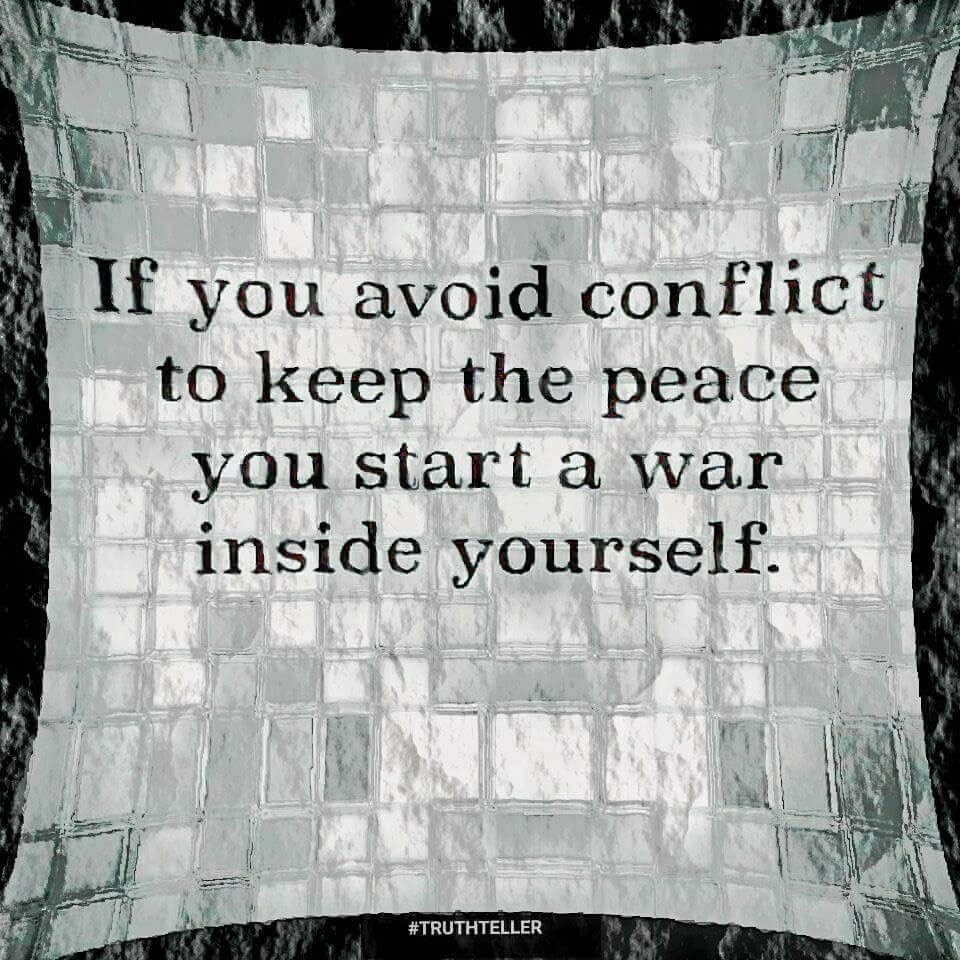
This hit me hard because I have had a long-term struggle with boundaries. As a child, I learned that it was not okay for me to set them. So as an adult, to avoid conflict, I have continued to shift my boundaries to accommodate what someone else wanted or expected of me. Doing so made me bitter without any understanding that the bitterness was coming from my giving what I wanted and needed away to keep someone else comfortable. Giving others their peace took away my own. Not setting boundaries kept me stuck. Understanding that keeping boundaries is essential to being compassionate to myself and others empowers me to stand my ground, to make room for myself, and to find that peace I have been lacking.
Over the past year, I have been working a great deal on boundaries. I didn’t come at this through the knowledge that it would allow me to better practice compassion. I came at this because I finally got to a point in my life where I realized that not having any boundaries in place for myself was no longer a tenable situation. The pandemic, and lockdown particularly, taught me I need boundaries to stay sane and to be pleasant towards others. I learned that I need space. I need silence. I need peace. And I need to stand up for myself to have these things in my life. If I don’t set boundaries, if I am not willing to ask for (and demand, if necessary) what I need from others, then I will forever be a grumpy, negative person who feels powerless. I don’t like that. I don’t want that, and I don’t want to be that person. So, I am learning to set boundaries and to accept that those boundaries will piss some people off and completely alienate others and that is not my concern. My concern is keeping myself and my sense of self safe from those who would use my difficulty in advocating for myself against me.
“The only people who get upset about you setting boundaries are the ones who benefitted from you having none.” ~Unknown
“You are not required to set yourself on fire to keep others warm.” ~ Unknown
I might start saying no more firmly this year. You might hear me saying things like, “I understand that is what you want, but that doesn’t work for me.” I may full well make some people uncomfortable by refusing to do what they think is fair and right because I believe it doesn’t align with my core values and what I need. This will be hard for me because I was raised to believe people would only like me if I made myself likable by acquiescing to their whims. But I’m old enough now to understand that it’s not only acceptable but imperative that I set boundaries where I need them and tend to them to keep them secure and impenetrable. I will ruffle feathers and others may use my boundaries as talking points to turn others against me, but I no longer care about that. I’m exhausted from being the willow tree that bends. I’m ready to be the rock that the tree learns to grow around.
We dropped Thing One at the airport again this morning for his flight back to Walla Walla. He has been in college a year now and, overall, these comings and goings have become easier for me. Not because I don’t miss him but because he has proven himself more than up to the task and I have seen that life without him after 20 years with him is okay. I am okay. My time as Mom isn’t over but the role has shifted. Joe still needs me often enough, but he’s also on his own a lot more. So we dropped him at the curb with his bags and drove off without incident. No tears. Everything was copacetic.
Everything was fine when we got home too. I was feeling pretty proud of myself. It was the easiest drop off yet. Yay, me! I got to work on life around the house, laundry, vacuuming. Then I got to the kitchen table. I removed the placements, wiped it off, and went to take the fifth chair away. That is when I got sad and teary eyed. I put the fifth chair back at the dining table where it lives and then set about taking the extra leaf out of the kitchen table and returning it to its usual 4-person size. I stood there for a minute overwhelmed over the loss of that extra seat.
A little later after I thought I had moved on again and pulled myself together, I put on a hoodie Joe left behind for me. It smelled like him. I got teary eyed again.
Letting go is a process, one I have to keep reminding myself about over and over. I know I will never stop missing Joe or being sad when he leaves, but it will become part of our new relationship contract. I told him today that I was a little sad about the table. And then I told him that it is all okay because I love him with my whole heart and I am happy that he is off pursuing his own life, but I will always miss him when he leaves. Then I told him that someday he will miss me when I leave and that is life. He told me we’d best not talk about that ever again.
Relationships aren’t easy, but they are worthwhile. And I will always have a table with an extra leaf for those times when the important people pop back into my life. Until then, there’s this little guy who is here for me.
The son I got to replace the son who sent to college. I will have to get another when Thing Two goes to college. And I am really glad I didn’t have more children because I can only handle two dogs.
Some times, due to time constraints, you have to cut corners and do something less than optimal, like have a plain turkey and swiss on gluten free bread for dinner. On those occasions, though, don’t think of yourself as anything less than the marvelous queen (or king, I guess) that you are. Even if dinner is just a yawn of a sandwich, make sure you cut that shit on the diagonal because you are absolutely worth it.
Love is blind. I know we have all heard that platitude a million times, but for some reason today it didn’t sit right with me when I heard it in a song. This, I assume, is because I am growing as a person and seeing life through a different lens. I used to think that phrase meant that when you love someone you are blind to their faults. Maybe that part is true when you are first falling for someone in a romantic way, but I don’t think it’s true once you are fully committed to a person or in relationships that are not romantic in nature, like with siblings or children or parents. I love my children more than anything and would give my life for theirs in a heartbeat, but I’m not blind to who they are, all of them, the good and the bad traits (some of which definitely came to them through me). And I think they absolutely could tell you what the positives and negatives are about me.
I am no expert on love, having come to know it only in the last half of my life thus far. As I was growing up, I understood love on an intellectual level. I had no real concept of it because I had experienced no real example of it. I assumed my parents loved me because they would get angry if I came home late. But if love was indeed blind, then my parents didn’t love me because they definitely knew my shortcomings and pointed them out regularly. So love confounded me. How did it work?
Here is what I have learned about love since having my own children. Love is not blind, and it shouldn’t be. Love is knowing someone intimately and wanting the best for them always, even when they are confused about their gender identity or in jail because they got a DUI or lost the thousand dollars they got from you for Christmas. If you aren’t able to recognize someone’s struggles, weaknesses, and issues, how can you be there for them, to support and encourage them, to take care of them when they are at their worst? Love isn’t about being blind to who someone is or what they do. It’s about being there for them in spite of the things about them or that they do to make you crazy, stressed, worried, angry, or frustrated.
Love is all seeing and ever present. It exists in the hard work of being present for someone else no matter what. It’s you seeing someone else in all their humanity and appreciating them both for it and in spite of it. It’s in the sacrifices you make for another person. It’s in the suffering you take on to ease their pain. Love is about showing up. It’s a lot harder to show up if you can’t see.
“It’s not that we have little time, but more that we waste a good deal of it.” ~Seneca
I have wasted a ton of time since the pandemic began. I can’t even begin to calculate how much time. If you checked my Nintendo DS, you could probably find a record of how much time I spent playing Animal Crossing during lockdown (okay, and beyond). It would be a gargantuan number of hours. Add to that the time I spent on TikTok or researching travel I could not undertake or playing Archery in my text threads with my sisters or reading tweets, well, it’s embarrassing. I know that my misuse of time stemmed, at least initially, from the overwhelm of being in lockdown and uncertain about what was going to happen with the pandemic. But, once things relaxed a bit, did I get back on track with living my life? No. I did not. The ups and downs of “do we mask” and “can we trust the vaccines” and “why am I wearing a mask when so many people aren’t” and “how far do I have to travel to get a vaccine” and “what do you mean cloth masks aren’t effective enough” and “will there even be room at a hospital if I have a stroke or something” made me want to check out. So, I did. I continued to bury my head in nonsense.
But then we went to Hawaii for Christmas, and I put my phone down more often and lived. I sat in the sun on warm, black lava rocks, and watched the waves roll in shades of turquoise. I walked among swiss-cheese rocks and looked for shells both teeming with life and devoid of it. I woke up to the sunrise ten out of eleven mornings there. I felt the sand between my toes, smelled plumeria blossoms, and tasted fresh, Kona-grown coffee. It felt good to be alive again.
I missed living.
So today I spent some quality time with our puppy because he makes me laugh every day. I savored my food and appreciated it. I went to my meditation meeting and listened intently to what the other participants said about their practices. I worked hard to be present all day.
Maybe it was my Hawaiian holiday. Maybe it was watching Don’t Look Up. I’m not sure what has brought me to this place, but I have definitely been more present so far in 2022. I’m tired of wasting time and then being frustrated that I didn’t do all the things I wanted to do. I know what I want for this year, so I am setting an intention to show up for my life and the people in it. I’m going to spend some time this week figuring out what that looks like and how I think I can best accomplish it. And then I am going to get busy living again. It’s not a New Year’s Resolution. It’s a Life Revolution.
“I went to the woods because I wished to live deliberately, to front only the essential facts of life, and see if I could not learn what it had to teach, and not, when I came to die, discover that I had not lived.” ~Henry David Thoreau
We’re sitting at home watching Queer Eye on Netflix (full disclosure: I’m only sort of watching because I am doing on some online shopping with my eyes) and someone on the show mentions there’s a difference between existing and living as you get older. This caught my attention. It is easy as you age to fall into habits and get into patterns that don’t leave much room for new experiences and personal growth. After all, you’ve been around 5, 6, 7 decades and you’ve got a history. People hold you accountable to that history. You’ve been defined, and being thus defined you settle into place like gum stuck under a table. You are stuck, and you exist in the well-worn grooves.
I’m going to be 54 in May. My husband and I will celebrate 27 years in August, and later that month our youngest will begin college. This is when the gum can get stuck to the wall. I know a lot of people my age and older (and even younger) who are stuck. There is nothing new in their lives. There is no freshness, no growth. They are existing.
I don’t want that for my life, but I know that since March 2020 that is what I have been doing. I have been simply existing. I’ve been lazy about self-care and home care. I have been going through the motions. And, yes. There has been a lot of change, stress, anxiety, and adjustment these past two years just trying to negotiate our Covid-19 world, and I have to give myself a little grace for that. But I am ready to move beyond this stagnation and start living again. I’m ready to carve out a place to care for myself and not self-soothe by checking out. I’m ready to accept myself where I am at and move forward and live again because time isn’t slowing down, Covid isn’t going away, and the longer I stay stuck the more difficult it will be to pry myself loose.
If you did a self check in right now, where are you? Are you living or are you existing?
A few months ago, my sister sent me a journal so I can practice some narrative therapy. Narrative therapy helps an individual become an expert in their own life through telling the stories they have carried around. Putting the stories of your life into writing gives meaning to your experiences and influences how you see yourself and the world around you. When my sons were younger, I used my blog as a form of narrative therapy to help me rearrange my negative perceptions about their struggles and create a better path forward for all of us. More recently, I’ve used blogging to tell stories from my childhood as a way to validate those experiences and increase my own voice and messaging around those pivotal events that shaped who I am. Through these exercises, I’ve begun to understand myself more fully. I am more aware of why I am the way I am and more capable of making adjustments in areas where I’m not fond of the trajectory I’ve taken. The process is helping me have greater self-compassion because I understand that my fears, coping mechanisms, and judgments didn’t originate in a vacuum. These behaviors arose to protect me. Now that I understand why they existed in the first place, I can begin to jettison habits that once protected me but no longer serve me .
One thing my sister and I have challenged each other to do is start some reconstruction. We are creating lists that outline what we like so we can recreate ourselves fully as the people we actually are and not the people we were told we were. We are rewriting our stories. That may sound odd or even disingenuous but, when you have spent your life in a pattern of reaction borne out of the fallacy that you are not an expert on your own self, you need to start with the basics to reclaim your identity.
Today my sister threw a gauntlet down. She sent me a photograph of a page where she has started listing things she knows she likes. To keep things equitable, I too started a list. My criteria? Things that make me happy or give me a sense of hope and possibility. Here’s what I have so far:
sunrises
dogs
a sunny day in the mountains
medium roast espresso
attending concerts
puzzles and word games
all types of travel, including long road trips
writing
cheese
smelling lily of the valley and lilacs
long, hot showers
deep conversations about faith, life, death, philosophy, space, current events, politics, or anything that avoids the pointless drivel of small talk
skiing, camping, hiking, cycling, kayaking, snorkeling, being active out in nature and not in a gym
documentaries and foreign films
anything with the flavor of passion fruit
the color of a green apple
lectures presented by experts in their field
Coca Cola and Bugles
the Buffalo Bills
hammocks
Wes Anderson films
wool socks
satellite radio
flip flops
down comforters
I will keep adding to this list in my journal as items come to mind. In the meantime, I know that being bold enough to enumerate here these items is the first step reclaiming my story. I know who I am. I know what I like. No one knows me better than I do. And I’m finished letting others dictate to me who I am.
It can be difficult to know when you are ready to step away from therapy, either for the short or long term. Some days therapy is incredibly useful, and others you may walk out feeling like it was a waste of money. After my session today, though, I am fairly certain I know when I will be ready to call it good for a while:
When I can get through a session without thinking to myself, even for one quick second, “Eeesh…do you hear yourself? Blah…blah…blah. Who cares? Get over it and shut up.”
When I can walk out the door as the session is ending without thanking my therapist and apologizing to her for making her listen to me ramble on for an hour.
I did both of these things today, and it troubles me that I am still struggling to be compassionate to myself for being human and having emotions and thoughts I need to work through and I’m still not believing I’m worth the trouble I put my therapist through, despite the reality that I am paying her to listen and guide me to a better place.
The good news is that I am no longer in the dark about these things. I know the areas where I have room for growth, and I’m not afraid to explore them and move forward despite understanding the speed bumps ahead. This proves that I have become more mindful, so there’s that.




 Live Now and Zen